10 U.S. Bridges Women Cross for Views So Good They Always Stop Midway
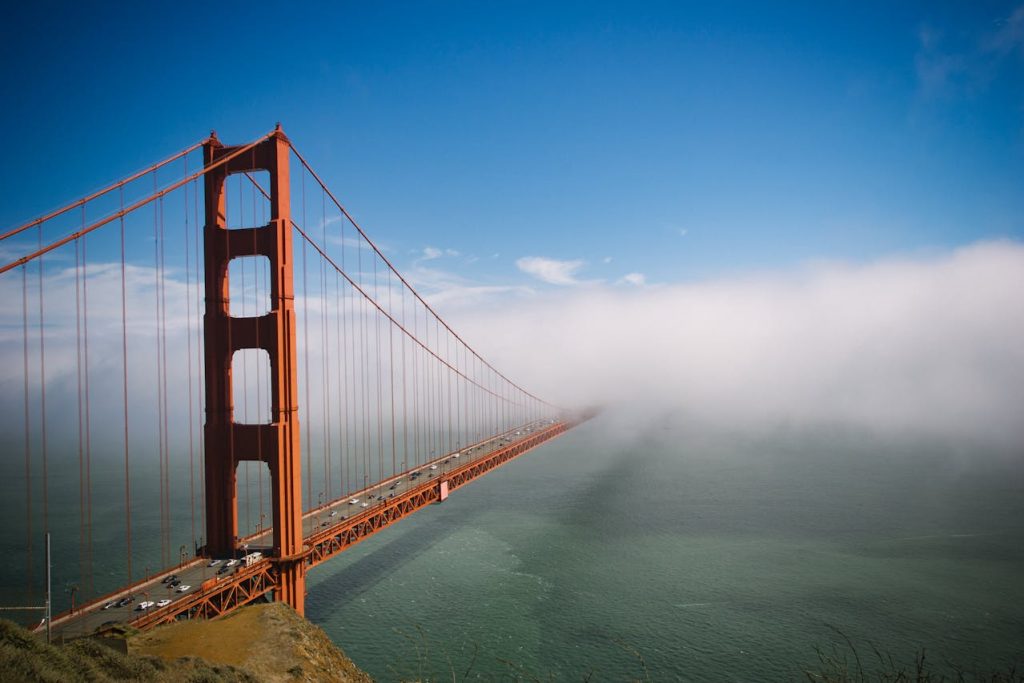
Some crossings become routines. Others become rituals. Across the United States, a small set of bridges keeps turning simple walks into pauses that feel personal, especially for women travelers carrying a camera, a journal, or just a need to breathe for a minute above moving water. The pull is not only architecture. It is weather, light, and the way a skyline or canyon suddenly opens at the midpoint.
These bridges span bays, gorges, rivers, and straits, but they share one thing: people rarely rush across them. They stop, look down, look out, and remember exactly where they were standing when the view finally hit on a clear day.
Golden Gate Bridge, California
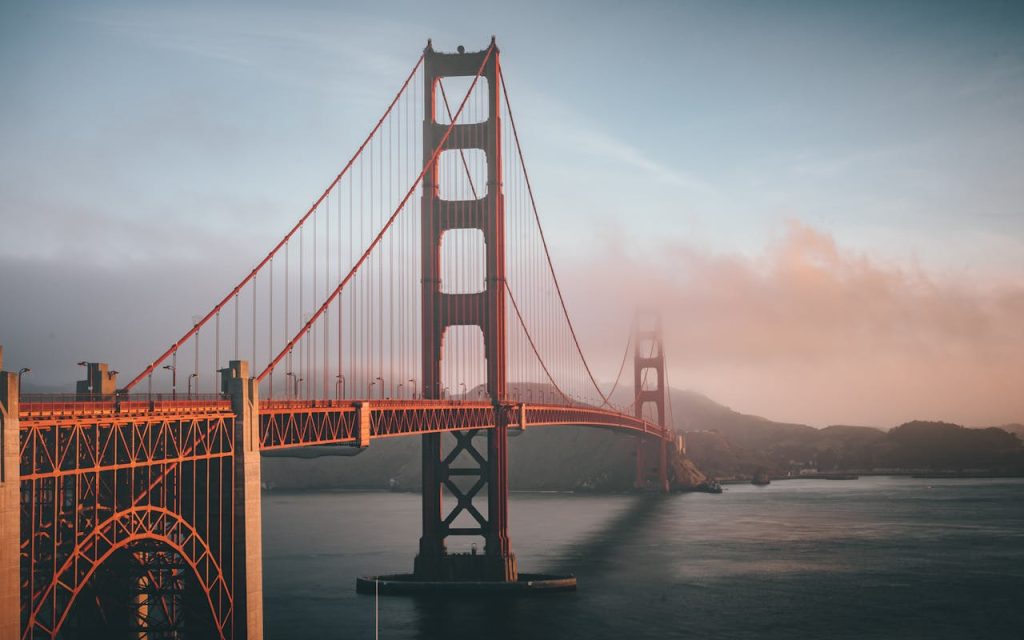
On San Francisco’s Golden Gate Bridge, the east sidewalk stays the classic walking line, with open-bay views that shift from blue to silver as marine fog moves in and out. District visitor alerts note that sidewalk space can narrow during construction staging, so the scene feels alive rather than postcard static. Even when crowds build, the midpoint still offers that straight-on look to the towers and city beyond.
It is the contrast that holds attention: hard steel, soft light, fast traffic, slow footsteps. Many walkers reach the middle, grip the rail for a moment, and stay longer than planned because the horizon keeps changing.
Brooklyn Bridge, New York
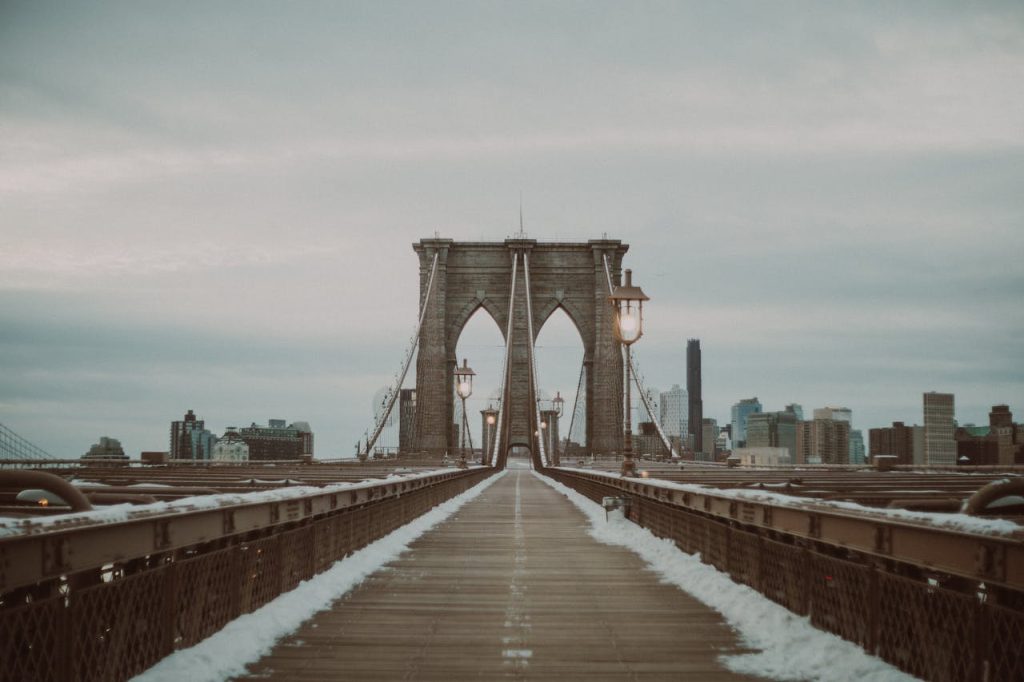
The Brooklyn Bridge gives a rare double drama: Manhattan’s vertical skyline on one side, Brooklyn’s waterfront texture on the other. The wooden promenade keeps walkers above vehicle lanes, and city transportation data shows how heavily the path is used, which explains the stop-go rhythm at peak hours. Even with that crowding, people still drift to the center for the harbor breeze and the long framing lines of stone arches and cables.
At twilight, the bridge shifts tone from historic landmark to open-air overlook. Phones come out, conversations pause, and the East River starts reflecting windows, ferries, and sky in one long, bright strip.
Arthur Ravenel Jr. Bridge, South Carolina
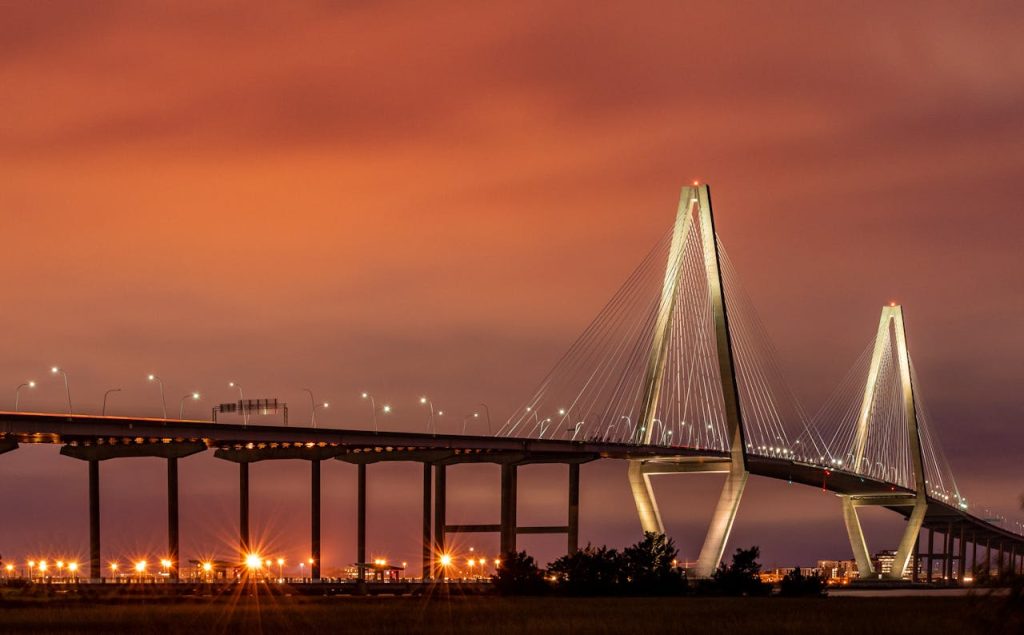
Charleston’s Arthur Ravenel Jr. Bridge carries a bike-and-pedestrian path known as Wonders’ Way, and the state travel guide describes it as a broad, dedicated route with sweeping harbor sightlines. From the ascent, church steeples, marsh edges, and port cranes stack into one frame that feels both historic and modern. The higher the climb, the more the city opens, and the midpoint becomes a natural place to stop and reset.
Wind can be strong up top, which makes the crossing feel dramatic without being difficult. By early evening, warm light settles across the Cooper River, and even quick walkers slow down to watch boats cut through the glow.
Walkway Over the Hudson, New York
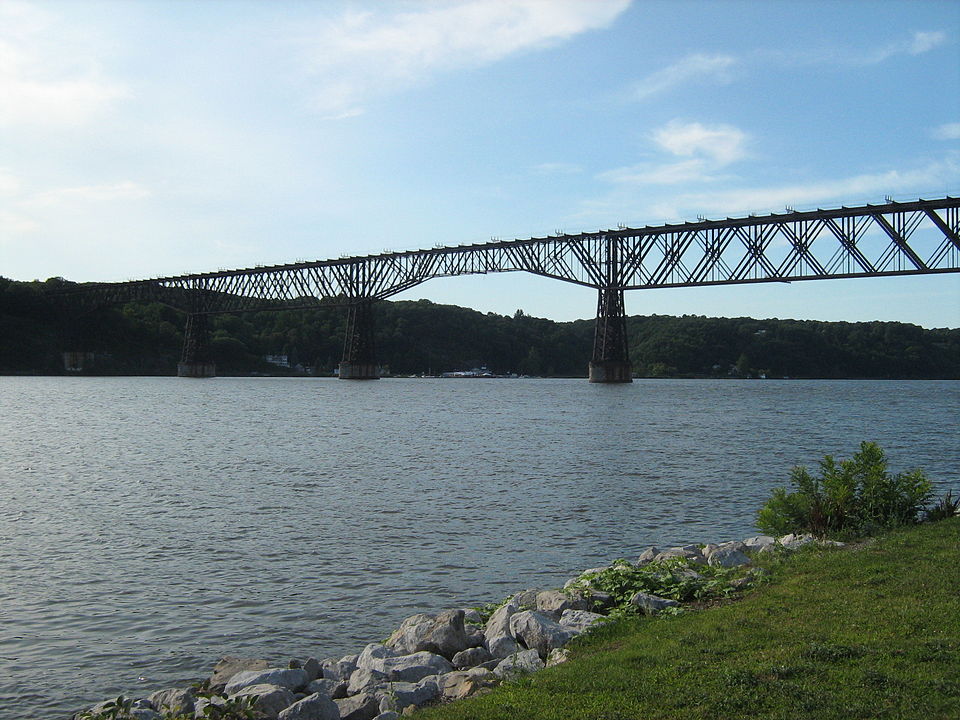
Walkway Over the Hudson in New York is built for lingering. State Parks lists it at 1.28 miles long and 212 feet above the river, with direct access for walkers, runners, and cyclists, so the bridge reads like a moving balcony over a wide valley. Instead of traffic noise, there is open air and the steady pattern of footsteps. The midpoint gives a broad view of both shorelines and the long arc of Hudson Valley ridges.
Because it was reborn from a former rail bridge, the structure carries history without feeling heavy. People cross for exercise, then stop halfway for photos, river light, and that quiet sense of elevation at dawn.
Bob Kerrey Pedestrian Bridge, Nebraska-Iowa
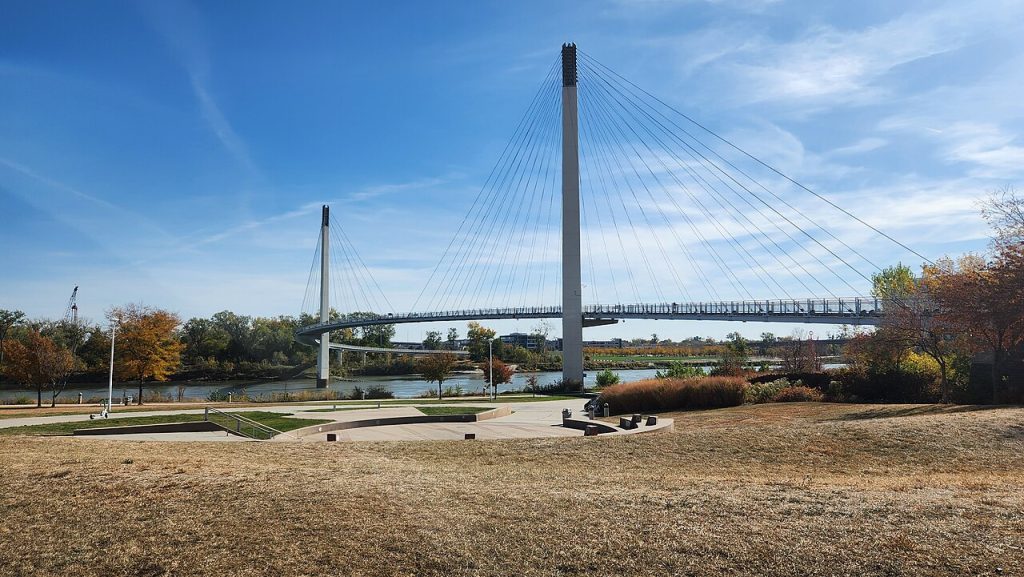
Between Omaha and Council Bluffs, the Bob Kerrey Pedestrian Bridge was opened in 2008 as a joint city-and-state project, and Council Bluffs notes its cable-stayed, S-curved design and 2,224-foot length. The crossing sits low enough to keep river movement in view while still giving wide skyline angles, especially when evening color settles over the Missouri. The center span feels open and balanced, not rushed.
That geometry is why people pause midway. The bridge invites a clean look in both directions: downtown towers behind, water and trail corridors ahead. It is part landmark, part local habit, and always photogenic without trying too hard.
Penobscot Narrows Bridge, Maine
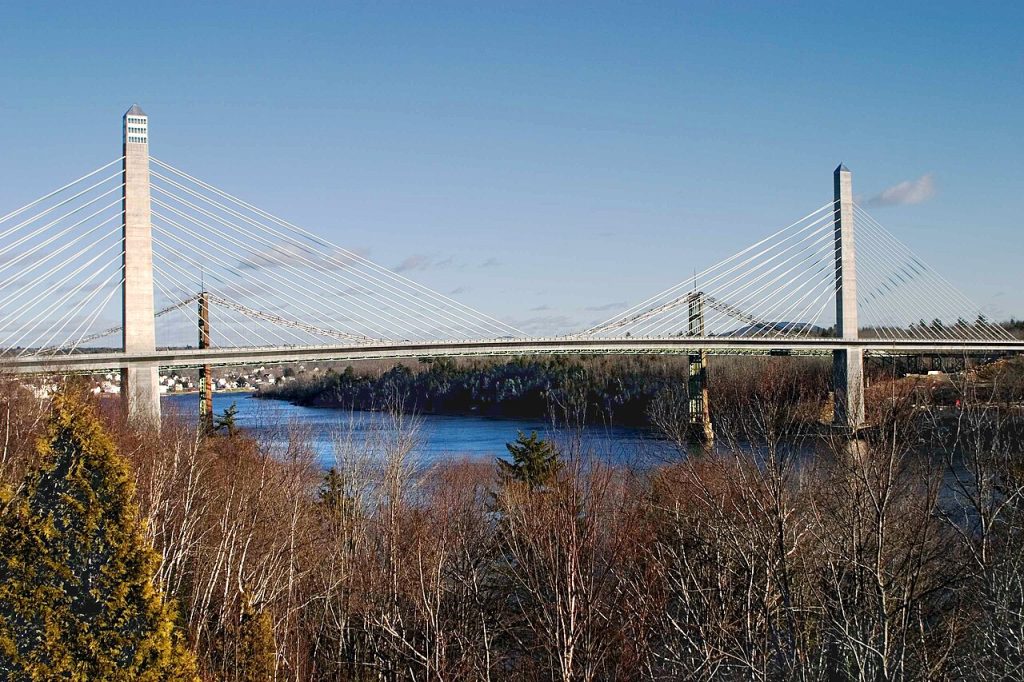
Maine’s Penobscot Narrows Bridge turns a river crossing into a vertical viewpoint. State transportation pages highlight the attached observatory, rising about 420 feet and billed as the tallest public bridge observatory, which means the stop is not only midway across but also high above it. Forested banks, working water, and distant hills stack in clean layers, especially in early fall.
Even before reaching the observatory, the deck-level view pulls people toward the rail. The scene feels expansive but calm, with enough detail to reward a long look. It is one of those rare bridges where scale and stillness coexist in the same frame.
George Washington Bridge, New York-New Jersey
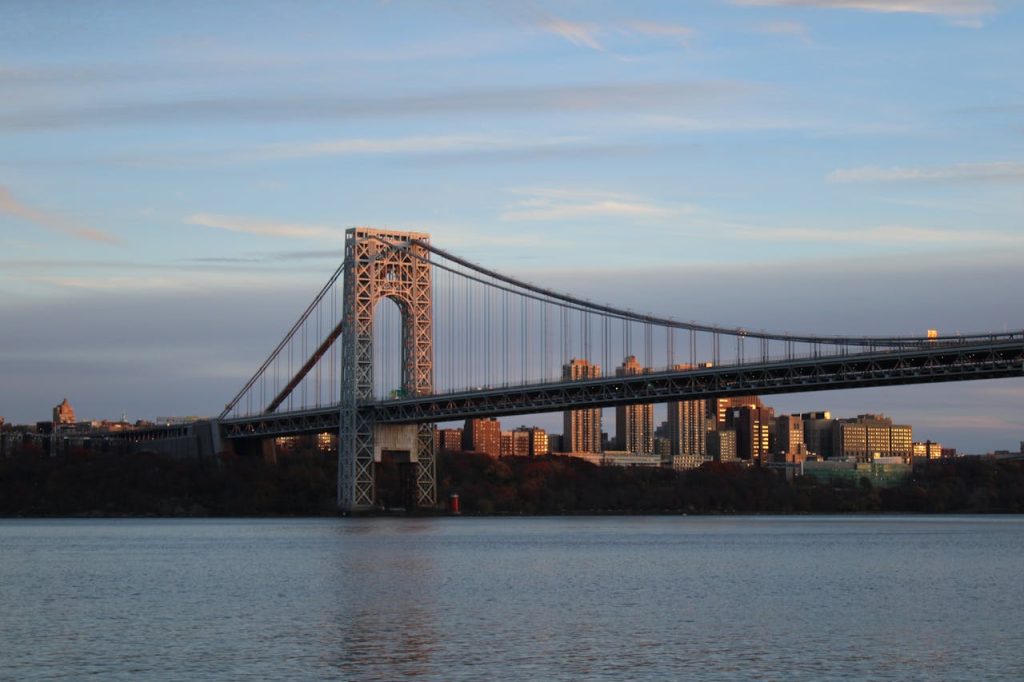
On the George Washington Bridge, the North Walk gives pedestrians a direct line above the Hudson with Manhattan to the south and the Palisades to the north. Port Authority guidance for walk-and-bike paths helps travelers time access, but once on the span, the pace becomes personal. Wind, river current, and layered skyline depth turn an everyday crossing into a cinematic one.
The midpoint is where scale becomes real. Trucks look miniature, boats trace thin wakes, and city sound drops into a steady hum. Even seasoned commuters pause there, not out of novelty, but because the river corridor always looks slightly different each time.
Royal Gorge Bridge, Colorado
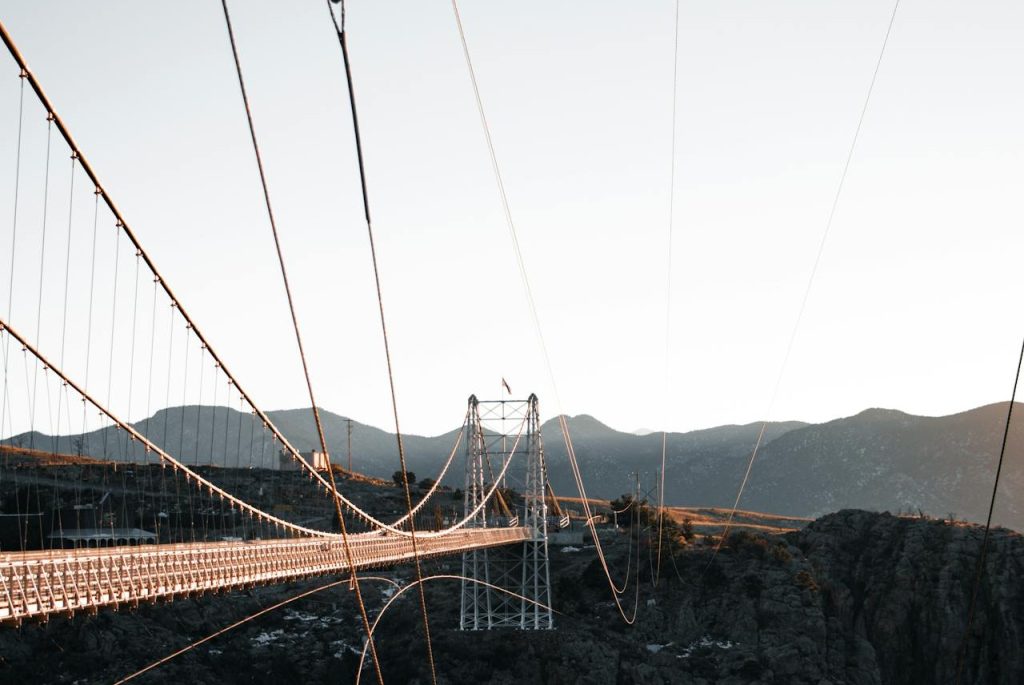
At Colorado’s Royal Gorge Bridge, the numbers alone are enough to stop most people: the park describes 1,257 wooden planks suspended 956 feet above the Arkansas River. The crossing combines canyon depth, mountain air, and a slow, deliberate walking pace, so halfway across feels less like transit and more like standing in open sky. The view pulls attention downward and outward at the same time.
There is a little adrenaline in the experience, but the beauty is what lingers. Cliffs change color through the day, shadows slide across the gorge, and the river line keeps anchoring the scene beneath the bridge’s long, straight run.
New River Gorge Bridge, West Virginia
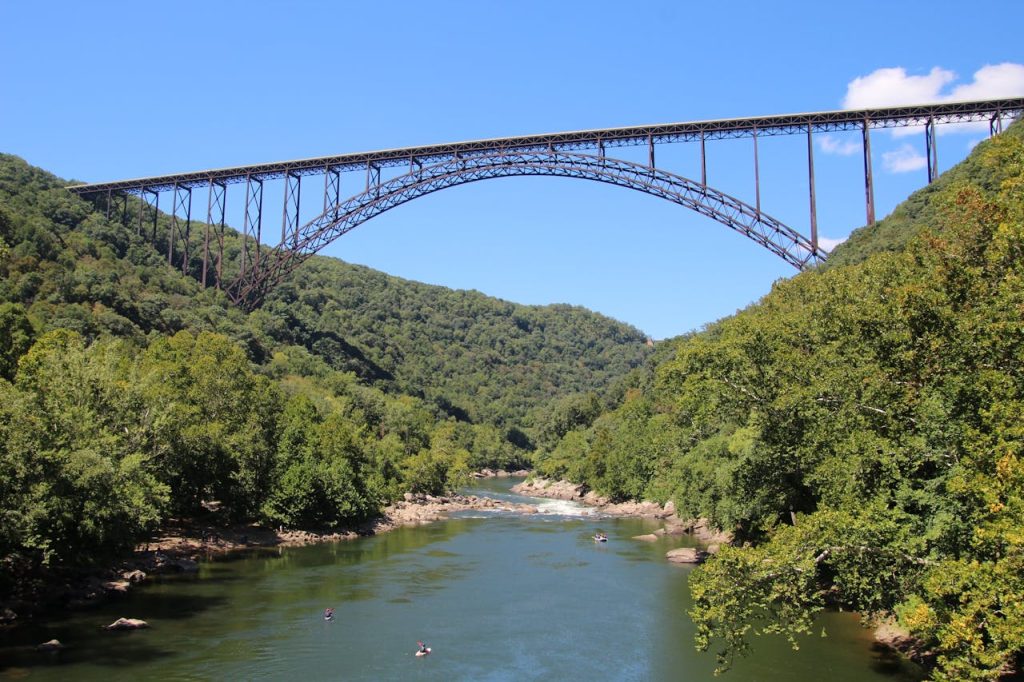
West Virginia’s New River Gorge Bridge is famous for scale, but also for perspective. National Park Service pages note that routine pedestrian access is limited, with the roadway opened to walkers on Bridge Day, while guided catwalk tours operate below the deck. That controlled access makes every on-foot moment feel earned, and the midpoint view across forested canyon walls is unforgettable.
When people stop there, they are not only looking at scenery. They are reading the structure itself: the long steel arc, the depth of the gorge, and the river threading far below. It is a place where engineering and landscape meet without competing.
Mackinac Bridge, Michigan
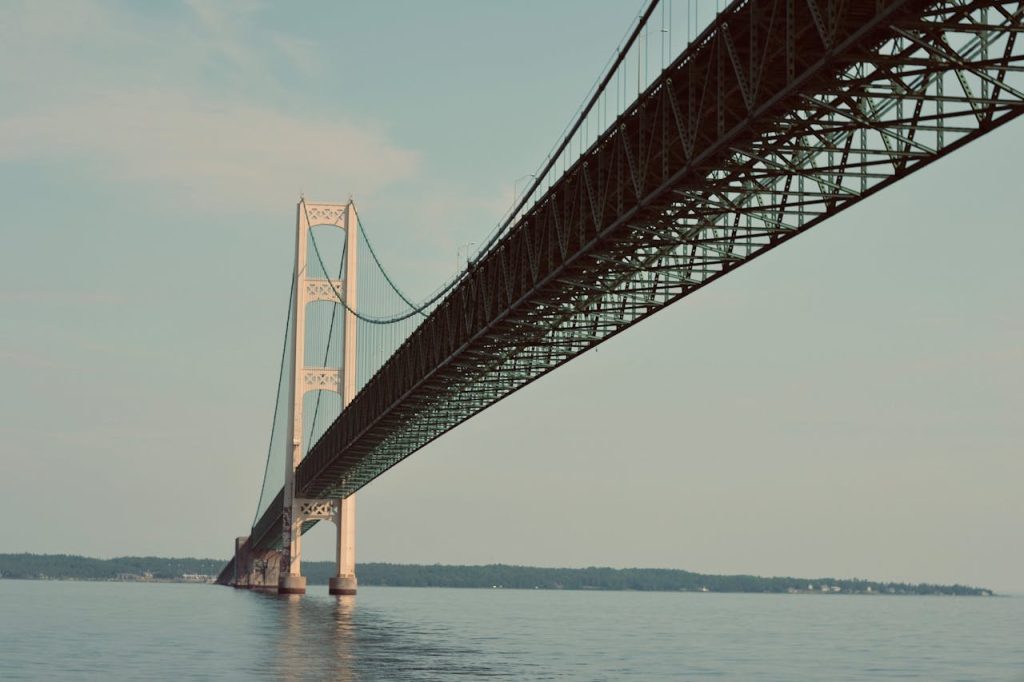
The Mackinac Bridge usually serves traffic, but during its annual Labor Day walk, the span becomes a shared public overlook between Michigan’s peninsulas. Bridge Authority event guidance sets clear start times, turnaround rules, and lane management, which helps keep the experience orderly with large crowds. Mid-bridge, water stretches in both directions until the horizon and lake seem to merge.
That midpoint pause has a distinct mood: cooler air, open distance, and a sense of standing between regions rather than inside one. People come for tradition, then stop for the view because it feels wide, clean, and hard to forget once seen in person.