11 Roadside Oddities to Chase on U.S. Highways
A long U.S. highway day often blurs into fuel stops, exits, and familiar chain signs. Then a giant whale, a painted mountain, or an elephant-shaped building appears and resets the mood in seconds. These odd landmarks persist because they are rooted in local stories, civic pride, and communities that kept repairing, repainting, and reimagining what a roadside stop could be through decades.
Across deserts, plains, and shore towns, they turn transit time into memory. Each stop carries a different origin, yet all of them reward curiosity with context, character, and a reminder that detours can still feel personal and meaningful.
Cadillac Ranch, Amarillo, Texas
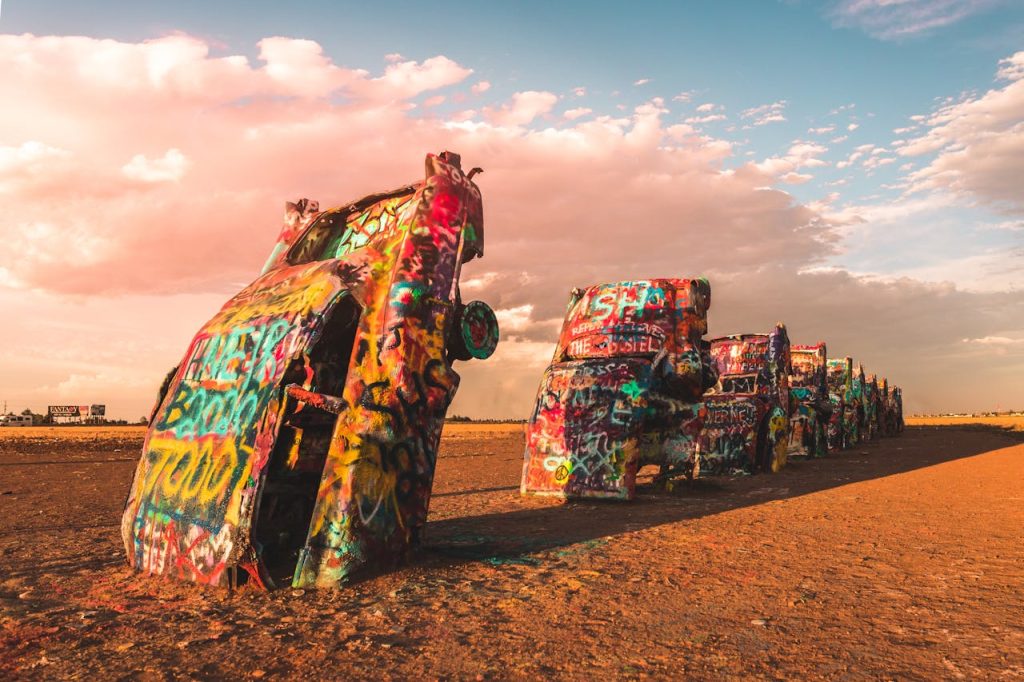
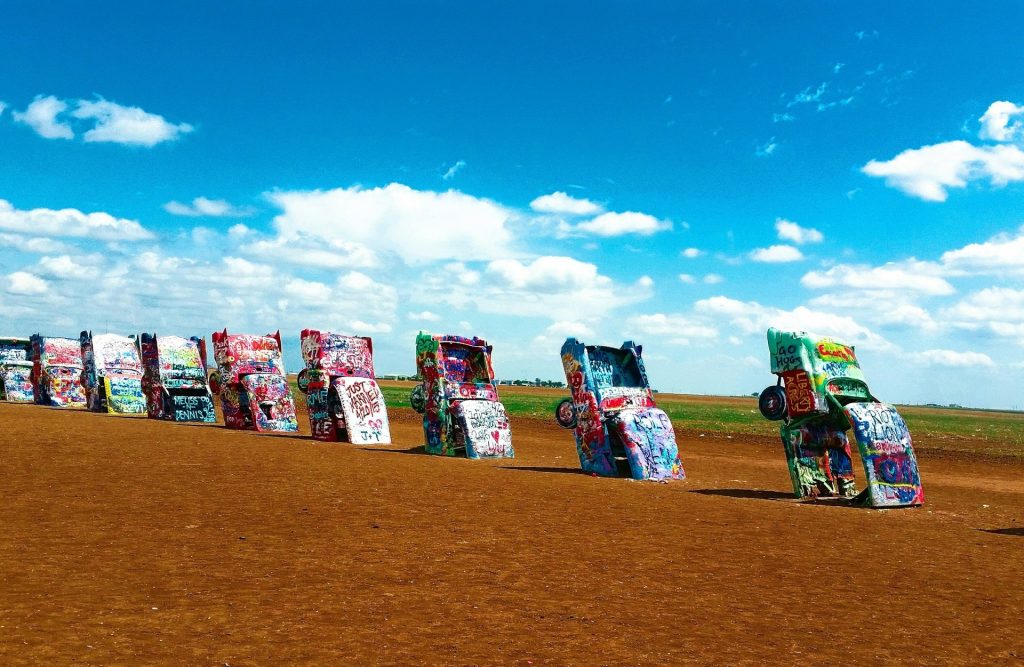
Cadillac Ranch is where a routine highway day suddenly turns playful. Created in 1974 by Ant Farm near Amarillo, the work places 10 Cadillacs nose first in the ground, and visitors continually repaint them. Those layers make the site feel alive rather than fixed, more like a public sketchbook than a preserved monument that never changes.
The setting does heavy lifting too. Flat Panhandle light, wind, and passing traffic frame the cars in a way galleries cannot copy. It captures a familiar American instinct: turn ordinary objects into shared ritual by letting people touch, mark, and reinterpret them in real time, day after day.
Carhenge, Alliance, Nebraska
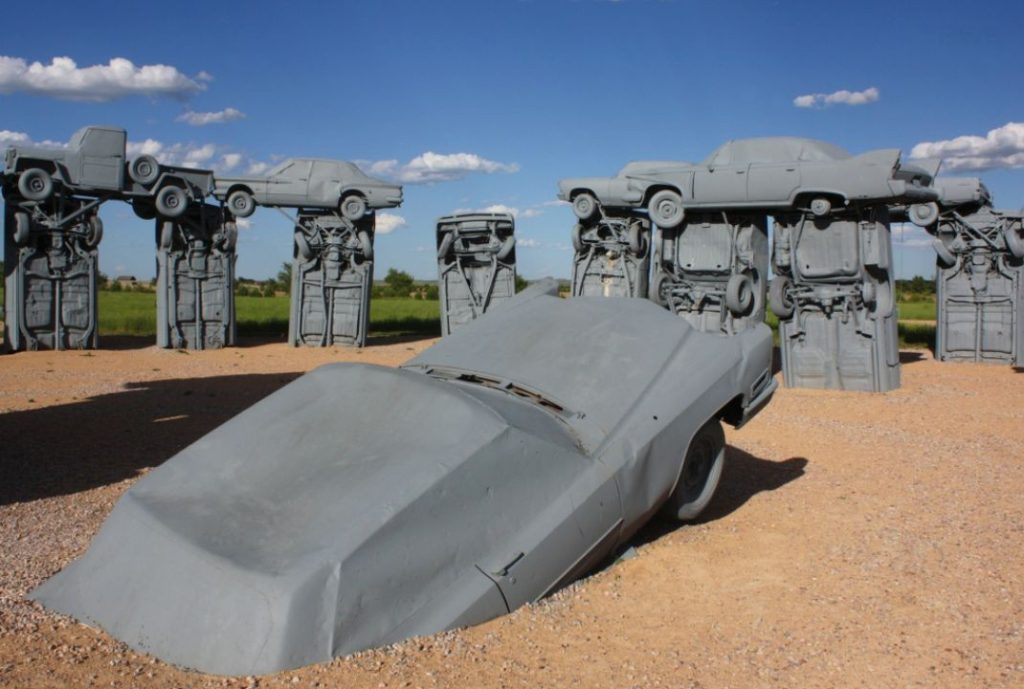
Carhenge takes an ancient silhouette and rebuilds it with prairie humor and real precision. Built in 1987 by Jim Reinders near Alliance, it arranges 39 automobiles to mirror Stonehenge proportions in a circle about 96 feet wide. Gray paint unifies the whole composition, so shape comes first and car details arrive a beat later.
What stays with travelers is the balance of absurdity and discipline. People laugh, then linger, because the monument feels intentional instead of random. In a landscape defined by distance, Carhenge shows how local imagination can turn scrap into a destination that keeps drawing traffic decade after decade.
The Enchanted Highway, North Dakota
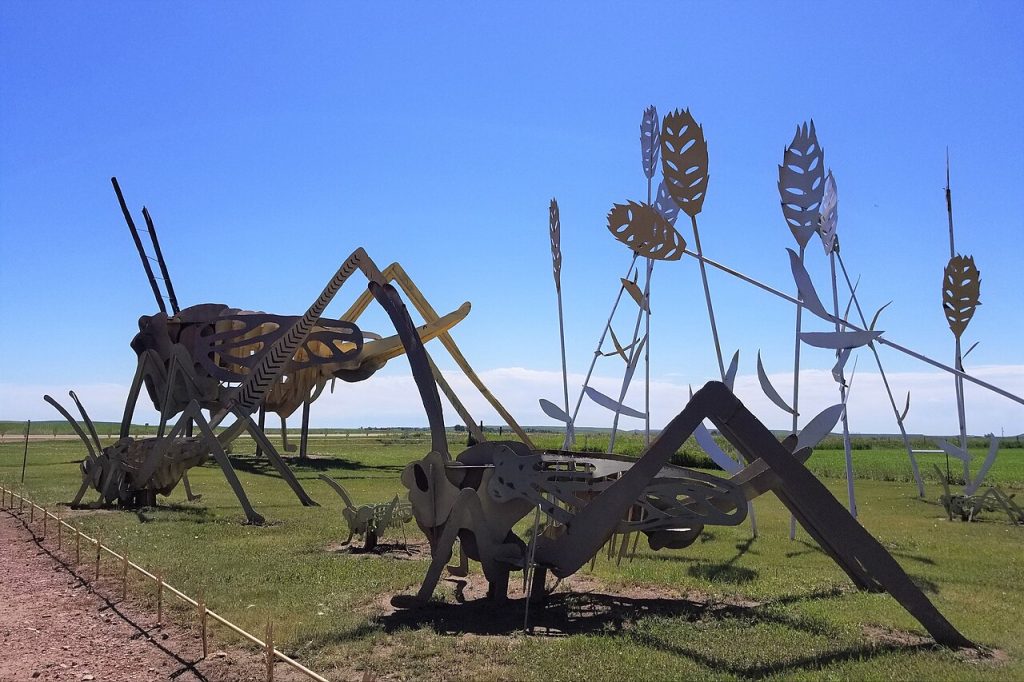
The Enchanted Highway is less one attraction and more a full driving narrative. From the I-94 area near Gladstone to Regent, it is widely described as a 32-mile corridor lined with giant scrap metal sculptures created by Gary Greff. Wide pullouts at each piece let people pause, breathe, and continue without rush while still seeing every stop clearly.
Its deeper logic is economic as well as artistic. Greff began the project to pull visitors back toward a town losing people and business. That purpose is still visible today: every sculpture reads like a handmade welcome sign stretched across prairie miles, practical hope welded into steel.
Blue Whale of Catoosa, Oklahoma
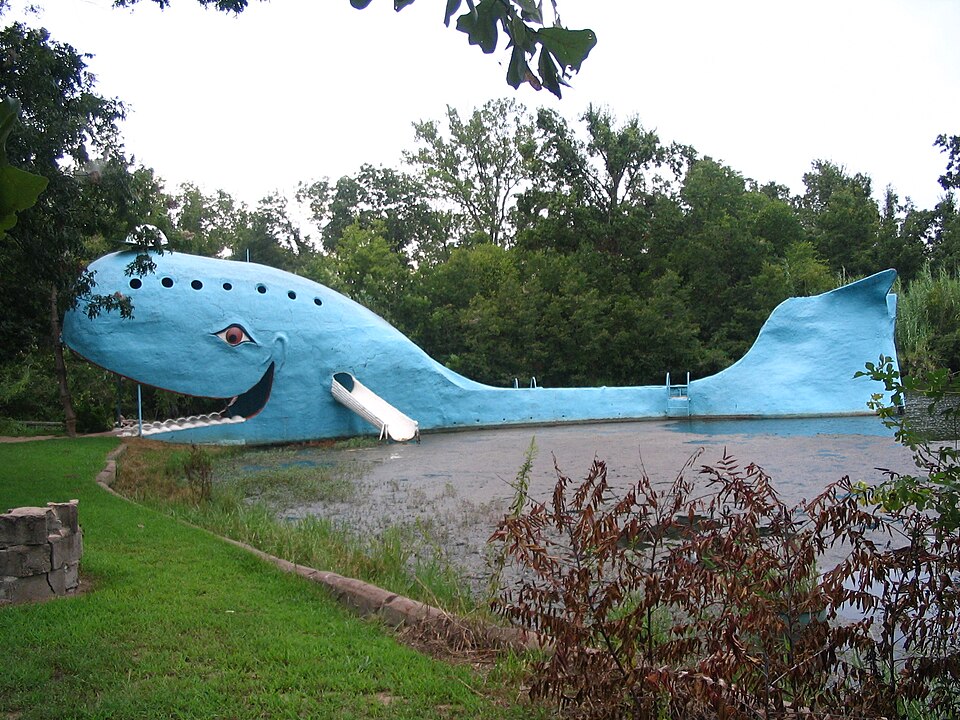
The Blue Whale of Catoosa remains one of Route 66’s most recognizable surprises. City history credits Hugh S. Davis with creating it as a family swimming spot, and the structure grew into a landmark around 20 feet tall and 80 feet long. Its bright color and pond setting offer a gentle pause after long, repetitive highway stretches.
The appeal is more than novelty. It began as a personal labor of affection, then became a shared memory marker for generations of road travelers. That origin still comes through, which is why the site feels warm and sincere instead of ironic even in an age built on quick content and constant scrolling.
Corn Palace, Mitchell, South Dakota
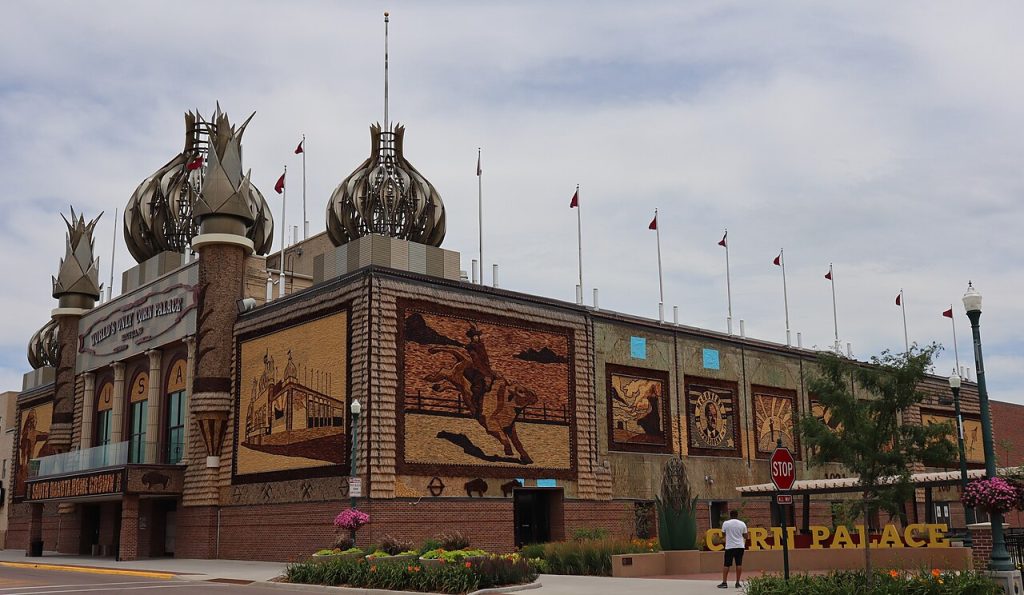
Mitchell’s Corn Palace sounds exaggerated until the facade appears in full view. Official history notes that exterior murals are stripped and rebuilt with crop materials, and the venue still hosts community events. That mix makes it both roadside oddity and active civic space, not a relic held in place by nostalgia alone.
Its visual language is deeply regional. Corn, grain, and seasonal color are treated as architecture, not simple decoration, tying the building directly to South Dakota farm identity. Travelers get spectacle, but the stronger impression is local pride expressed in public and renewed again and again, season after season.
World’s Largest Ball of Twine, Cawker City, Kansas
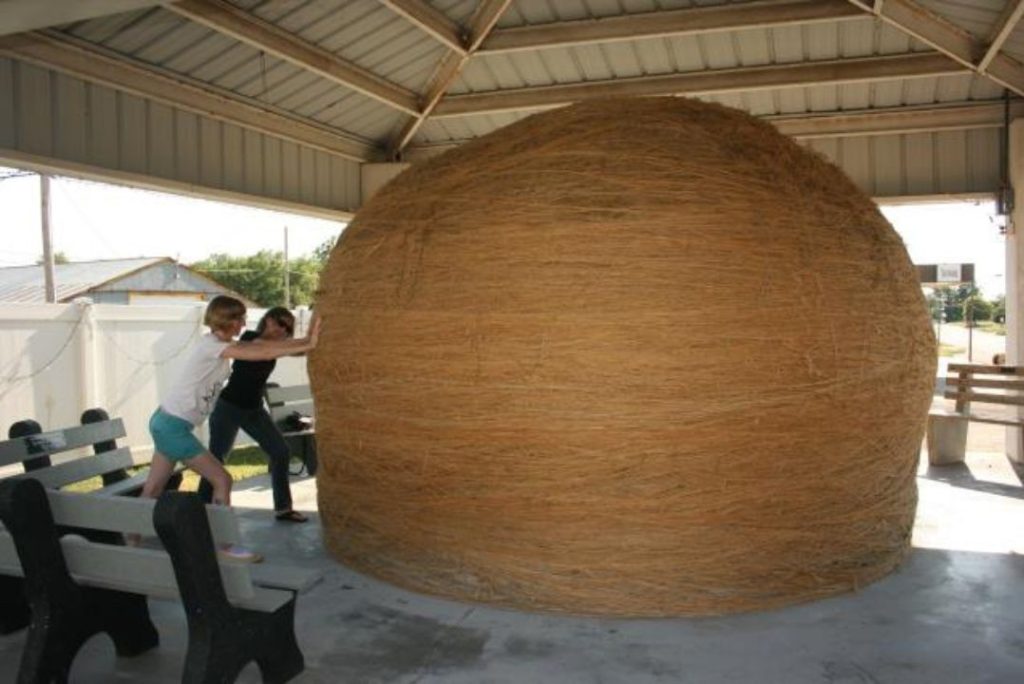
Cawker City’s twine ball endures because it functions as a community ritual, not a one-time stunt. Kansas tourism listings describe a landmark with 40-foot circumference, 17,320 pounds, and more than 7.9 million feet of sisal. Those numbers are impressive, but the bigger story is that locals keep adding to it over time.
That shared upkeep changes the tone of the stop. Instead of viewing a finished object behind a barrier, travelers encounter a living project shaped by repeated participation. On long highway days, it lands as more than roadside humor. It becomes proof that small towns can build lasting symbols through steady effort.
The Big Easel, Goodland, Kansas
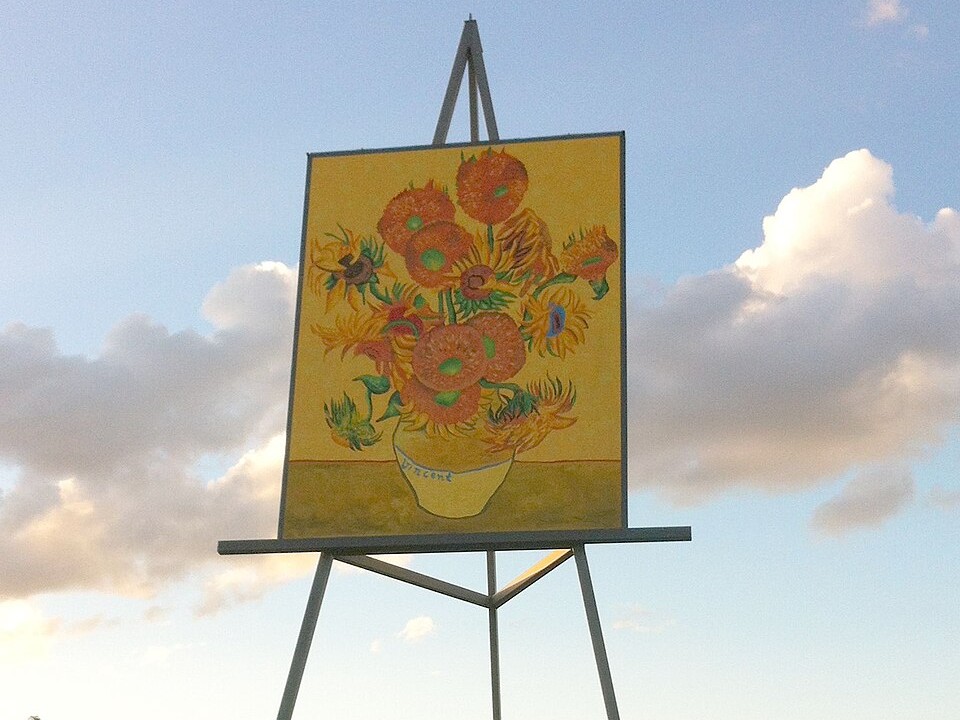
Goodland’s Big Easel delivers scale with zero apology. Kansas travel records describe a 24-by-32-foot Van Gogh sunflower reproduction mounted on an 80-foot easel weighing about 40,000 pounds, installed in 2001. Rising above Pioneer Park, it creates a clean visual jolt for travelers crossing western Kansas by highway.
The work succeeds because it commits fully to its concept. Art history, roadside culture, and open prairie meet in one frame without overexplaining itself. From a distance it reads bold and playful. Up close, structural detail and shadow make it feel unexpectedly elegant, especially when late light sharpens every line.
Cabazon Dinosaurs, Cabazon, California
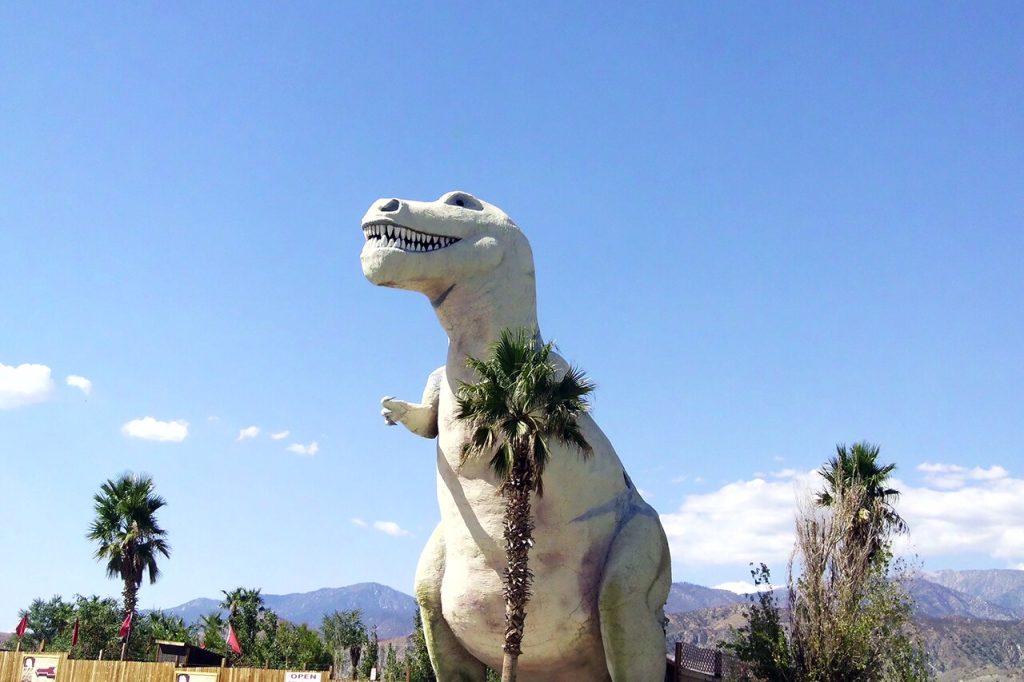
The Cabazon Dinosaurs remain a defining Interstate 10 landmark in Southern California. The site began with Claude Bell’s giant concrete figures, centered on Dinny and Mr. Rex, and now includes many additional dinosaurs across the attraction. Against desert hills and broad sky, the silhouettes create instant impact before the car exits.
Their staying power comes from continuity across generations. Families know the forms from road trips, movies, and repeat vacations, yet the place still feels current instead of frozen in nostalgia. It bridges kitsch and memory, turning a short detour into a shared reference point long after the drive ends.
Paul Bunyan and Babe, Bemidji, Minnesota
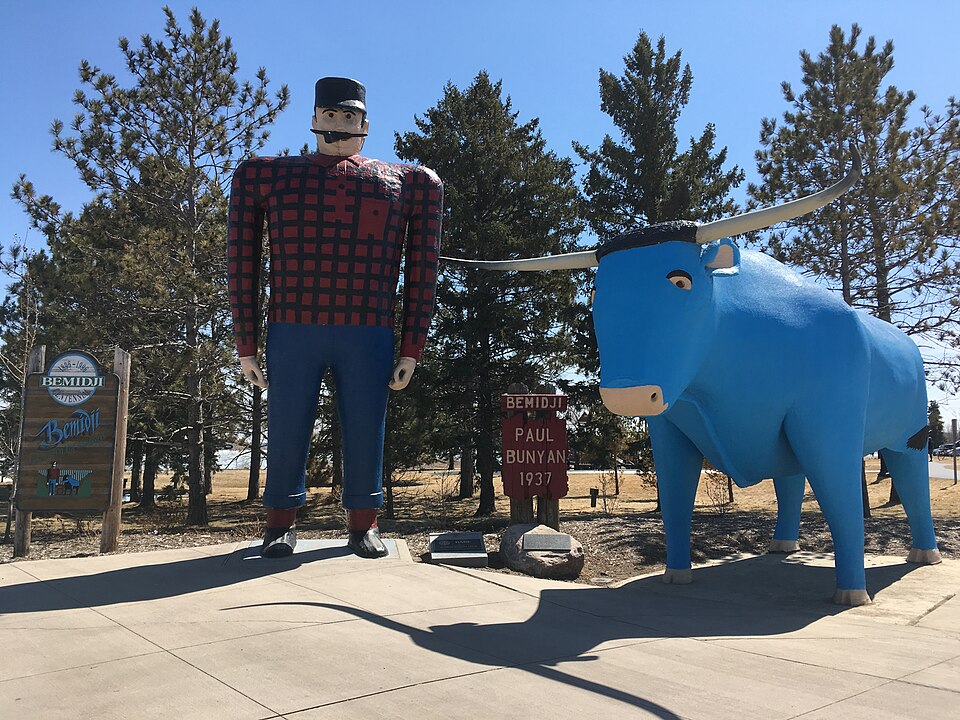
Bemidji’s Paul Bunyan and Babe statues were unveiled in 1937 during a civic tourism push linked to winter carnival culture and logging identity. They remain classic examples of early car-era roadside promotion, and their lakefront placement gives the figures local context instead of roadside randomness.
What makes the stop endure is the way scale meets story. Folk legend, working history, and community pride converge in one location that still anchors city identity. Visitors may arrive for a photo, then stay to absorb how towns used bold symbols to introduce themselves to passing traffic and visiting families each season.
Lucy the Elephant, Margate City, New Jersey
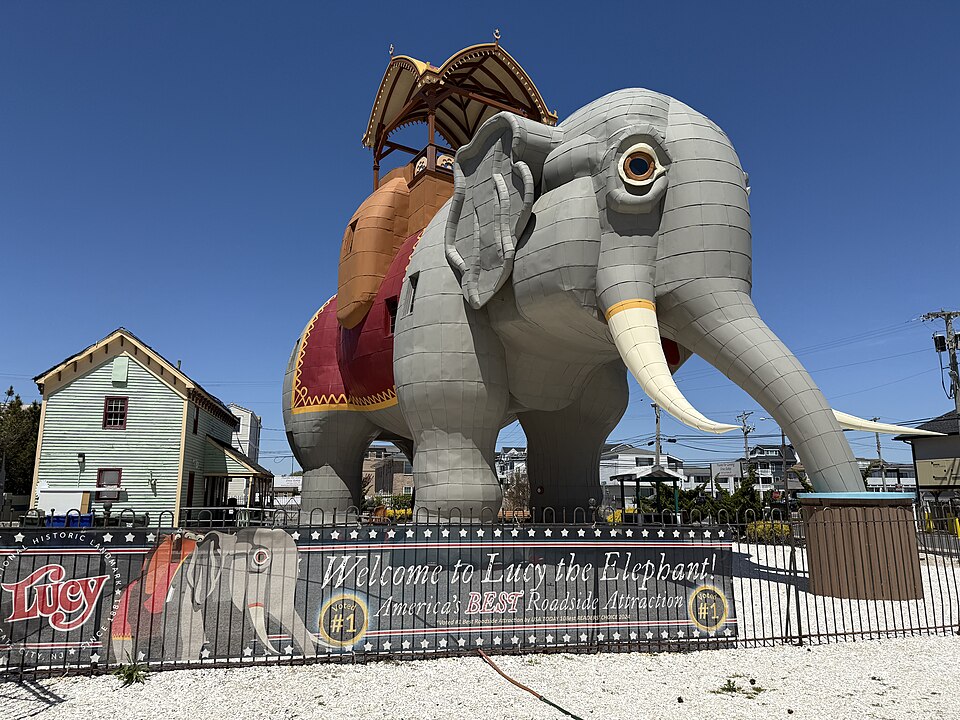
Lucy the Elephant has stood near the shore since 1881 and is presented by caretakers as a six-story National Historic Landmark. That survival is remarkable for a wood-frame novelty structure built to attract real-estate buyers in a coastal region. Today, Lucy functions as both public icon and preserved architecture.
Her impact goes beyond size. The structure represents a long restoration story powered by local fundraising, maintenance, and civic attachment across generations. What first reads as whimsy becomes practical heritage: a community repeatedly choosing to protect a singular landmark carrying place memory and shoreline identity.
Salvation Mountain, Niland, California
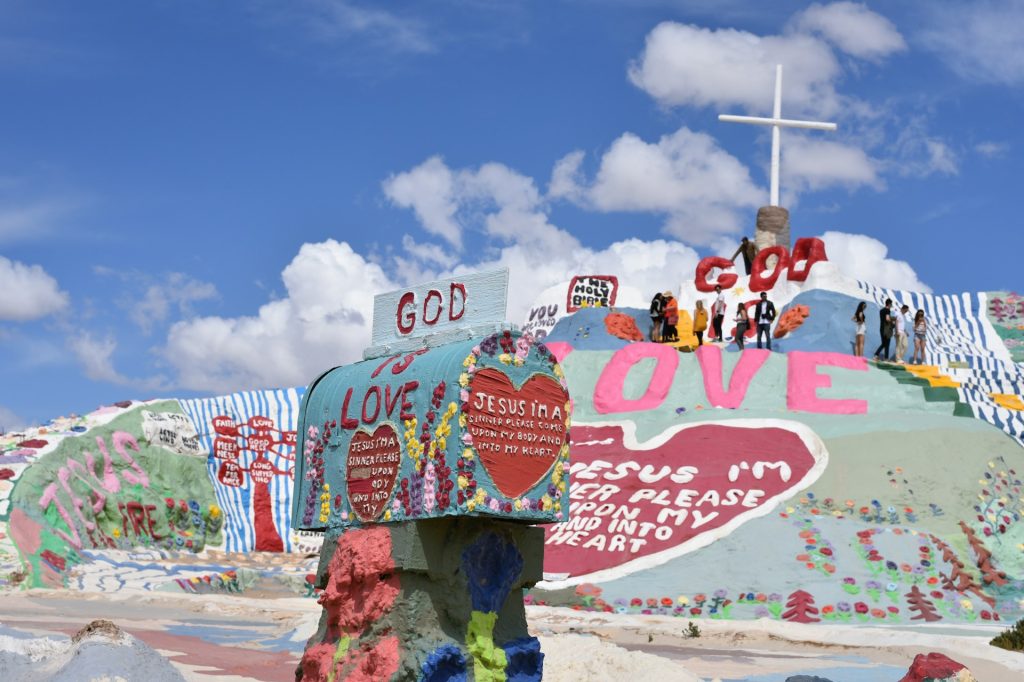
Salvation Mountain rises near Niland as a hand-built, brightly painted earthwork sustained by ongoing volunteer care. The organization overseeing the site states it is open sunrise to sunset every day and free to visit, with donations used for preservation. That framework keeps access open while recognizing maintenance demands in desert climate.
The feeling on site differs from commercial roadside attractions. Paint, adobe, weather, and human labor remain visible across every surface, so process is part of the artwork itself. Many travelers leave quieter because the place shows how personal vision can become shared landscape over time.