11 Strange Places Hidden in the U.S. Midwest Few Talk About
Midwestern strangeness rarely announces itself with neon. It sits between cornfields, river bluffs, and small towns that chose to build something wildly specific and keep it there. These stops are not theme parks. They are personal projects, ancient ground, and local curiosities that grew quietly, then stayed.
Interstates encourage speed, but these places reward the slower exits and the extra ten minutes. Each one offers a clean jolt of wonder: handmade stonework, odd roadside art, or landscapes shaped by people long gone. The best part is how normal life carries on around them, making the surprise land harder. Eyes stay open.
Grotto of the Redemption, Iowa
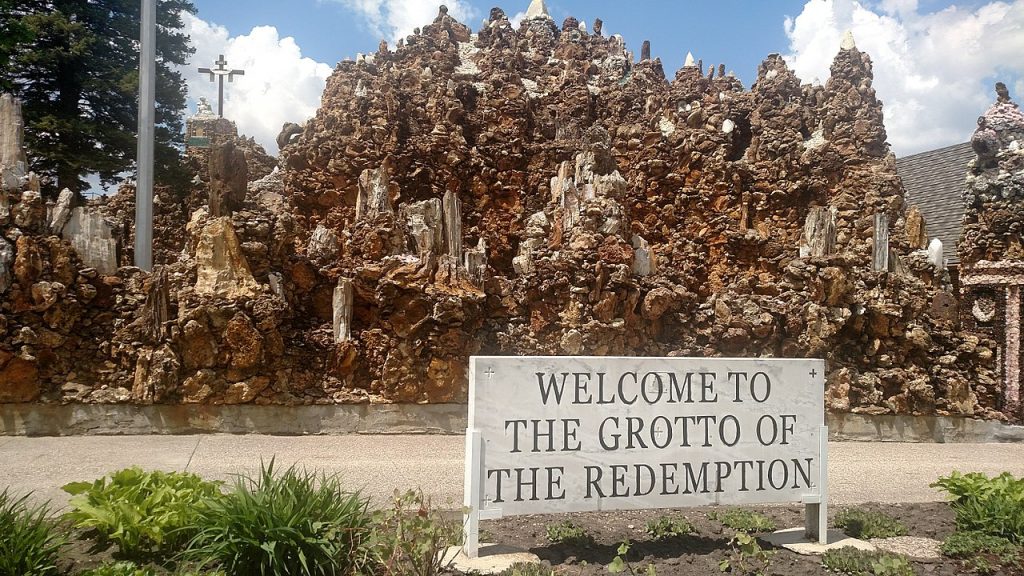
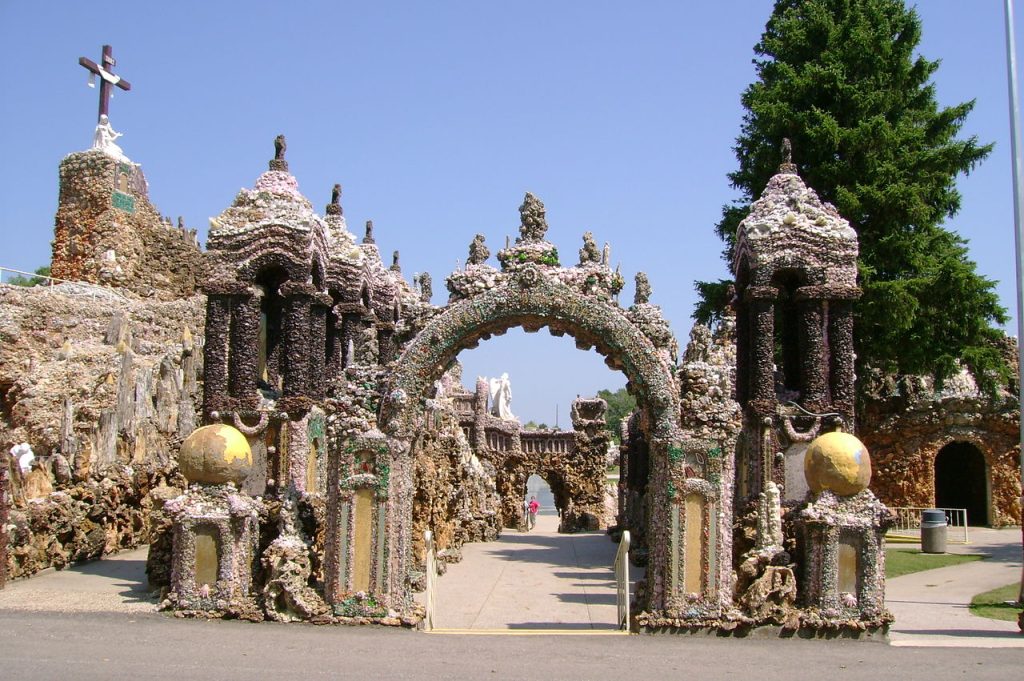
In West Bend, Iowa, the Grotto of the Redemption feels like a stone-built daydream, with nine grotto scenes formed from minerals, fossils, shells, and stained glass. Father Paul Dobberstein began the work in 1912, and the surfaces still shimmer as light catches geodes, polished rock, and tiny chips of color set into arches.
The paths stay calm because the detail slows everyone down. Benches and garden corners invite long pauses, not quick snapshots. It is less about spectacle and more about patience made visible, one small piece placed by hand until the whole grounds start to glow after rain or in bright sun, without hurry.
The Enchanted Highway, North Dakota
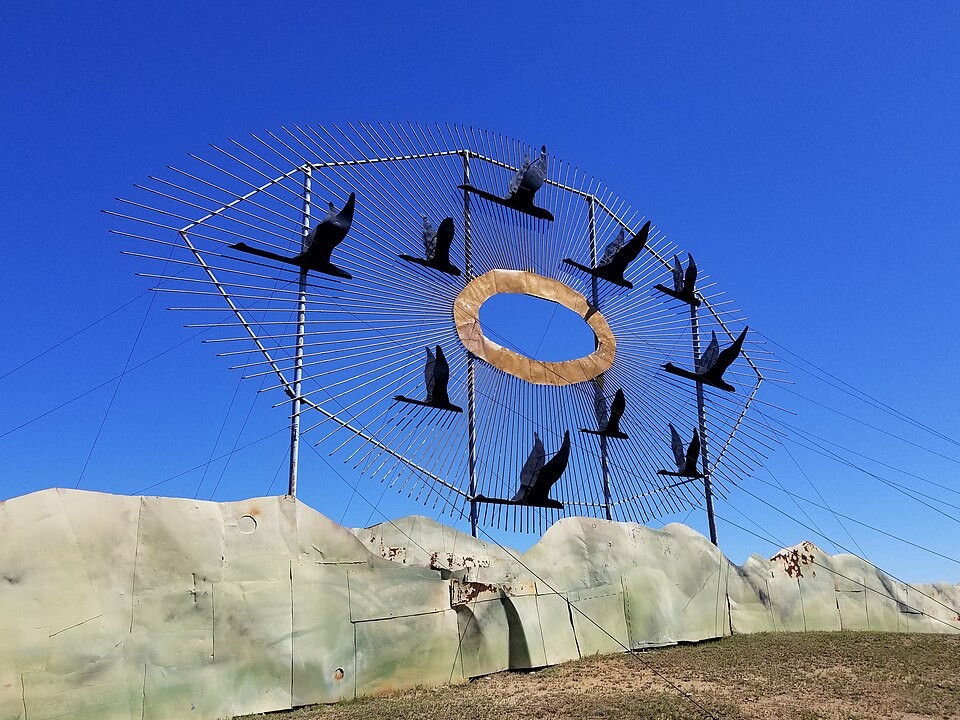
North Dakota’s Enchanted Highway turns a quiet drive into a roadside gallery, stretching about 32 miles along Highway 21 between I-94 and Regent. Giant scrap-metal sculptures appear at intervals, each with a pullout and a small kiosk, so the route becomes a series of short, easy stops instead of one long commitment. The first piece, “Geese in Flight,” can be seen from I-94.
The prairie backdrop does half the work. At sunset, steel silhouettes cut into a huge sky, and wind moves through open frames like a steady drumbeat. It feels playful, but also sincere, like a community decided art belongs out here, where the horizon is the main stage.
Carhenge, Nebraska
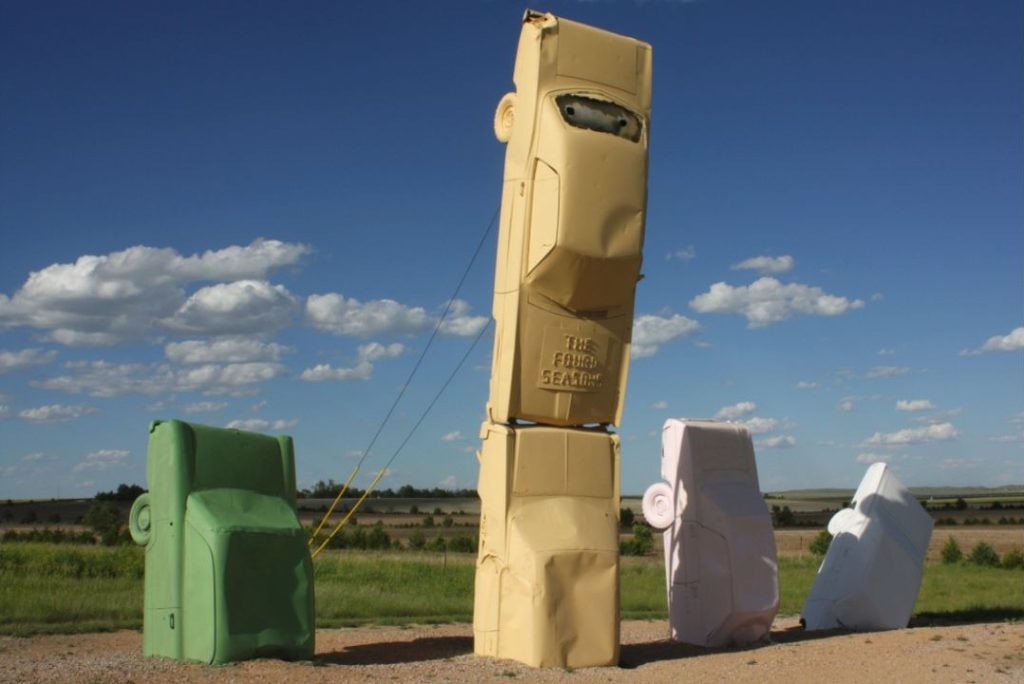
Carhenge, outside Alliance, Nebraska, is a prairie joke told with real care: 39 old cars stand nose-down in the ground, arranged in the same general proportions as Stonehenge. It was built in 1987 by Jim Reinders as a memorial to his father, and that mix of tribute and humor keeps it from feeling like a throwaway gag.
The empty land around it is part of the magic. Morning light makes long shadows between bumpers and hoods, and the wind moves through frames like it does through standing stones, especially at sunrise. The site is open from dawn to dusk, and people arrive smiling, then linger once the geometry turns peaceful.
Rock City, Kansas
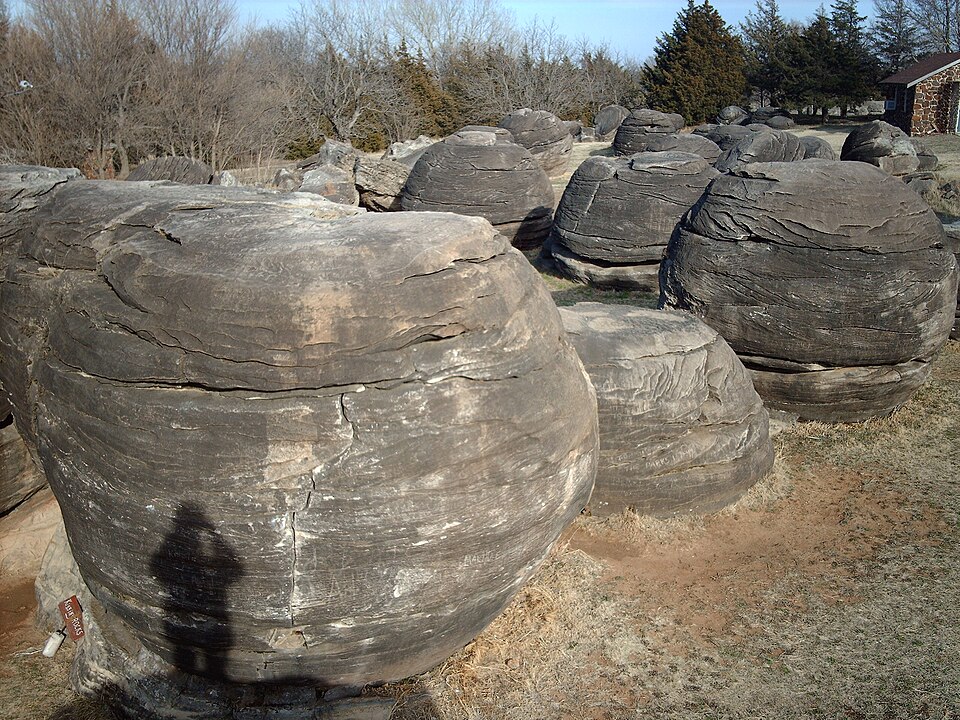
Rock City, south of Minneapolis, Kansas, looks like nature dropped a field of stone cannonballs into prairie grass and walked away. The park holds roughly 200 rounded sandstone concretions, scattered in clusters across a small pasture. Some are wide enough to feel like little rooms, and the roundness keeps tricking the eye from every angle. It is a National Natural Landmark.
The surprise is how quiet it feels. With no skyline and few distractions, shape and shadow take over. Climbing is allowed in many spots, and the viewpoint changes with every step. Late-day light turns the boulders golden, making the place feel briefly unreal.
Garden of Eden, Kansas
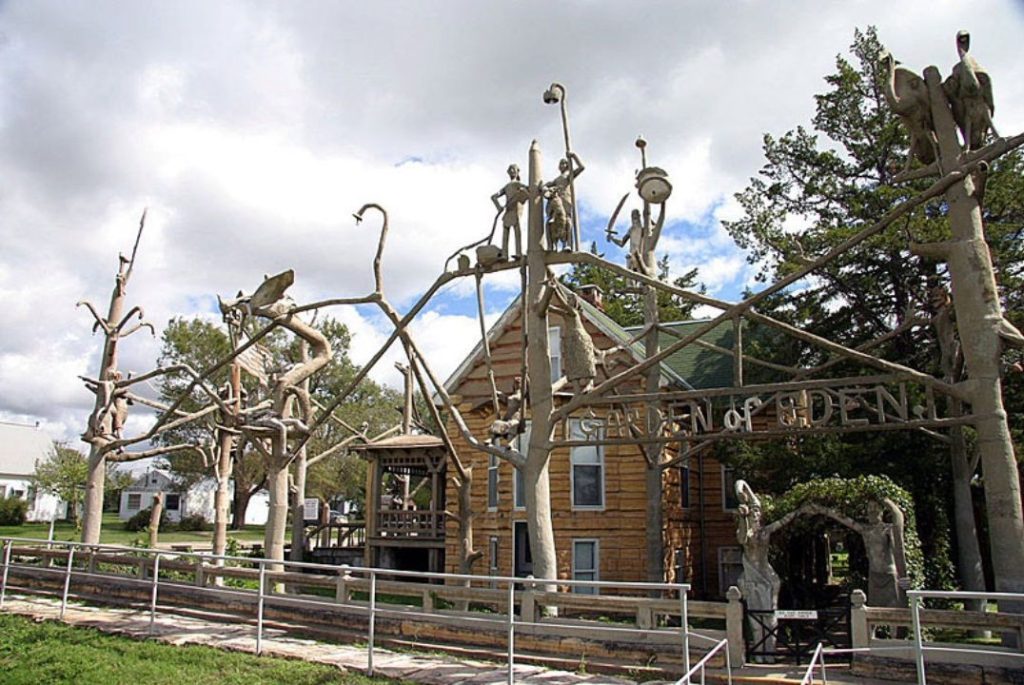
Lucas, Kansas, hides a stubborn backyard vision called the Garden of Eden, built by Samuel P. Dinsmoor in the early 1900s. A concrete-log house sits inside a yard of sculpted scenes that mix religion, politics, and blunt folk storytelling. More than 200 concrete figures crowd the space, like a life’s argument poured into cement and left in the open air.
Nothing here tries to be polite. The forms are rough, direct, and sometimes dryly funny, like a sermon delivered by someone who refuses to whisper. That honesty lingers. In warm prairie light, the concrete takes on a soft glow, and the whole yard feels strangely alive at dusk.
Dr. Evermor’s Forevertron, Wisconsin
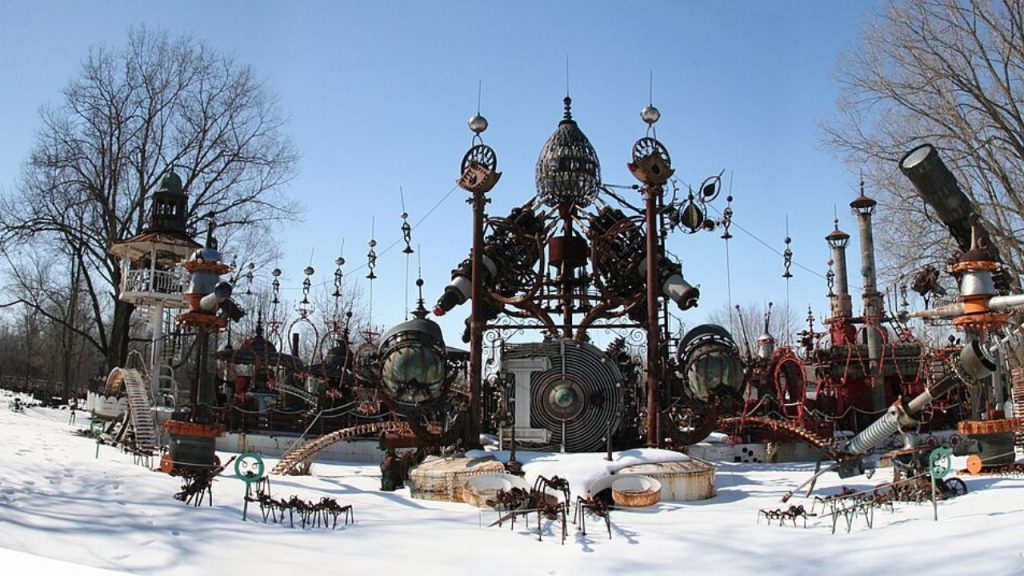
Dr. Evermor’s Forevertron, near Sumpter, Wisconsin, rises from salvaged industrial parts into a towering machine-like sculpture. It stands about 50 feet tall and 120 feet wide, built in the 1980s as the centerpiece of a roadside art park. Coils, pipes, bells, and dynamos stack into a structure that looks ready to spark into motion.
The fun is in the details. Antique metalwork sits beside heavy machinery with theatrical confidence, and the surrounding grounds are filled with smaller inventions. Visitors drift slowly, spotting new pieces at every angle. It feels like a comic-book device parked in a field, grand but oddly relaxed.
Cahokia Mounds, Illinois
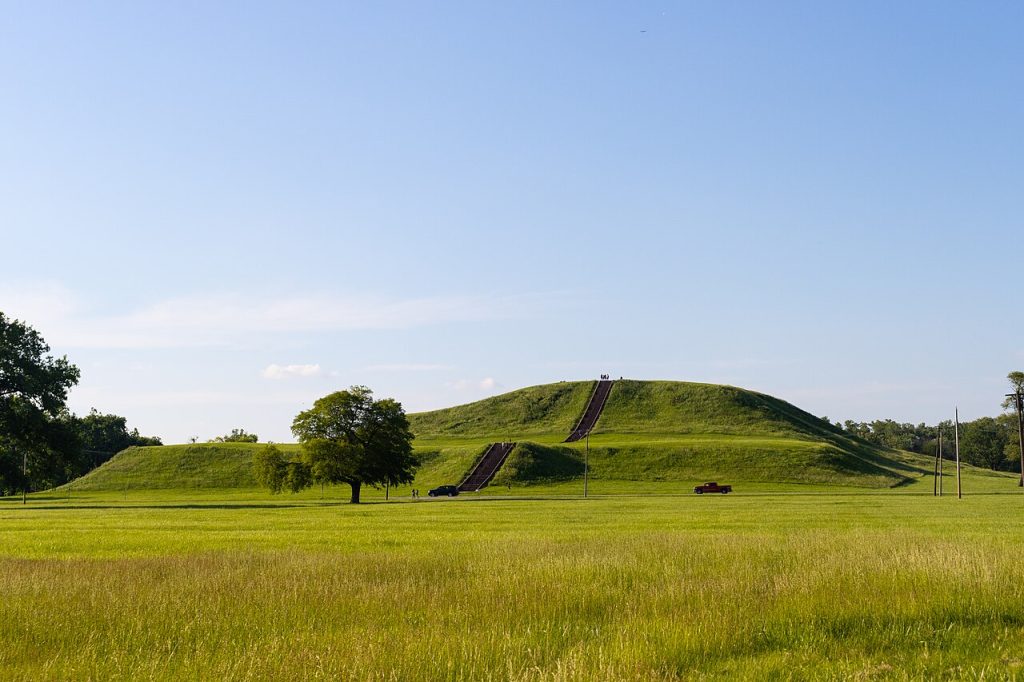
Near Collinsville, Illinois, Cahokia Mounds holds the footprint of a pre-Columbian city and is recognized as a UNESCO World Heritage site. At its peak around 1100, it spread across thousands of acres with many mounds and public spaces. Monks Mound rises in four terraces to about 30 meters, turning flat ground into something that reads as quietly monumental once the climb begins.
The strangeness comes from contrast, not noise. Cars pass nearby, yet the site feels older than the modern map around it. Walking the paths can make time feel thin, as if a missing city still presses upward through grass, sky, and the steady outlines of earthworks.
Effigy Mounds National Monument, Iowa
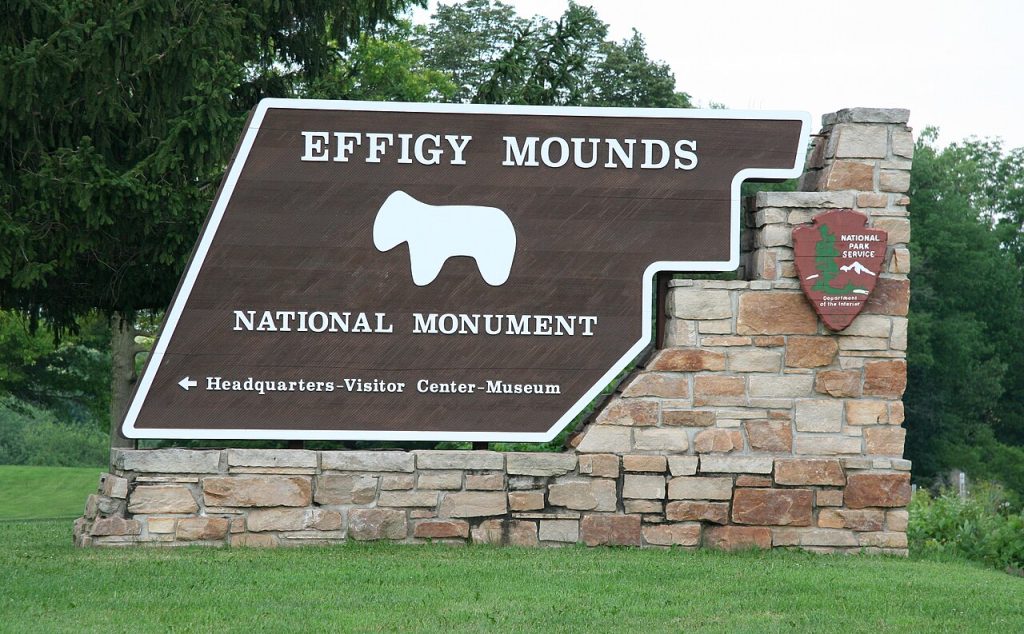
Effigy Mounds National Monument in northeastern Iowa preserves more than 200 earthen mounds, including animal-shaped forms like bears and birds. Set above the Upper Mississippi River Valley, the trails move through woods and bluff edges where the landscape feels both gentle and deliberate. Shapes appear in the ground like signals, not monuments.
Nothing towers, yet the outlines hold attention longer than many bigger attractions. The mounds do not shout for photos. They ask for a calm pace and a longer look. In morning mist, the river below turns silver, and the effigies feel less like artifacts and more like memory held in soil.
National Mustard Museum, Wisconsin
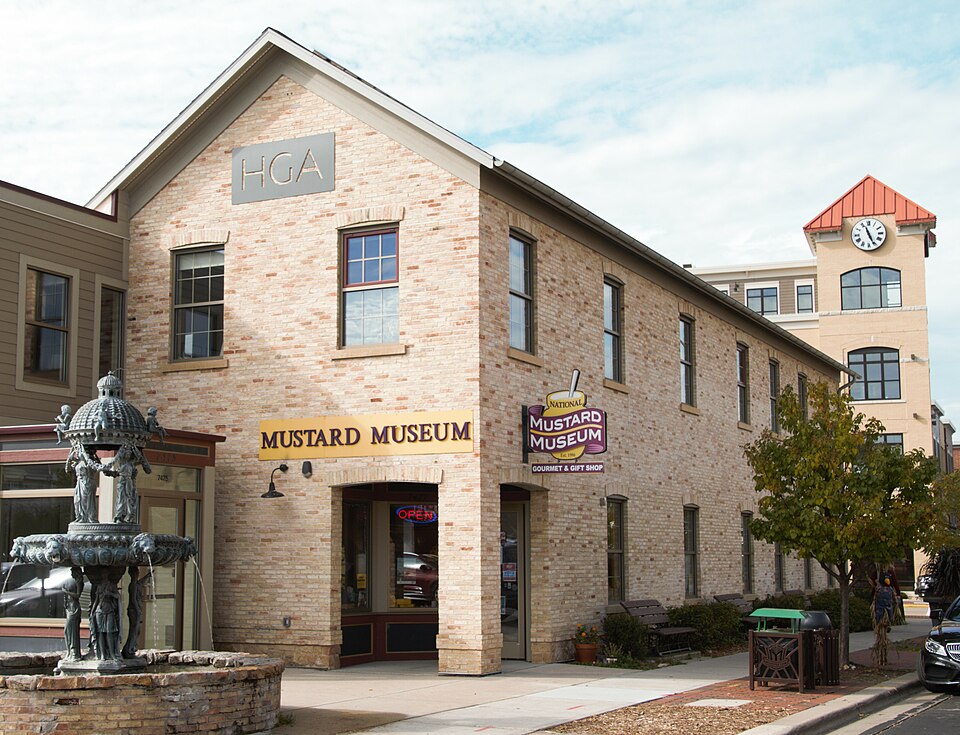
Middleton, Wisconsin, hosts the National Mustard Museum, a place so specific it becomes charming on contact. Founded in 1992, it holds thousands of mustards from all 50 states and more than 70 countries, with labels, tins, and odd flavors lined up like tiny time capsules. The collection turns one condiment into a surprising map of taste and branding.
Admission is free, and the mood stays light without being silly. People arrive amused, then linger over vintage packaging and regional styles. Some visit for the humor, others for culinary curiosity, but most leave impressed by how much history can hide inside a small jar on a simple shelf.
House on the Rock, Wisconsin
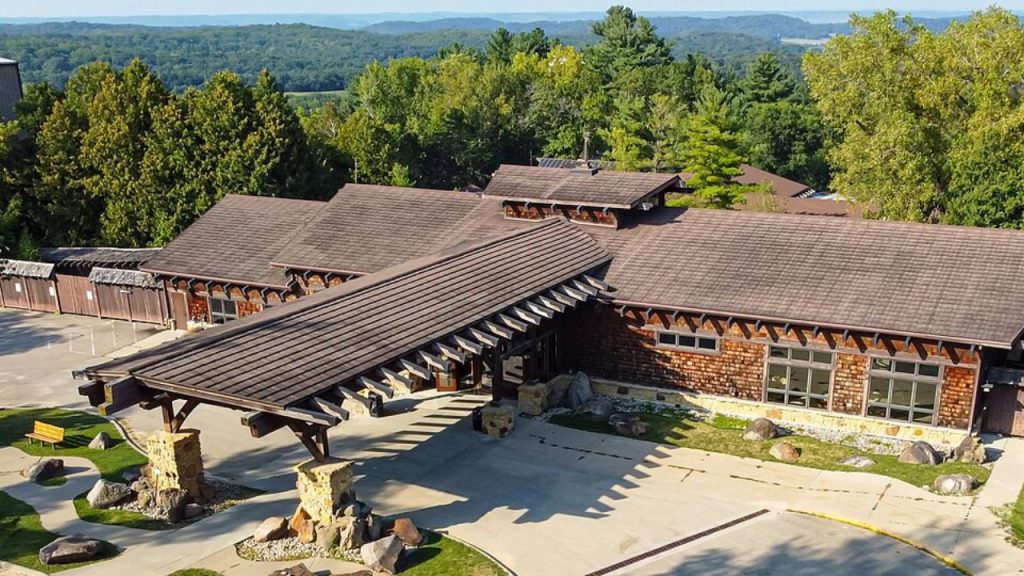
Near Spring Green, Wisconsin, the House on the Rock begins as a home built atop a chimney of rock, then expands into a maze of oversized collections and strange rooms. Its creator, Alex Jordan, opened it to the public in 1960, and the place still feels like a private obsession made walkable, with scale that keeps tipping past what seems reasonable.
Scenes shift from elegant to surreal with almost no warning. The famous Infinity Room projects outward, creating a floating sense of space over the valley. Music, mirrors, and long corridors push time out of shape. Visitors stop trying to explain it and simply accept the ride, step by step.
The Corn Palace, South Dakota
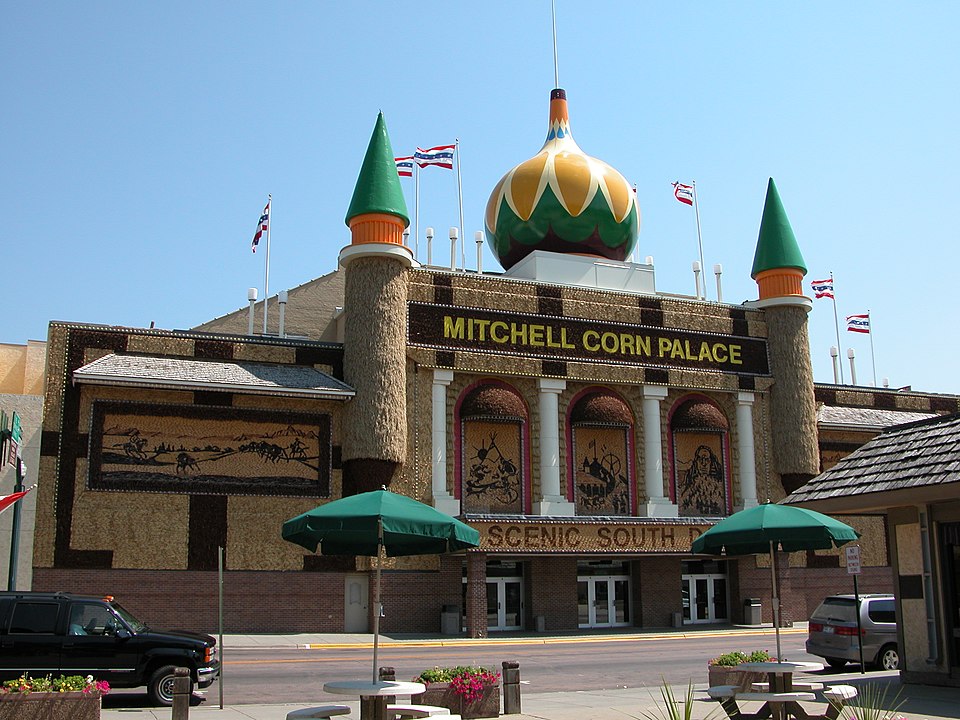
Mitchell, South Dakota, has a civic building dressed in crops: the Corn Palace, redecorated each year with naturally colored corn, grains, and grasses. A new theme guides the exterior murals, and the work is done ear by ear, turning farm materials into public art that changes with the seasons while the town keeps showing up to do it.
The best part is the confidence behind it. The building is earnest, a little theatrical, and oddly comforting after long miles of highway. In peak summer, the colors feel bright and fresh. Even in winter, some decoration still remains, like a reminder that the region’s creativity is patient, too.