12 Southwest Arroyos Flash-Flood Without Warning
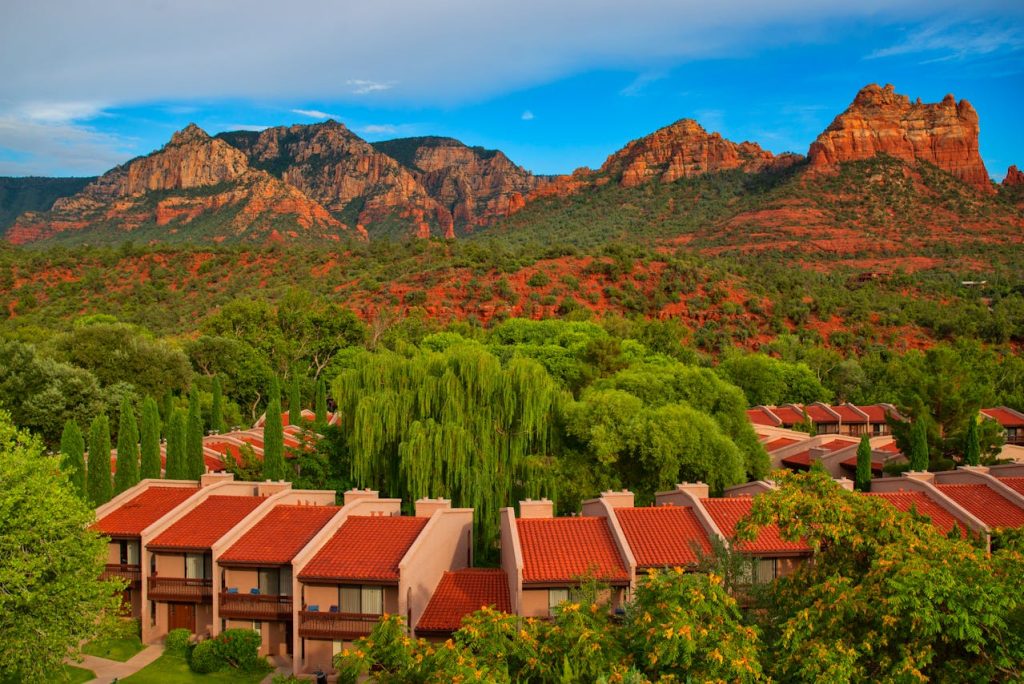
Summer in the Southwest can make dry channels feel trustworthy, like sand has decided to stay put.
Monsoon storms undo that certainty by dropping rain on distant mesas while a wash nearby stays sunlit. Runoff gathers on clay and slickrock, then arrives as a quick brown push that carries grit, twigs, and a sharp wet-dust smell. The shift can happen between one footstep and the next.
Locals watch the horizon, not just the sky overhead, and treat every arroyo as temporary ground. They notice burn scars, fresh debris lines, and the way wind steers clouds into the same drainages. When the sound in the channel changes, plans change with it.
Tucson Rillito Wash, Arizona
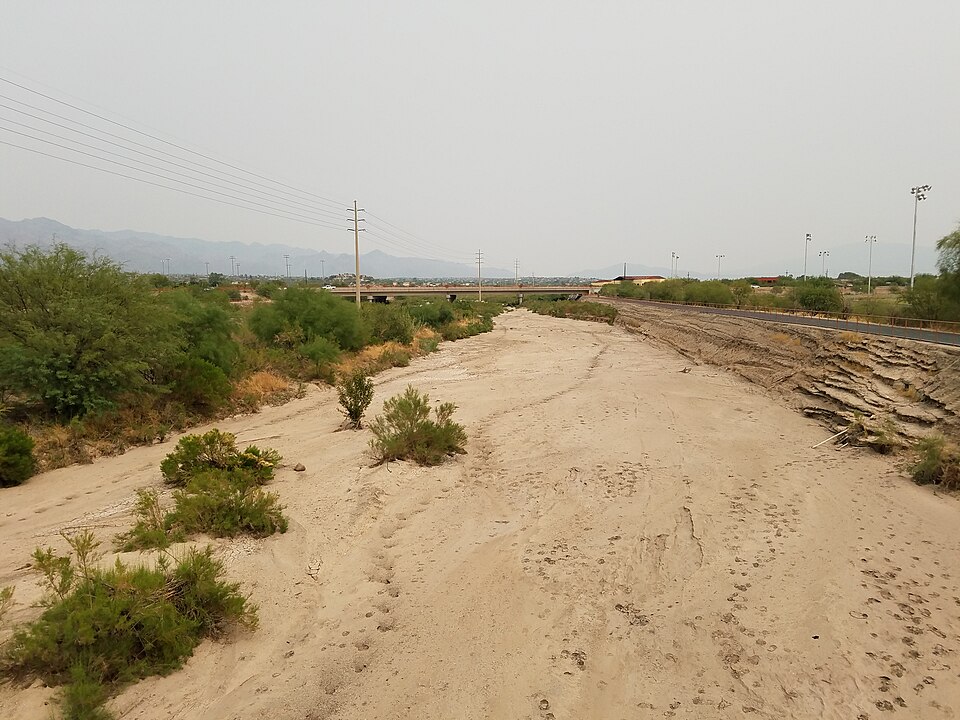
Sun can still sit over midtown Tucson while monsoon rain works the Catalina foothills, feeding the Rillito from upstream.
The sand starts to darken in streaks, then a muddy pulse slides in with foam, pebbles, and snapped reeds. Concrete banks speed the flow, and low underpasses collect thin sheets that look harmless until they tug at ankles and hide the real edge. A sharp creosote-and-dust smell rides the breeze, and the sound changes from scattered trickles to one continuous rush. Regulars watch distant rain curtains and wait out the lull, because later pulses often arrive higher and faster than the first, late in the hour.
Phoenix Indian Bend Wash, Arizona
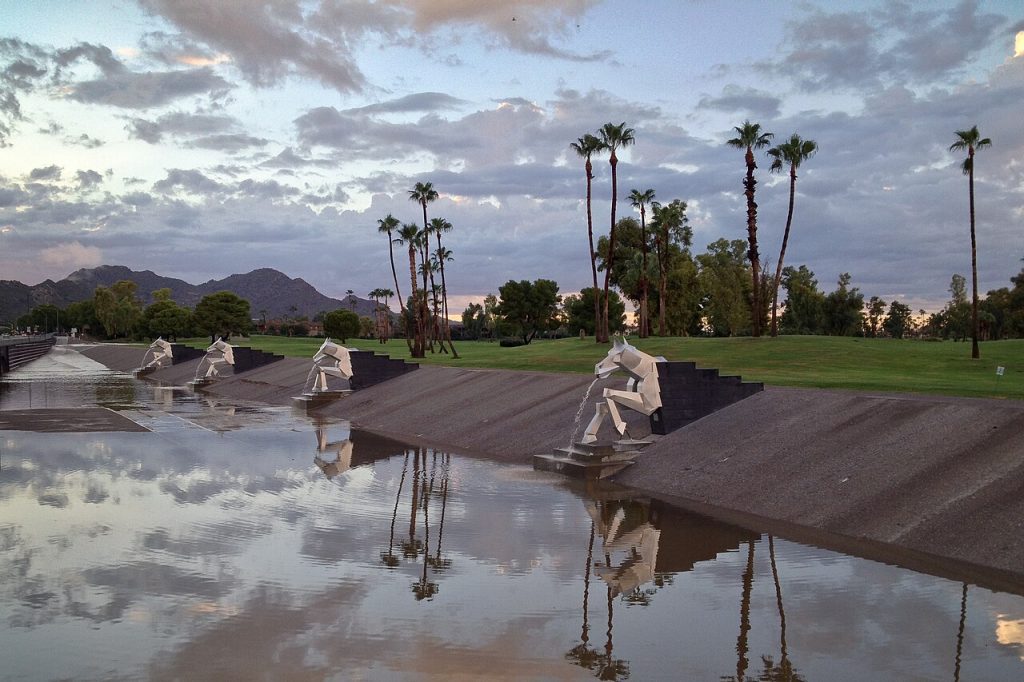
Indian Bend Wash looks like an easy green ribbon most days, which is why runoff feels abrupt when storms hit the north and east Valley.
A microburst over the McDowells can send water sheeting into the channel while nearby streets stay dry. Underpasses fill first, then the flow gathers speed under bridges, carrying palm fronds and street litter that snag at tight spots. When a small jam forms, the next pulse spreads wider across paths and turf, and the wash stops feeling like a park. Cyclists turn back, dogs get leashed, and the water keeps moving with calm force. The first warning is often a roar under concrete, not a raindrop overhead.
Albuquerque Arroyo Del Oso, New Mexico
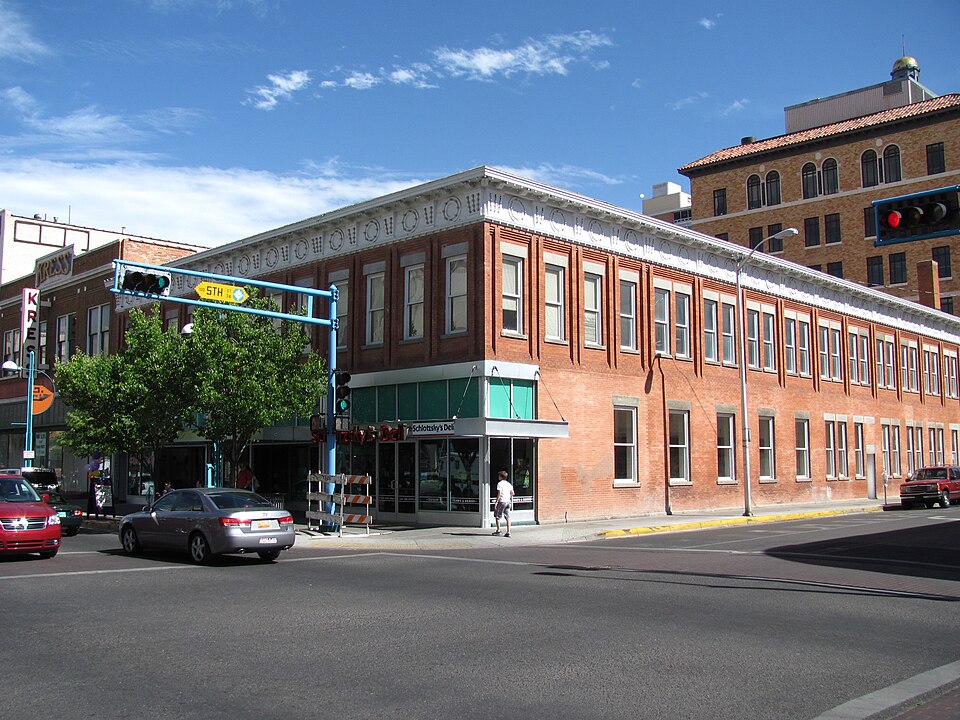
Albuquerque arroyos drain hard-packed ground that sheds water quickly, so a short storm on the Sandia side can start a rush downstream.
Arroyo del Oso speeds that runoff through long concrete reaches. The first surge often carries sand, tumbleweeds, and windblown trash that stacks at culverts, pushing shallow sheets onto nearby paths. Air cools and smells like wet cottonwood bark by the crossings. Water color deepens as more drainages connect, and the sound shifts from a scrape to a steady roar in minutes. Locals pause on higher banks and wait through the quiet gap, because a later pulse can arrive with more grit and a sharper push.
Santa Fe Arroyo Hondo, New Mexico
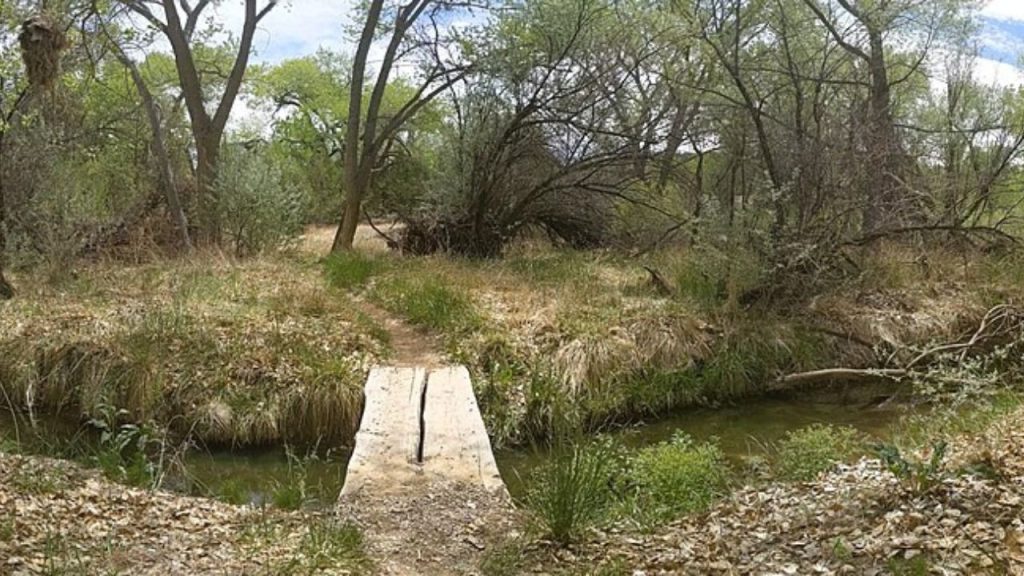
Santa Fe storms can be intensely local, and Arroyo Hondo can carry runoff from one ridge neighborhood into another canyon reach without much warning.
After dry spells, the first flow runs thick with fine sediment, turning the channel into a brown slurry that blurs the true edge. Narrow bends collect sticks and gravel, and a small jam can push water onto banks and across casual footpaths. If a burn scar sits upstream, pulses arrive darker and more loaded, with an ash note in the wet clay smell. People who know the arroyo listen for that low rumble. The lull between surges misleads, because it can feel like an ending when it is only a pause.
Las Vegas Wash, Nevada
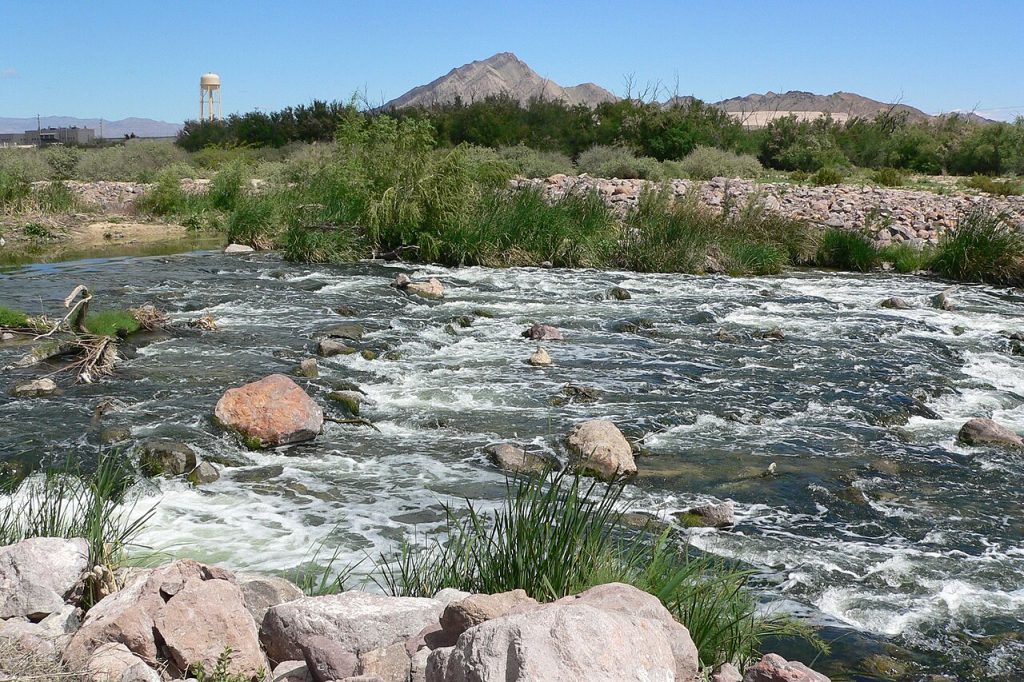
Las Vegas is built around washes, and summer storms on the valley edges or the Spring Mountains can turn the Las Vegas Wash into a fast conveyor.
Runoff spreads across gravel shoulders and service roads, carrying grit that makes shallow flow feel pushy and uneven. Underpasses fill first, and storm drains can surge hard enough to back water into low spots near trails. Thunder may be miles away, yet the channel grows louder. When windblown palm fronds and plastic snag at pinch points, the next pulse spreads wider than expected. The surprise is speed: a dip that looked safely paved a minute earlier becomes the lowest point in the whole system.
Anza-Borrego Desert Washes, California
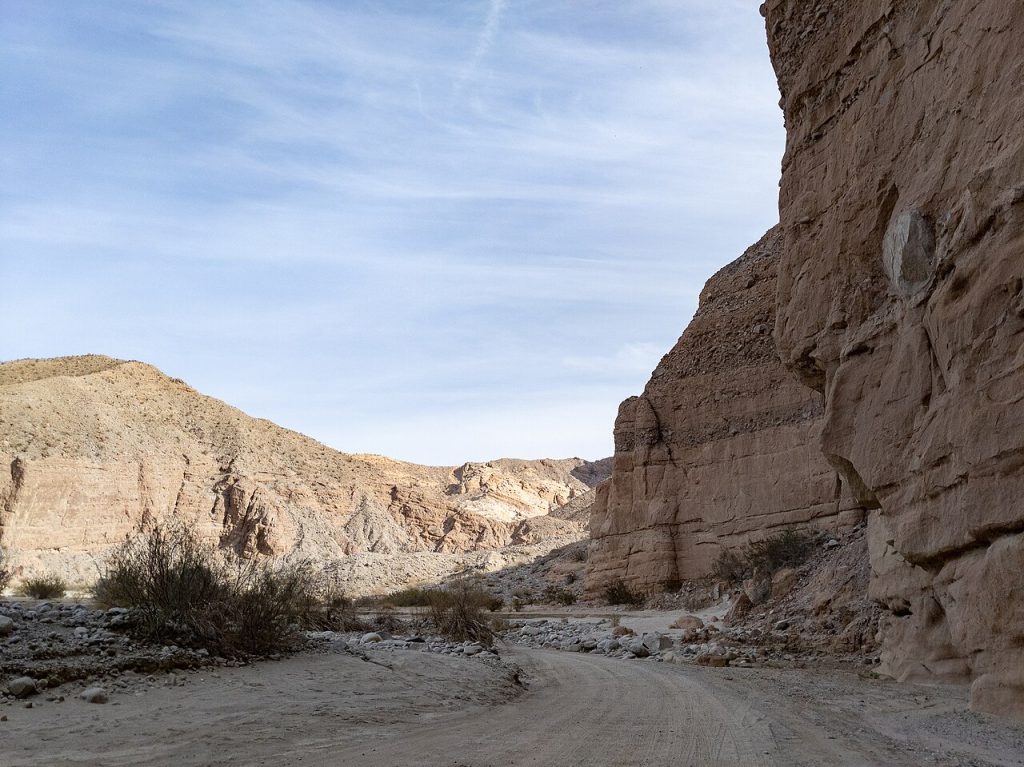
Anza-Borrego can feel empty and still, then a storm over the surrounding ranges sends water into sandy washes out on the flats with no rain falling nearby.
The first wave carries pebbles and sticks that rattle along the bottom, and braided channels let water jump sideways into fresh grooves. A route that looked obvious can vanish as the wash redraws itself, leaving new ripples and small cutbanks in minutes. Even modest flow undercuts a bank and turns footprints to paste, so people pause on higher benches and watch for debris lines climbing. When the channel finally quiets, it looks familiar again, but the map has changed.
Death Valley Furnace Creek Wash, California
Death Valley’s wide views hide how efficiently water concentrates, and Furnace Creek Wash can wake up when rain hits the Panamints or the badlands.
Clay-hard slopes shed water instead of soaking it in. A modest surge rearranges gravel bars, erases tire tracks, and drops a fresh fan of stones where a crossing used to be. The first push is gritty and loud, then a pause follows that feels like relief. Heat rises off wet rock with a mineral smell, and the quiet can tempt movement too soon. Later pulses may arrive thicker with sediment as upstream drainages catch up, and the wash keeps working for hours after clouds fade away.
Zion Side Canyons, Utah
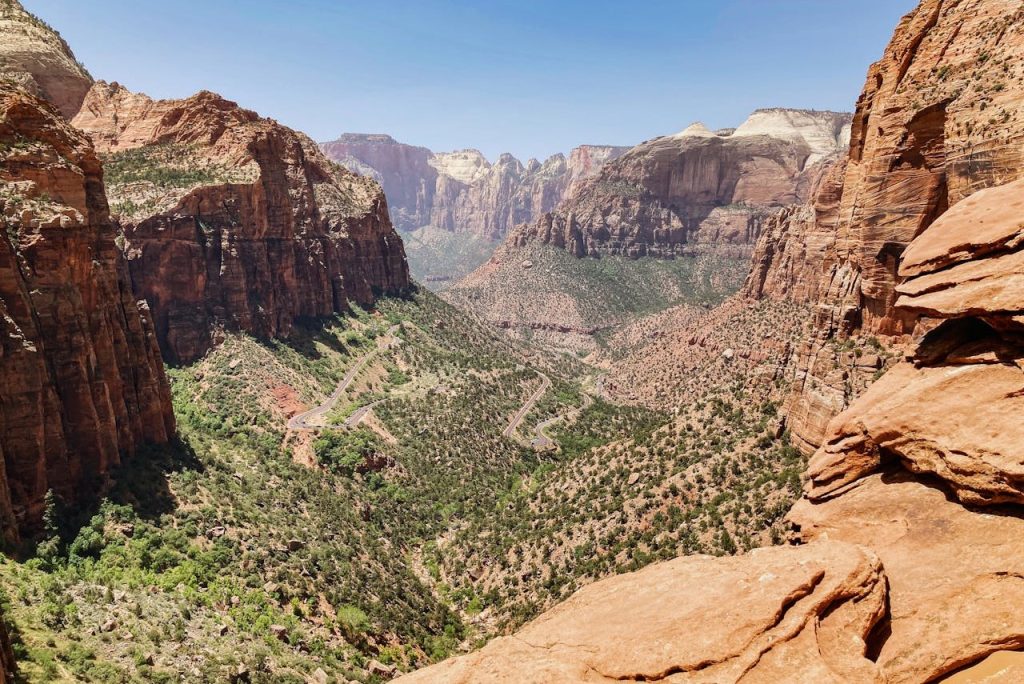
Zion’s side canyons behave like funnels, and rain miles beyond the rim can send fast-rising water through a slot that looked calm moments earlier.
Close walls hide the approach, then amplify it. Sand churned into the flow turns water opaque, and the current climbs smooth rock with few exits once it starts filling. A first pulse may carry pine needles and stones, then a second arrives stronger as more drainages connect. The sound changes first, from drip to a steady roar that echoes around bends. Rangers stress checking forecasts beyond the canyon, because a patch of blue sky inside a slot says little about what is falling upstream.
Capitol Reef Waterpocket Washes, Utah
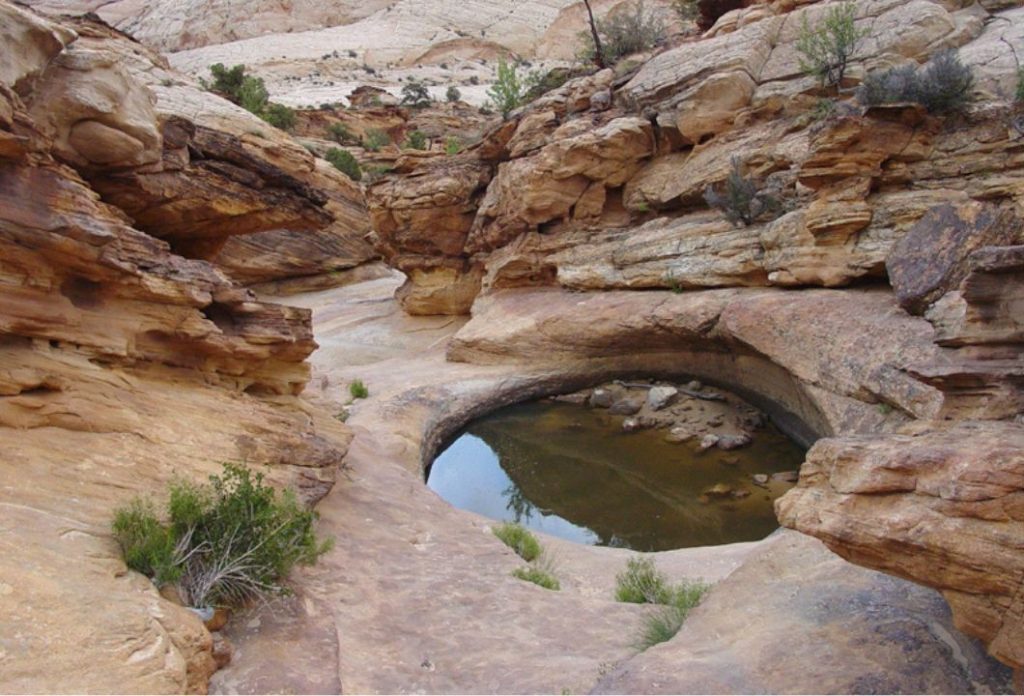
Capitol Reef’s Waterpocket Fold sheds rain quickly, and short, intense storms can send sudden flow into washes that looked like simple sand corridors.
Channels bend through cottonwoods, soft rock, and boulder gardens, and debris can jam at narrow points, forcing water onto banks and across trails. The flow often arrives in pulses, not one clean wave, so a brief lull can tempt movement back into the wash. Then the next surge arrives thicker, carrying fresh gravel and a louder rush as upstream basins catch up. Sandstone smells mineral sweet in the heat. Locals treat that pulsing rhythm as the real warning, more reliable than the sky overhead.
Moab Courthouse Wash, Utah
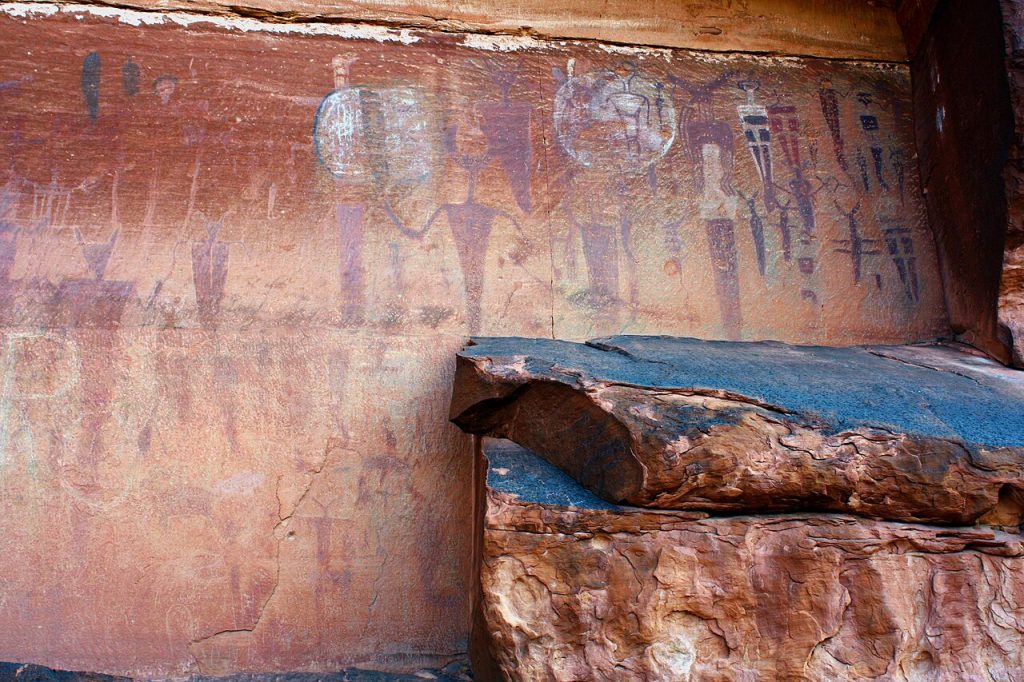
Moab slickrock absorbs very little, so storms on mesas and fins send runoff skimming across stone and dropping into Courthouse Wash with speed.
The current carries red mud and small pebbles that make footing feel uncertain, and shallow-looking water spreads wide across low spots. The deeper tongue of flow hides near the center, where the mud moves faster and pulls at loose gravel. When cells rebuild over the same ridge, the wash can rise, drop, then rise again, and that rhythm is what catches people off guard. Thunder echoes off fins, then fades, while water keeps arriving on schedule from upstream, pushing a fresh muddy edge forward.
Sedona Dry Creek Tributary Arroyos, Arizona
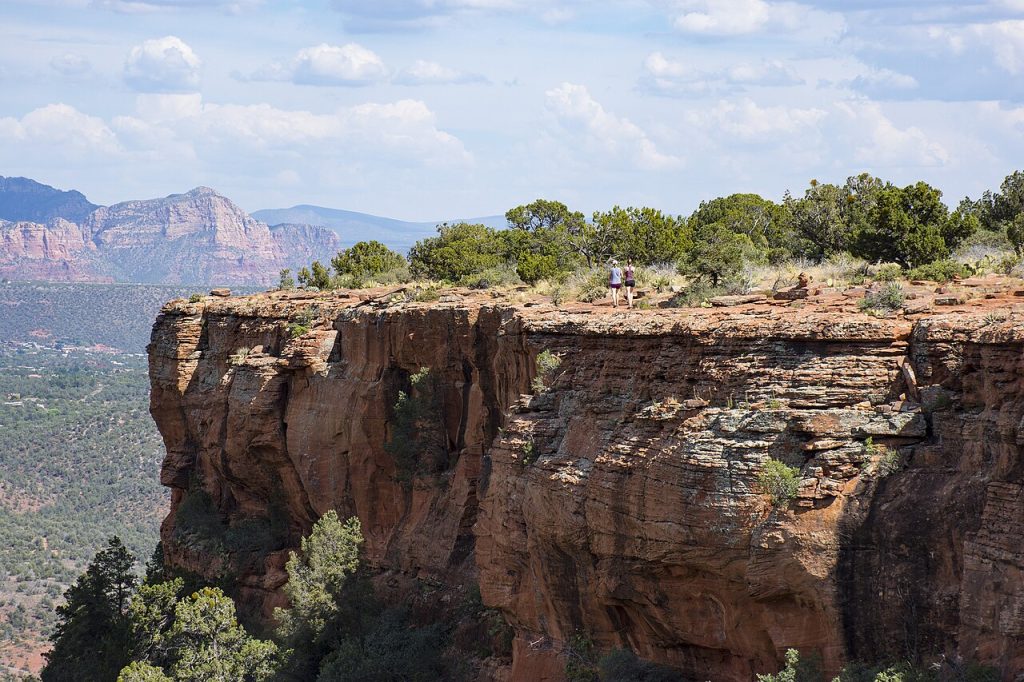
Sedona’s red-rock drainages can look gentle in fair weather, but monsoon rain on higher rims feeds Dry Creek tributaries and sends pulses downstream.
Runoff picks up grit and stones, and because channels often parallel trail corridors, it is easy to drift into the lowest ground without noticing. The first clue is often sound, a deeper upstream rumble that arrives before any visible water. Then the flow spreads into side channels that were invisible minutes earlier, cutting new lines around roots and boulders. Locals favor high rock shelves and wait until the sand stops vibrating and the channel quiets for real, not just briefly.
Big Bend Desert Arroyos, Texas
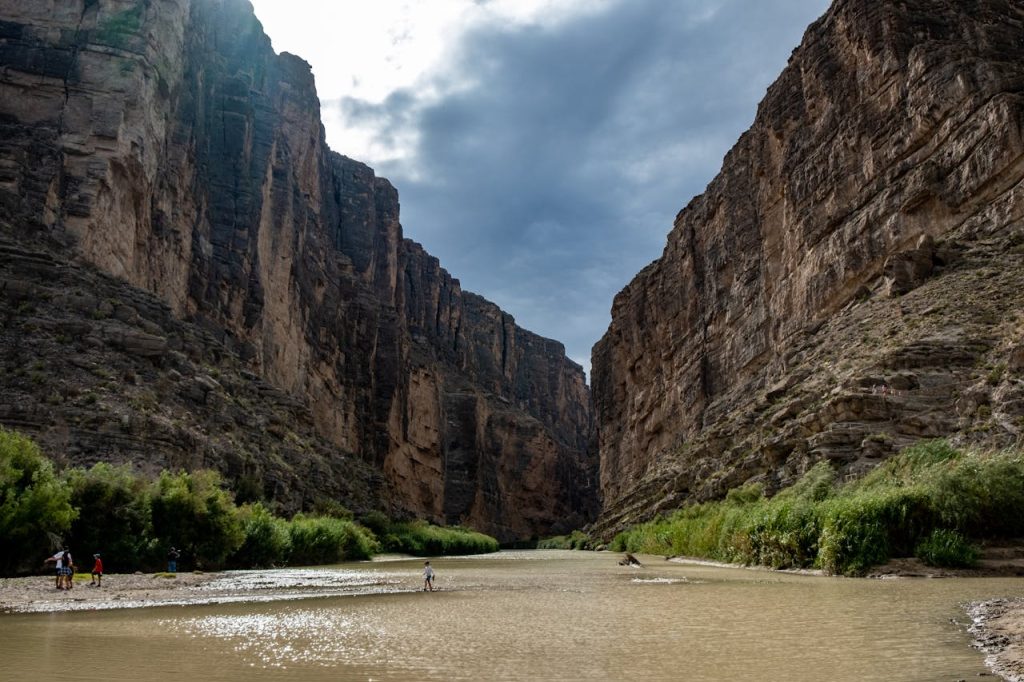
Big Bend arroyos can stay powder-dry for months, then take on water from storms over the Chisos that never touch the lower basins.
Hard-packed soil sheds rain quickly, and the first surge can carry brush and gravel that pile into chokepoints, forcing water to fan across flats. Along desert roads, low crossings turn slick with silt, and tire tracks vanish under a thin, moving sheet. Wide channels make distance feel safe, yet flow travels fast once it finds a main groove. A low roar may be the only early hint when wind masks sound and the sky overhead stays bright. Locals look for fresh debris lines on mesquite and wait on higher ground.