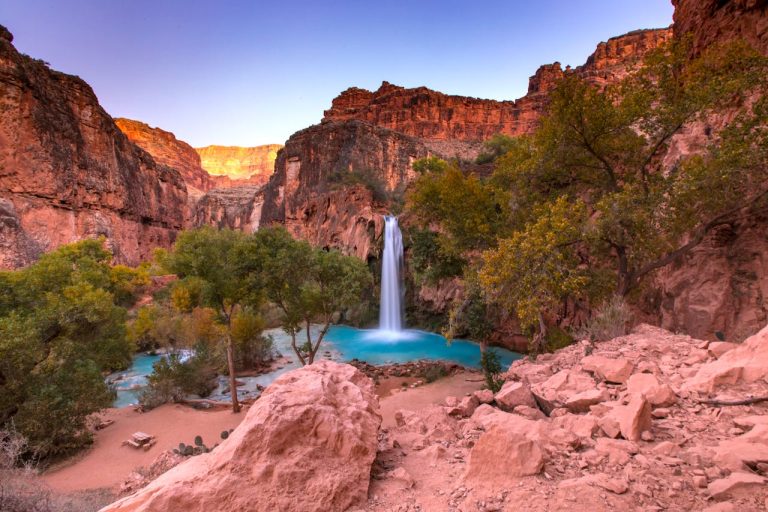
13 Cliff Hangers Hanging With Hurricane Howls
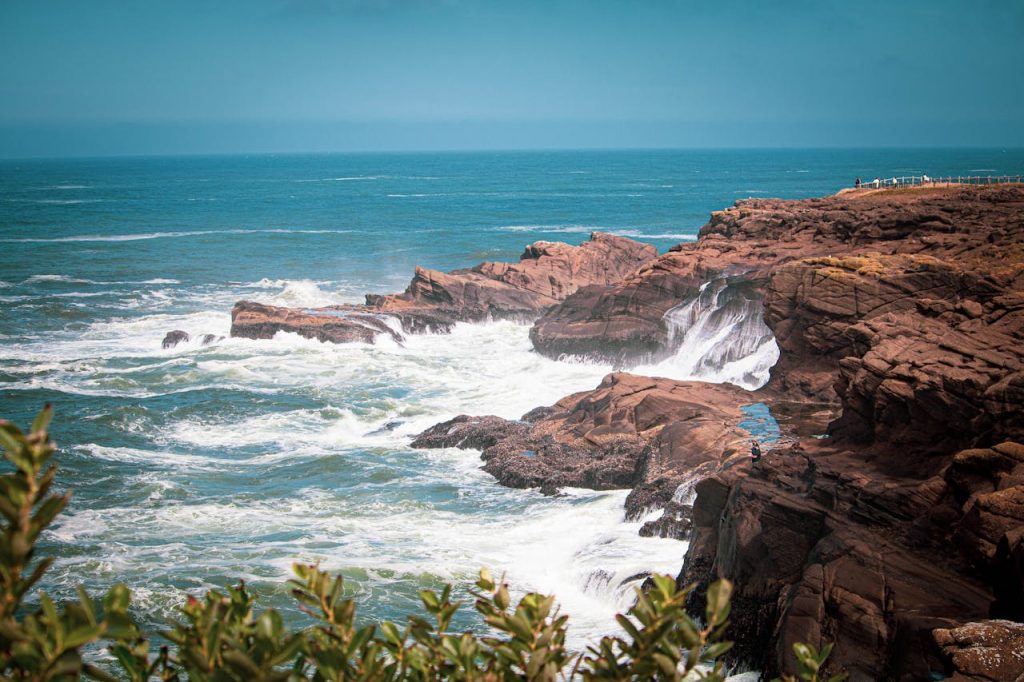
Along hurricane coasts, cliffs translate weather into sound and texture. Salt air thickens, birds fly low, and the surf trades sparkle for a deeper rumble. Even in calm light, these edges carry salt stains and wind-shaped grass that hint at what returns each season.
When winds arrive, spray lifts like pale smoke and skates sideways, and the horizon fades in and out. Gusts find every seam in stone and every loose hinge on a railing. After the bands pass, driftwood appears on high paths, pebbles gather where feet usually walk, and small cracks look freshly rinsed. Beauty stays, paired with respect for how fast a coast can rewrite itself.
Wind-Scoured Lookouts Above a Gray-Green Sea
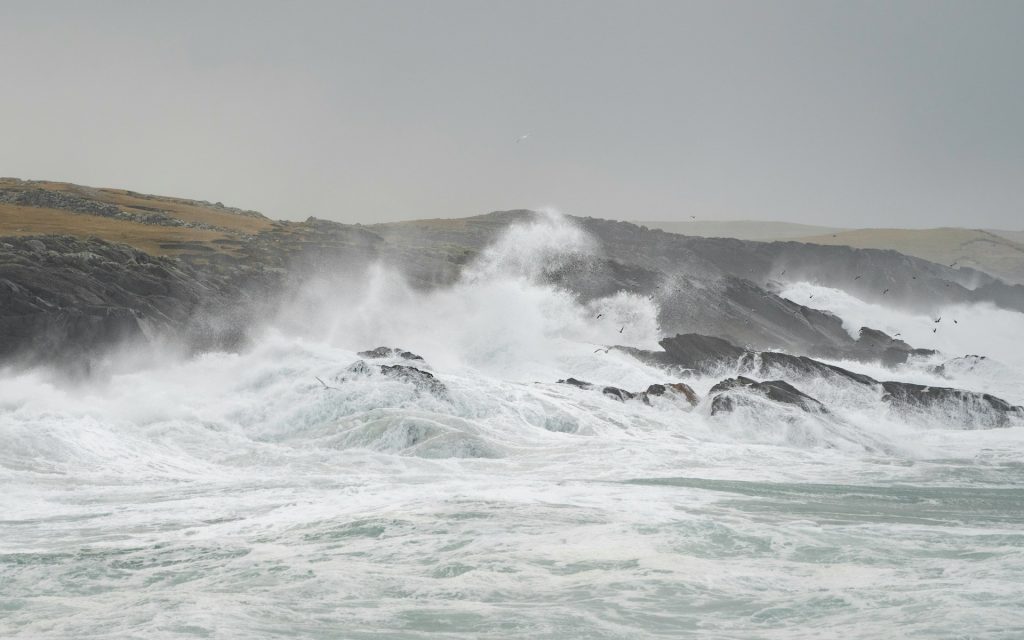
High lookouts change first. Grass lays flat, fence wire hums, and the water below turns gray-green, stitched with white seams that mark shifting currents. The air tastes of brine, and distant surf sounds closer than it looks. Cloud layers slide at different speeds, turning the sky into a restless ceiling.
As outer bands pass, visibility collapses and returns in quick flashes. Foam reaches higher than usual, and sand grains pepper railings. Gusts arrive in hard bursts, then vanish, leaving only the roar. When the sky opens again, the cliff feels scrubbed, with salt slicking stone and fresh scuffs showing where wind pushed grit uphill.
Basalt Walls That Turn Spray Into Mist
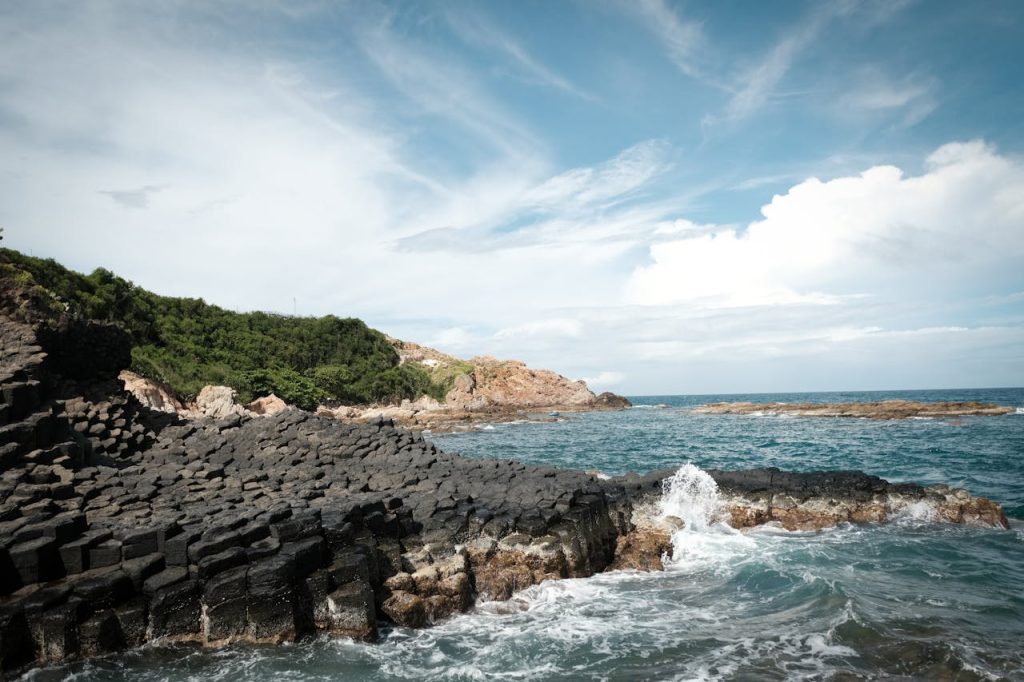
Basalt cliffs meet hurricanes with hard angles. Dark columns split incoming waves, and each impact throws spray upward until it hangs as cold mist, drifting sideways in steady sheets. Mist reveals wind direction, sliding in a single veil that clings to every notch. The sound is blunt and percussive.
Salt in the air hazes glass and leaves a fine grit on railings. After the roar eases, basalt often shows small edits: a cleaner fracture line, a newly shifted block, or tide pools refilled with sand and kelp. Underfoot, edges feel sharper, and the rock looks darker, as if it kept the storm’s shine a little longer. That sheen can linger.
Chalk Faces That Crumble Quietly After the Roar
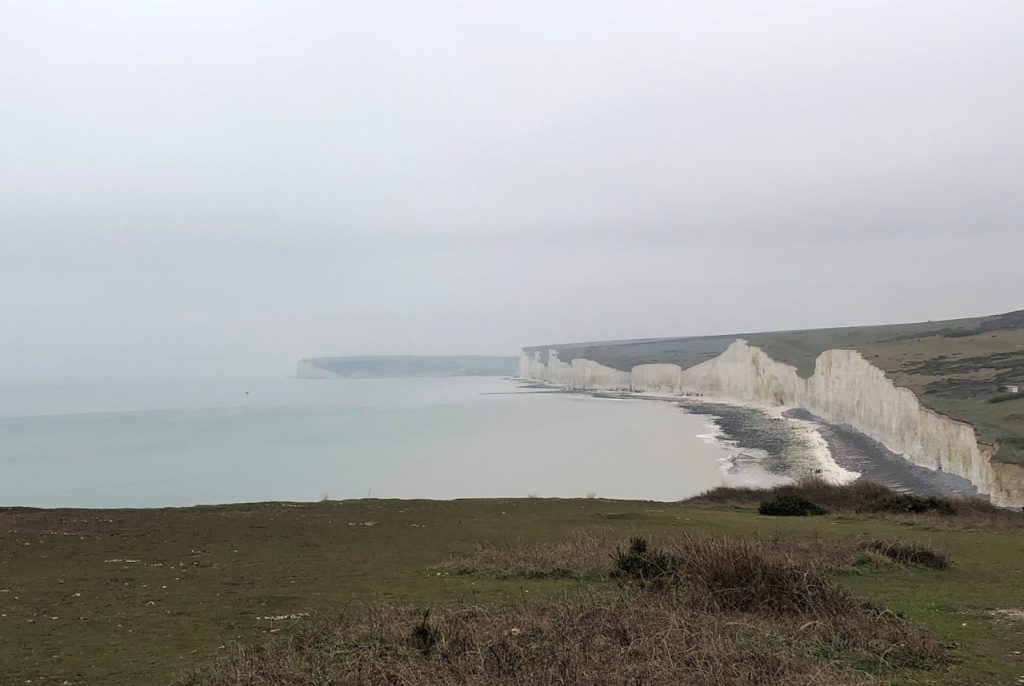
Chalk cliffs can look calm right up until they do not. Heavy rain soaks the face, and rough surf can undercut the base, loosening material long after the loudest wind has moved on. Damp air can linger in pockets, and hairline cracks can widen quietly.
After a storm, pale rubble at the toe and fresh streaks on the wall suggest recent movement. Flint bands often stand out in sharper contrast, and the beach gains bright fragments that tide will round down again. Closures matter because falls can happen on calm afternoons. From a distance the headland seems unchanged, yet its edge has shifted by inches, revised by water and weight.
Lighthouse Headlands Built for Bad Weather

Lighthouse headlands were chosen for early warning. During hurricane winds, the tower becomes a fixed reference while everything else moves. Spray beads on windows, and the air hums along stone walls as gusts work the cliffs. Even with modern navigation, the scene teaches scale and restraint.
Wave tops leap at the rocks below, then dissolve into mist, and the horizon fades until sea and sky share one tone. After the bands pass, paths can hold seaweed strands and tiny stones tossed high by spray. The grounds feel freshly rinsed, salty, and gritty at once, and the lighthouse reads less like decoration and more like a patient tool.
Sea Caves That Breathe Like Drums
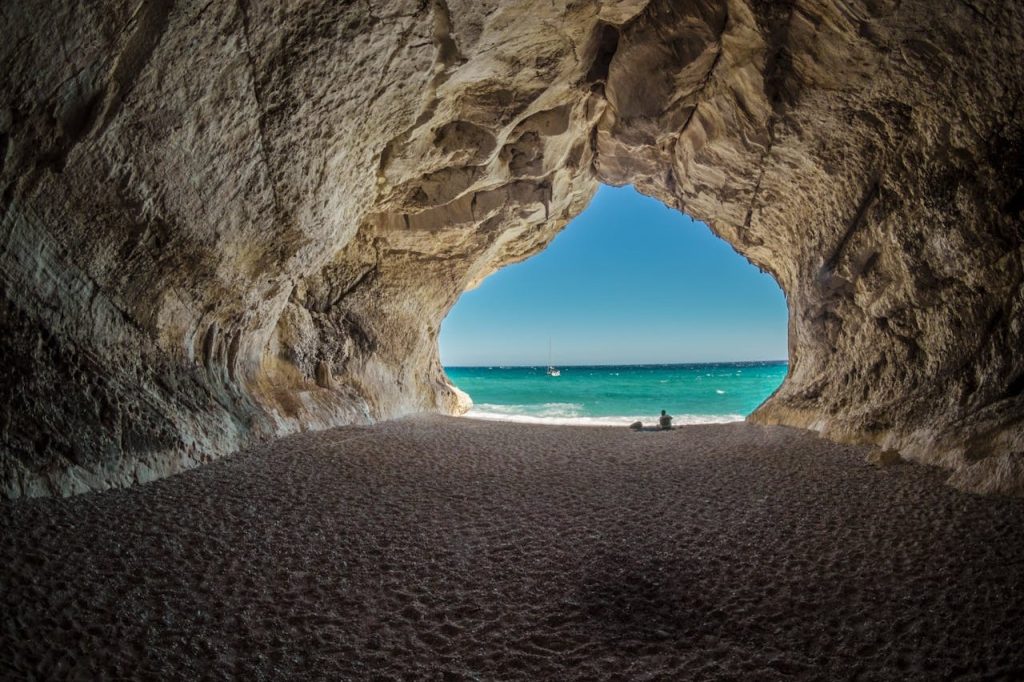
Sea caves turn hurricane swell into percussion. Surge drives water into chambers, trapped air compresses, and the cliff answers with a deep thump that repeats with each set. The pitch shifts as the tide rises, as if the rock is tuning itself. Echoes travel along the headland and blur distance.
Foam bursts outward, then slides back into darkness, leaving the mouth briefly empty and black. After the swell eases, entrances often look rearranged: sandbars shifted, boulders nudged, and the floor freshly scoured. Sea wrack collects in new corners, and the stone near the opening looks darker and smoother, polished by grit and spray.
Red Sandstone Bluffs That Bleed Color Into Foam
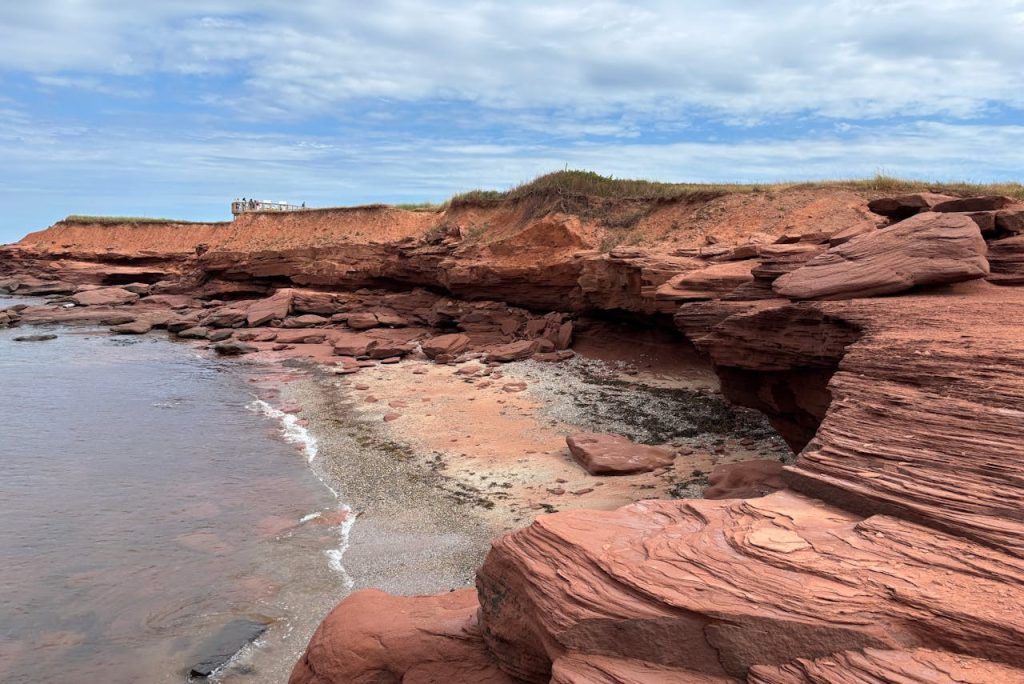
Red sandstone bluffs turn storm surf into color. Rough waves scrape softer layers, and the sea carries rust tones outward, tinting foam under flat light. Wind-driven rain adds quick grooves, and the face can look newly combed by morning. The air can smell earthy, like wet clay and brine.
After the bands pass, small falls at the toe expose brighter surfaces that slowly fade under sun and salt. Driftwood and seaweed collect in fresh pockets, and beaches often feel re-sorted, with pebbles stacked above sand. In calmer weather, those fresh cuts read like clean lines drawn across the bluff, proof of how quickly water can redraw land.
Barrier Island Edges Where Cliffs Are Made Overnight
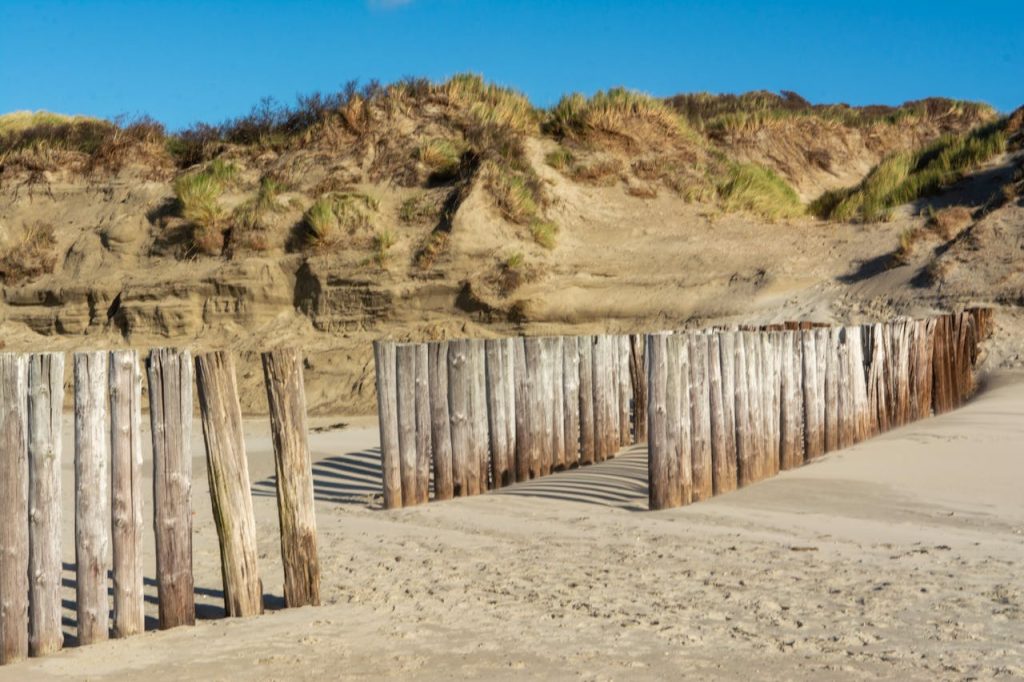
On barrier islands, steep sand cut banks can appear overnight. A hurricane bites into dune lines and leaves a raw vertical face, with roots dangling and shells pinned in the wall like small fossils. A debris line can sit oddly high, marking where surge reached.
Thin stripes in the sand reveal earlier storms, calmer seasons, and foot-worn layers. As overwash pushes sediment inland, the edge slumps, and yesterday’s wall becomes a softer slope. Sea wrack gathers at the base, then gets buried or carried off on the next tide. Wind soon starts rebuilding the dune from the top down, grain by grain. It is erosion in public, fast and honest.
Tropical Green Cliffs With Roots Holding On
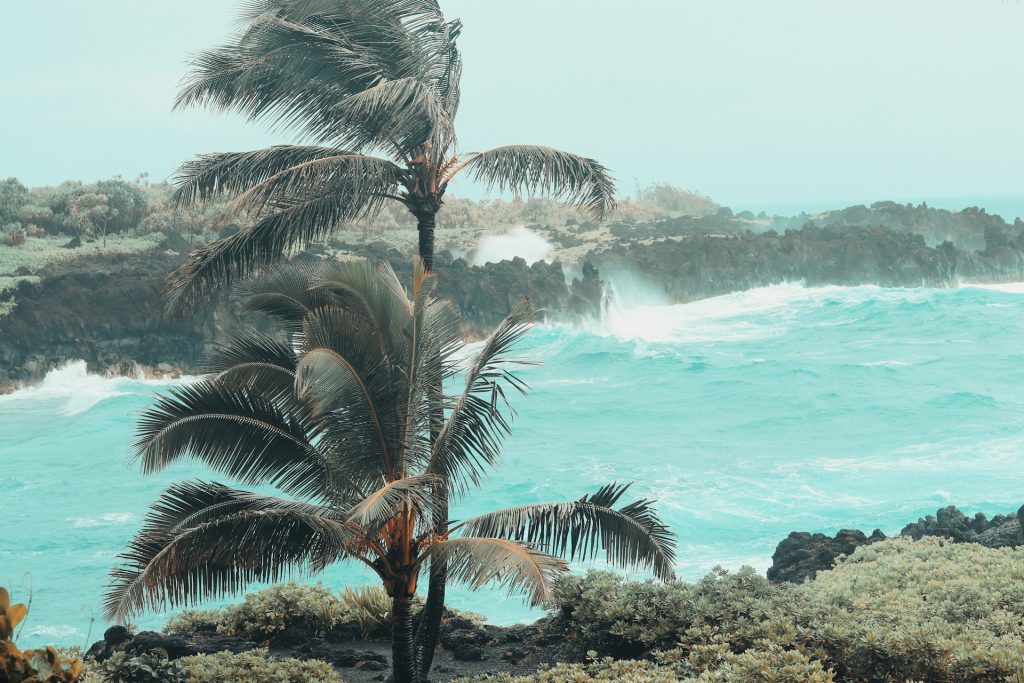
In warmer zones, some cliffs wear a living jacket of vines and shrubs. During hurricane winds, that greenery becomes both anchor and sail, holding soil while catching gusts. Leaves whip, then plaster flat, and rain runs in thin ribbons down the face. Broken twigs and seed pods scatter across paths.
After the storm, the story is mixed. Some patches look freshly shaved, while dense root mats keep whole sections intact like netting. New trickles appear where channels formed, and the air smells of crushed leaves, wet earth, and salt. When sun returns, steam can rise from dark stone, quiet and strange, as if the headland is exhaling.
Old Fort Cliffs That Turn History Into Shelter
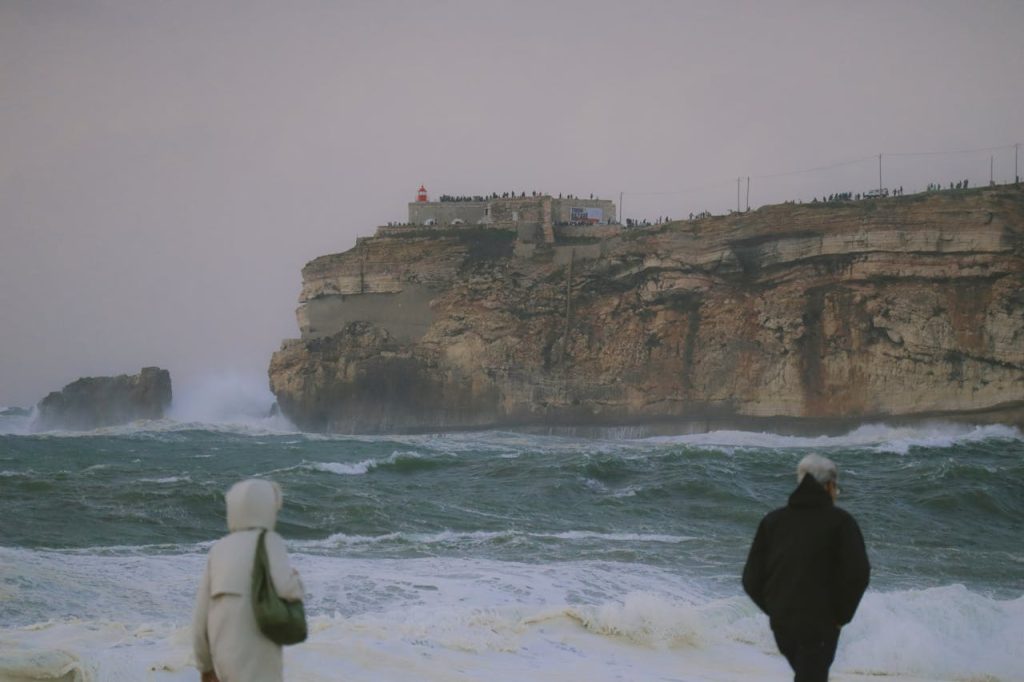
Cliff-top forts were built for sightlines, but hurricanes highlight their second purpose: staying put. Thick walls and low angles take wind with steady patience, even as the sea below throws white water at rock. Moist air beads on ironwork, and arches amplify surf into a hollow echo.
After a blow, seaweed strands and small stones can appear far above the tide line, carried by spray and gusts. Steps feel gritty, and corners smell sharply of salt. The fort becomes a ledger of weather, where old masonry meets new storm marks, and the coast’s power feels practical, not theatrical. Cleanup can feel like archaeology done with brooms.
Harbor Cliffs That Funnel Wind Like a Siren
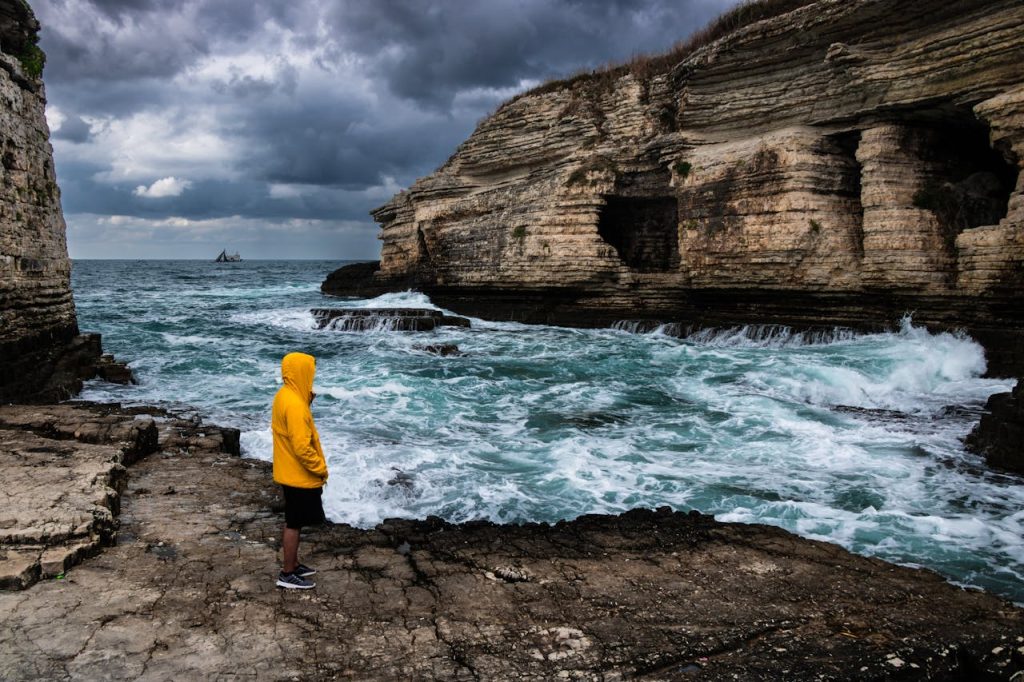
Near harbors, cliffs and gaps can shape wind into odd behavior. Hurricane gusts funnel through cuts and over ridges, producing a shifting pitch that rises, falls, and sometimes turns musical. Trees lean into it, then snap back, as if the air changed its mind mid-breath.
The water below rarely settles into one pattern. Waves rebound off seawalls, chop crosses swell, and channel lights blink through mist before vanishing again. Afterward, salt freckles windows and signs inland, and even streets away from water smell like brine. The harbor feels newly mapped by where spray managed to reach. Geography is not scenery here; it is an amplifier.
Palm-Lined Promontories Where the Sky Turns Metallic
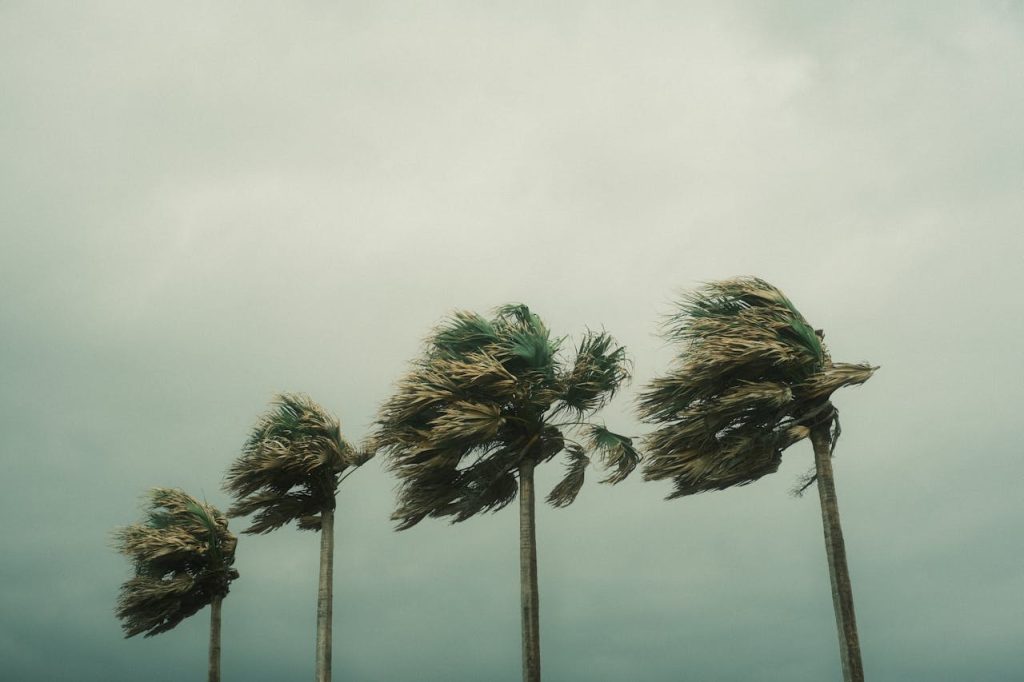
Palm-lined promontories can look metallic when hurricane bands arrive. The sky flattens into layered gray, palms bend hard, and the sea darkens as whitecaps spread, fast and busy. Light feels thin, replaced by texture and motion, while distant landmarks fade to silhouettes.
Sound takes over as spray hangs in the air and settles as a slick film on stone. Sea wrack collects in seams along the path, and the scent shifts toward salt and bruised vegetation. When calm returns, fronds hang frayed, birds reappear, and the horizon looks clean again. The place keeps that sharp coastal smell for a while, like a reminder. It lingers longer.
Post-Tropical Cliffs That Still Sound Like Winter
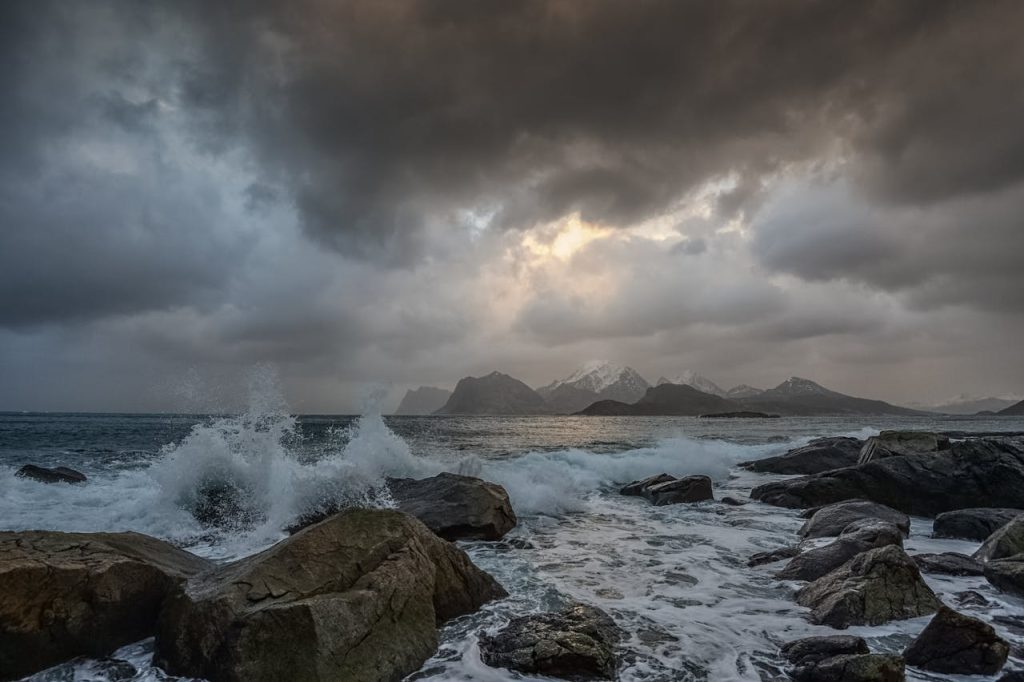
Farther north, storms may arrive as post-tropical systems, trading warm rain for colder wind and long, heavy swell. The cliffs respond with a winterlike roar that can linger, even when the sky briefly clears. Salt fog drifts inland, and every surface feels damp, as if the air itself has weight through the night.
After the peak, beaches often sort into bands, with pebbles stacked above sand like a simple graph of wave energy. Saturated soil can slump later, leaving fresh edges and exposed roots. It is a reminder that change does not always match the loudest hour; the coast keeps working quietly, set after set, until conditions soften.
Cliffside Roads Where Erosion Meets Everyday Life
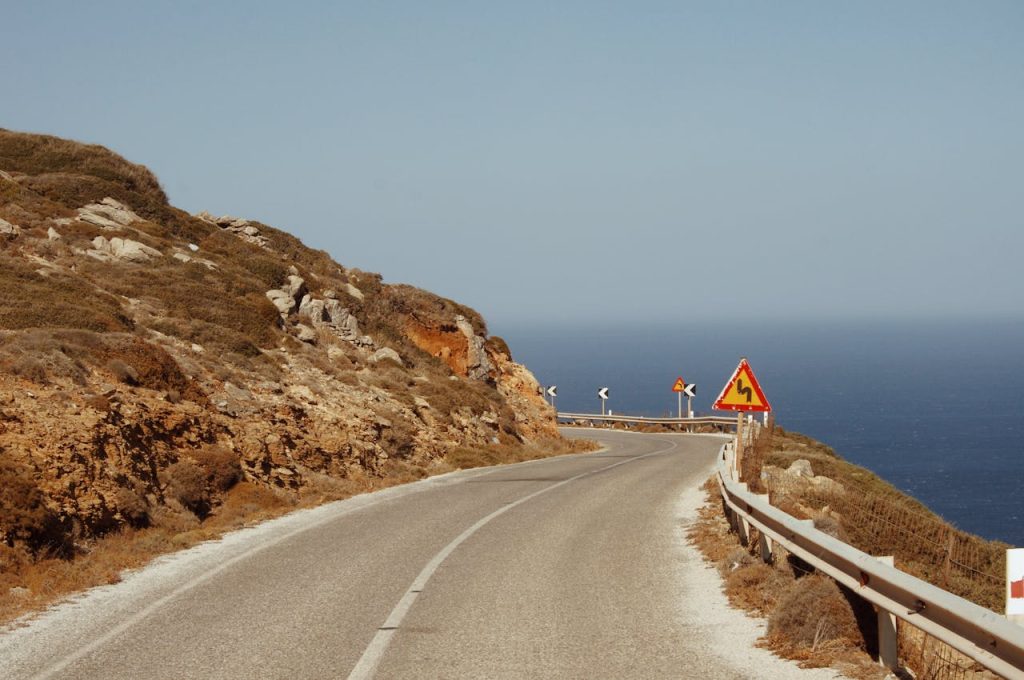
Some of the most unsettling hurricane scenes sit beside ordinary roads. A cliffside route can look fine, then reveal new cracks, a softened shoulder, or fresh stones in the gutter after surge and rain work together. Damage often shows first where asphalt meets air, then spreads in small, stubborn steps.
Communities along these stretches treat inspections and detours as routine, sharing updates with practical calm. Cones and caution signs become landmarks, and crews read the slope like a report card. When repairs begin, the coast stops being background and becomes infrastructure and memory at once, measured in rock, asphalt, and patience.