6 Places Where Freedom Of Movement Feels Limited To Tourists
Travel is often sold as pure freedom. You arrive, follow curiosity, and let the day unfold.
But some destinations work differently, and the rules start shaping your route before you even leave home.
This is not about places being unfriendly. It is about places carrying pressure from crowds, safety risks, or sacred use.
When that pressure rises, access becomes managed, timed, or permit-based.
In practical terms, tourists feel it as checkpoints, fixed circuits, guided-only zones, and hard caps.
Spontaneous wandering gets replaced by scheduled entry and stricter route discipline.
This article tracks 11 places where that shift is visible: Venice, Mecca, Medina, Mount Fuji, Machu Picchu, Upper Antelope Canyon, Lower Antelope Canyon, Antelope Canyon X, The Wave, Coyote Buttes North, and Coyote Buttes South.
City Streets and Sacred Zones With Clear Boundaries
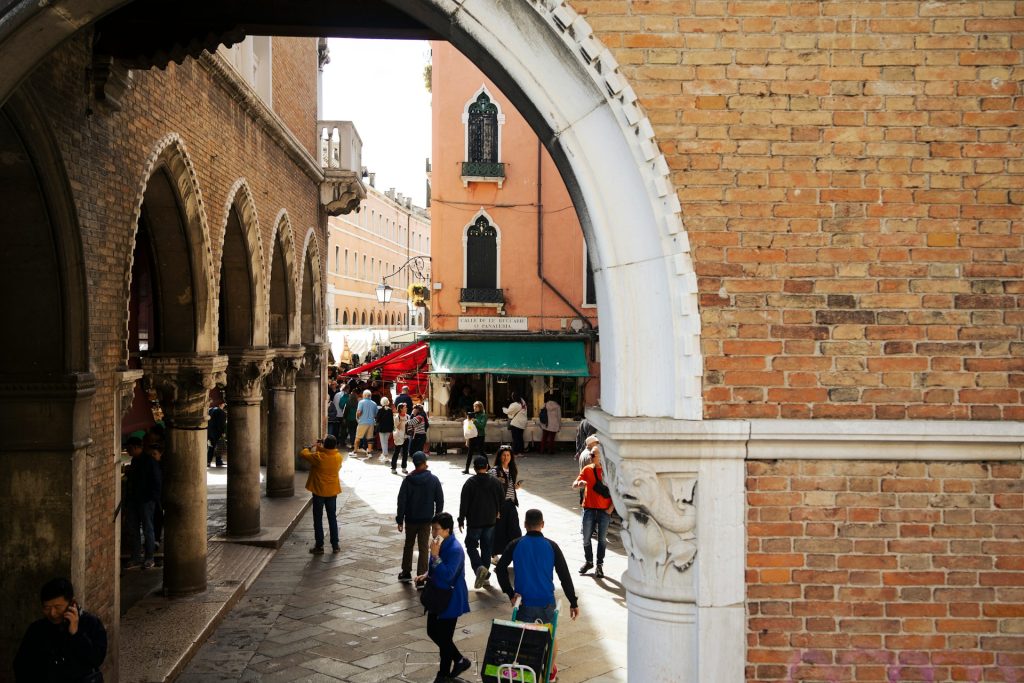
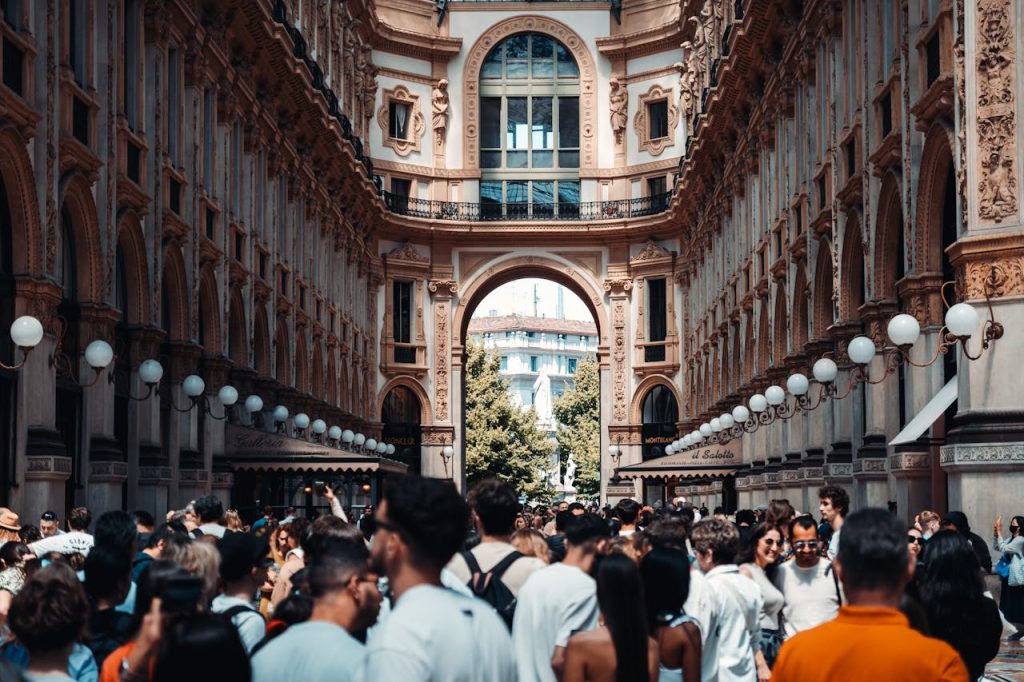
Venice now uses an access-fee system on selected days and hours, which turns a casual day trip into a regulated entry window rather than open flow.
For tourists, that feels like a soft gate around a historic city center.
Mecca is more explicit. U.S. travel guidance states non-Muslims are not allowed to travel there, and sacred parts of Medina are also restricted.
So movement is tied directly to religious rules, not just ticketing.
What makes this feel restrictive is the contrast.
Both places are world-famous, both appear open on a map, and both demand specific compliance once you are on the ground.
That tension is the point: visibility does not equal access.
In these destinations, the right plan matters more than the fastest itinerary.
Mountain and Heritage Icons That Run on Timed Access
Mount Fuji’s Yoshida Trail rules include a mandatory hiking fee and gate controls tied to timing and crowd management.
So even a classic summit attempt now begins with structured entry, not pure spontaneity.
The official Machu Picchu system routes ticketing through the Peruvian state platform, and entry depends on having the right booking in hand.
That means timing and ticket type can shape the entire day before you reach the ruins.
Tourists usually notice this at the weakest moment: when plans are tight and transport is already booked.
A missed slot or wrong booking can force a same-day reset.
The lesson is simple and a little humbling.
At high-pressure sites, movement is granted in windows, not assumed as a default right.
Slot Canyons Where the Guide Sets the Pace
At Antelope Canyon, the rule is direct: all Lake Powell-Antelope Canyon locations are accessible only via guided tours, with guides mandatory.
That covers Upper Antelope Canyon, Lower Antelope Canyon, and Canyon X operations under the same guided-access model.
Once inside, the tour clock drives everything.
How long you stand, when you move, and where you stop for photos are all managed in sequence.
For visitors used to independent hiking, this can feel restrictive at first.
For land managers, it is a control layer that keeps traffic organized in tight, sensitive corridors.
The emotional shift is real.
You are not exploring alone, you are moving through a curated channel with shared timing.
Desert Permit Landscapes With Hard Daily Limits
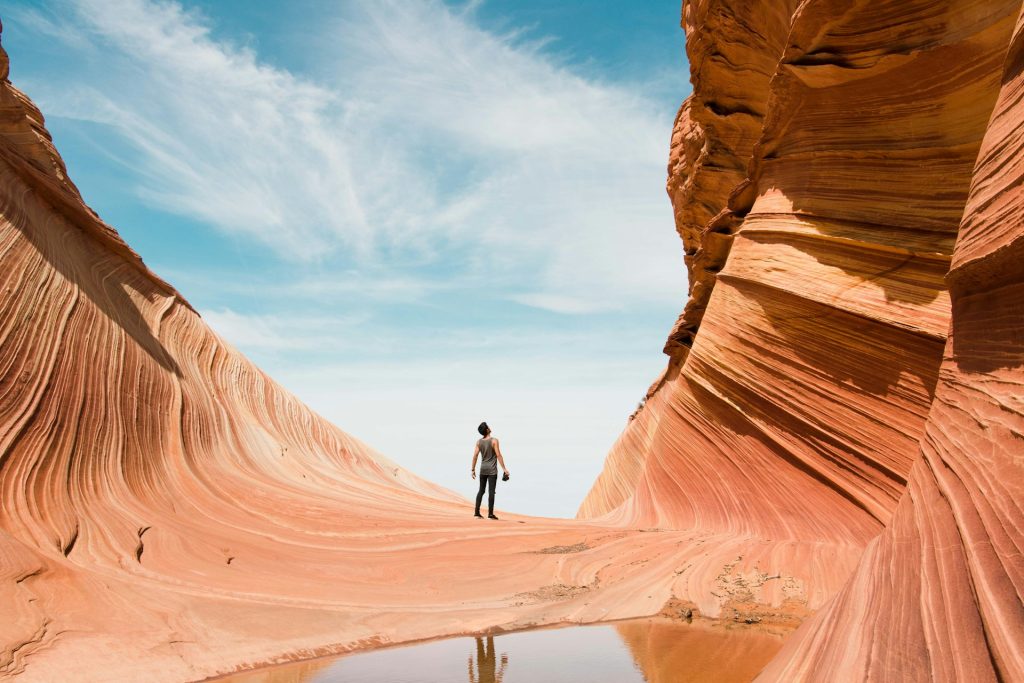
The Wave sits inside Coyote Buttes North, where BLM requires permits and limits visitation to protect fragile terrain.
No permit means no entry, even if you are already nearby.
The same permit logic applies across Coyote Buttes permit areas, including Coyote Buttes South, with non-transferable permits and strict controls.
This is not casual walk-up country, it is quota-managed wilderness access.
BLM guidance also separates daily and advanced lottery pathways for Coyote Buttes North planning.
So movement is limited not only by geography, but by lottery timing and application success.
That is why these landscapes feel different from ordinary parks.
The limiting factor is not distance, it is permission.
Why These Rules Feel Heavy To Tourists
Most travelers build trips around momentum.
One good stop leads to the next, and flexibility is part of the joy.
Regulated destinations interrupt that rhythm.
They force pre-commitment, and pre-commitment can feel like losing freedom.
Still, the rules are rarely arbitrary.
They usually protect sacred practice, reduce hazard exposure, or prevent place damage from overtourism.
What this really means is simple:
the tighter the pressure on a place, the narrower the movement envelope for visitors.
How To Travel Well When Access Is Structured
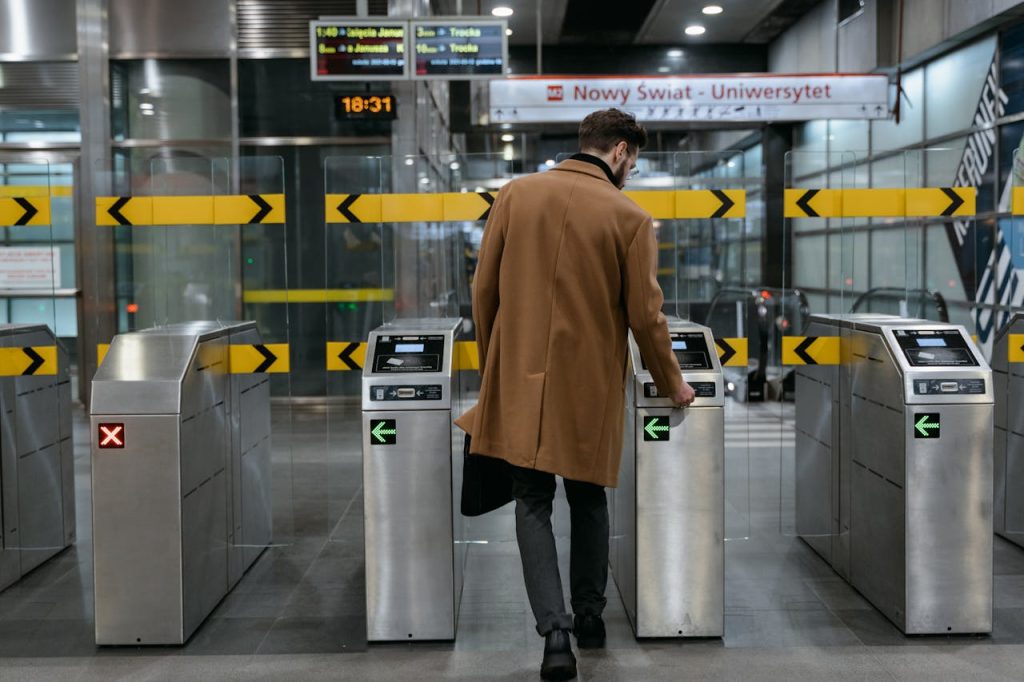
Start with official channels, not hearsay.
If a site has windows, permits, or guided-only rules, treat those as core trip architecture.
Build buffer time around transport and check-in moments.
Tight schedules break first in places where entry is timed and inflexible.
Carry proof cleanly and keep a backup plan for denied entry, late arrival, or weather disruption.
In regulated destinations, recovery options matter as much as first-choice plans.
And keep the mindset right.
The goal is not to go everywhere, it is to move responsibly where access is actually allowed.
Sources
- Comune di Venezia: Venice Access Fee
- Official Mt. Fuji Climbing Site: Yoshida Trail Regulations
- Machu Picchu Official Ticketing Page
- U.S. State Department: Hajj and Umrah Pilgrimage Travelers
- Navajo Nation Parks: Antelope Canyon Tour Operators
- BLM: Coyote Buttes North (The Wave) Permit System