These 11 Gondola Rides Foggy With Visibility Panics
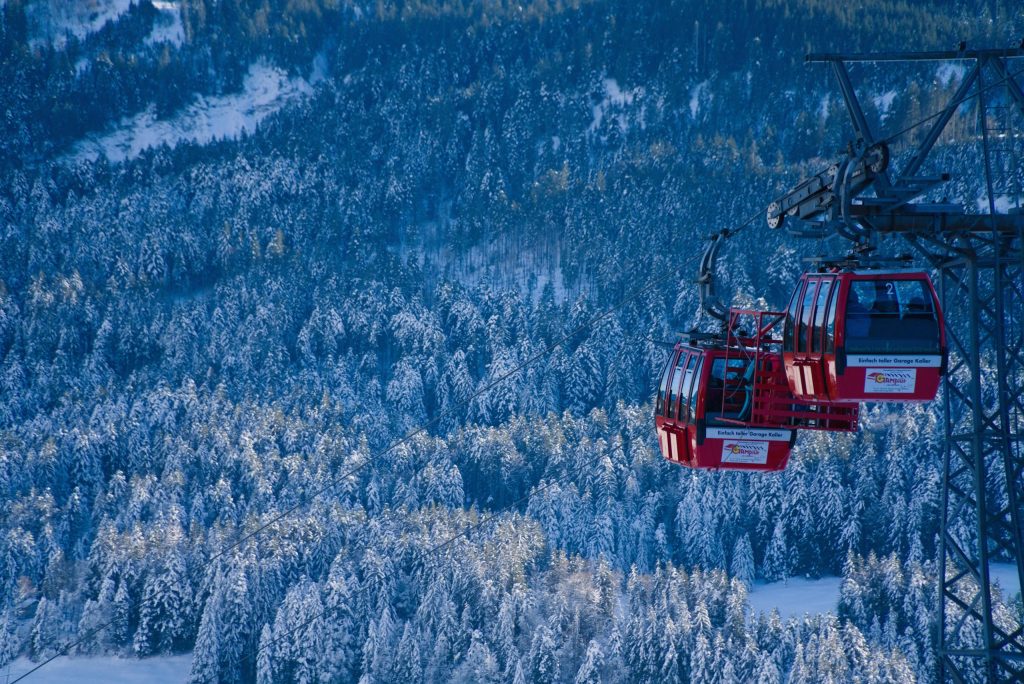
Mountain meteorologists and atmospheric scientists warn that high-altitude transport systems traverse some of the most volatile microclimates on Earth. While tourists flock to aerial tramways and gondolas promising panoramic views, the reality often involves sudden and disorienting weather shifts. Experts in alpine weather patterns explain that the rapid cooling of rising air against steep terrain creates dense cloud formations known as orographic fog. This phenomenon can engulf a cabin in seconds and reduce visibility to zero.
Travel psychologists and safety officials note that these whiteout conditions frequently trigger acute anxiety among passengers. The loss of visual reference points combined with the sensation of suspension creates a phenomenon called spatial disorientation. When the ground and the horizon vanish simultaneously, riders often experience heightened vertigo and panic. From the misty peaks of the Andes to the cloud-forest summits of Southeast Asia, these eleven gondola rides are identified by experts as the most prone to inducing visibility-related alarm.
Tianmen Mountain Cableway In China

Engineering experts cite the Tianmen Mountain Cableway as one of the longest high-mountain passenger ropeways in the world. It spans nearly twenty-five thousand feet and climbs steeply into the cliffs of Zhangjiajie. Meteorologists monitoring the Hunan province note that the region is subject to heavy moisture and rapid cloud formation. Riders frequently board the cabin in clear weather only to ascend directly into a thick stratocumulus layer that obscures the terrifying vertical drops just feet away.
The sheer length of the ride means passengers remain suspended in the gray void for extended periods. Park officials report that the dense fog often hides the famous Tianmen Cave and the surrounding jagged peaks completely. This isolation causes significant distress for travelers who cannot see the support towers or the station ahead. The silence of the mist combined with the inability to gauge height creates a sensory deprivation tank effect that unnerves even seasoned adventurers.
Ngong Ping 360 In Hong Kong

The Ngong Ping 360 connects Tung Chung to the Ngong Ping highlands on Lantau Island. It crosses open water and steep mountainous terrain. Climate researchers in Hong Kong explain that the island is prone to a heavy marine layer and low-hanging clouds that roll in from the South China Sea. During the humid spring and summer months, the cable cars often disappear into a wall of white mist. This is particularly disorienting for passengers in the Crystal Cabins which feature glass bottoms.
When the fog descends, the glass floor reveals nothing but swirling gray vapor. This eliminates the ground reference that usually anchors a passenger’s sense of balance. Tourism safety officers advise that this total lack of visibility can induce nausea and panic. The sensation of floating in a cloud without a visible tether to the ground amplifies the fear of heights. Operators sometimes suspend service during extreme visibility events, but rapid onset fog often catches riders mid-journey.
Skyway Monte Bianco In Italy
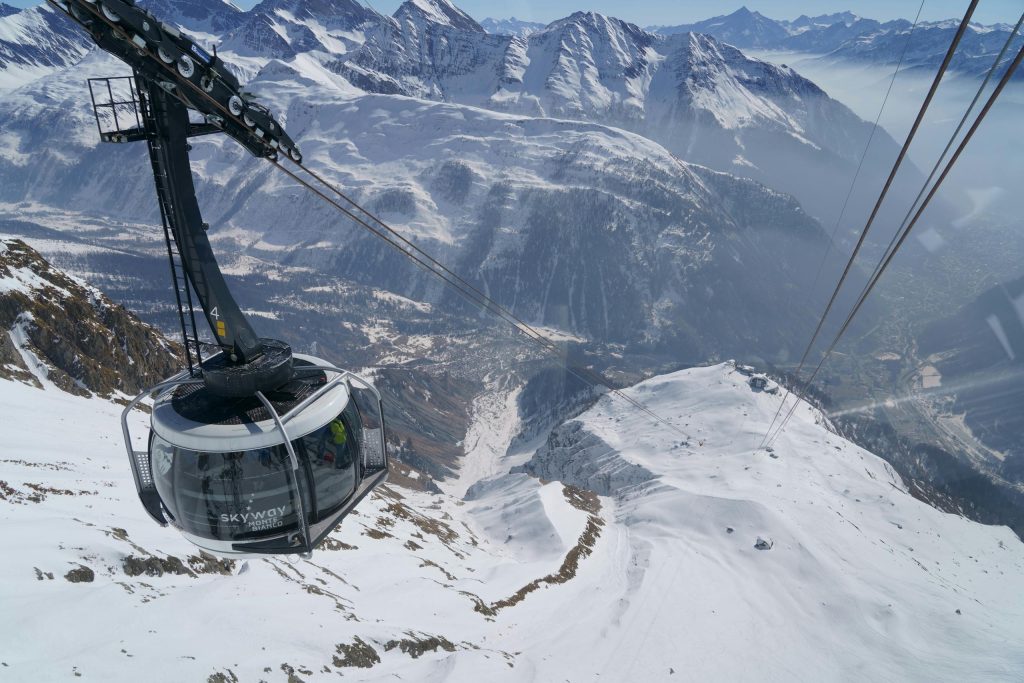
Alpine guides consider the Skyway Monte Bianco a marvel of engineering that brings casual tourists into the heart of the Mont Blanc massif. However, the high altitude of the Pointe Helbronner station exposes the system to severe alpine weather. Glaciologists note that the weather at eleven thousand feet creates immediate whiteout conditions where the distinction between the snowy ground and the cloudy sky vanishes completely.
Passengers on the rotating cabins often find themselves surrounded by an impenetrable white sphere. Mountain safety experts refer to this as flat light. It erases shadows and depth perception. The panic arises when the wind rocks the cabin while no visual horizon exists to help the brain orient the body. Riders feel the movement but see a static wall of white. This sensory mismatch leads to motion sickness and high anxiety until the machinery pierces through the cloud layer.
Peak 2 Peak Gondola In Canada

The Peak 2 Peak Gondola in Whistler holds records for the longest unsupported span between ropeway towers. It hangs nearly fourteen hundred feet above the valley floor. British Columbia weather forecasters emphasize that the coastal mountain range attracts heavy Pacific moisture. This results in frequent cloud layers that settle directly between Whistler and Blackcomb mountains. The cabins often travel from sunlight on one peak into a dense valley cloud bank and back out again.
During the middle section of the ride, the gondola travels for nearly two miles without passing a support tower. When fog engulfs this section, the sense of isolation is absolute. Search and rescue personnel train for these conditions, but for the average tourist, the disappearance of the cables into the mist creates a fear of being stranded. The visual disconnect from the ground makes the immense height abstract yet terrifyingly uncertain.
Ba Na Hills Cable Car In Vietnam

The Ba Na Hills cable car system holds world records for its length and elevation change as it ascends the Annamite Range. Tropical meteorologists explain that the collision of warm coastal air with the cooler mountain elevations guarantees mist and fog for much of the year. The route takes passengers over dense jungle that quickly fades from view as the cabins rise into the perennial cloud cover that shrouds the Golden Bridge.
Visitors often report an eerie transition from the vibrant green of the forest to a suffocating gray dampness. Resort management acknowledges that visibility can drop to less than ten feet. This obscures the massive stone hands of the famous bridge until visitors are practically touching them. For riders in the cable car, the journey becomes a blind ascent where the destination remains hidden until the final moment. This heightens the anticipation and anxiety of the unknown approach.
Sugarloaf Cable Car In Brazil
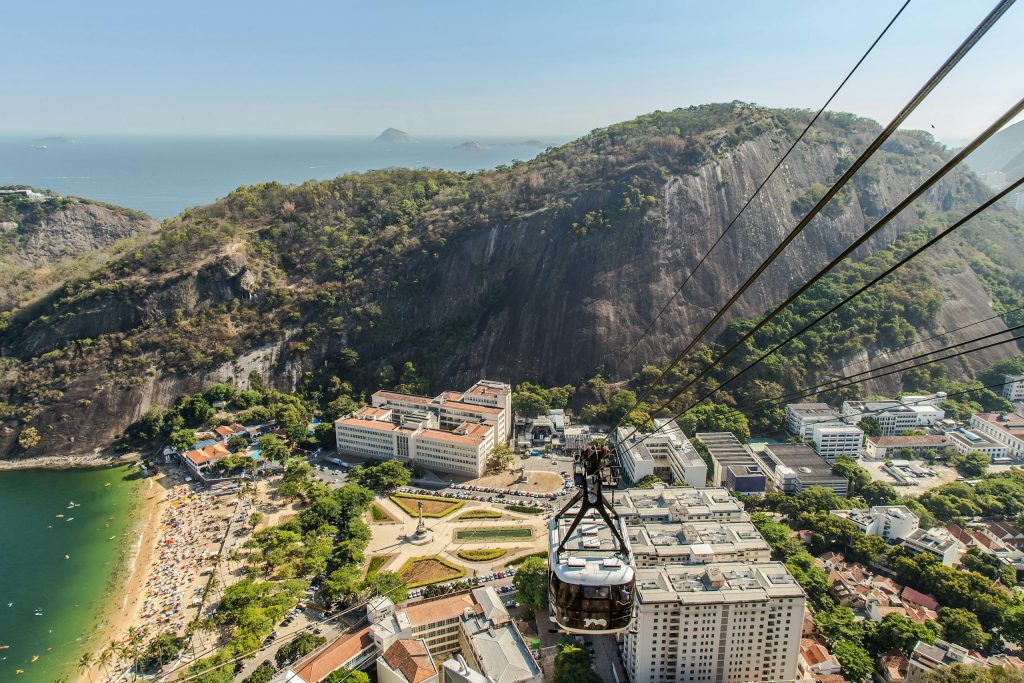
Rio de Janeiro is famous for its dramatic landscape, but maritime climate experts point out that the entrance to Guanabara Bay is a magnet for sea fog. The Sugarloaf Cable Car transports visitors in two stages to the summit of the granite peak. When thermal inversions occur, a dense blanket of fog rolls in from the Atlantic Ocean. It swallows the iconic mountain and the suspended cabins.
The panic here stems from the loss of the city reference points. One moment passengers see the sprawling metropolis and Christ the Redeemer, and the next they see only the cable disappearing into whiteness. Local pilots and maritime officials warn that this fog moves with surprising speed. It can leave tourists stranded at the summit or suspended in a gray limbo above the invisible harbor. The humidity and heat trapped within the cloud layer add to the physical discomfort of the disoriented riders.
Table Mountain Aerial Cableway In South Africa
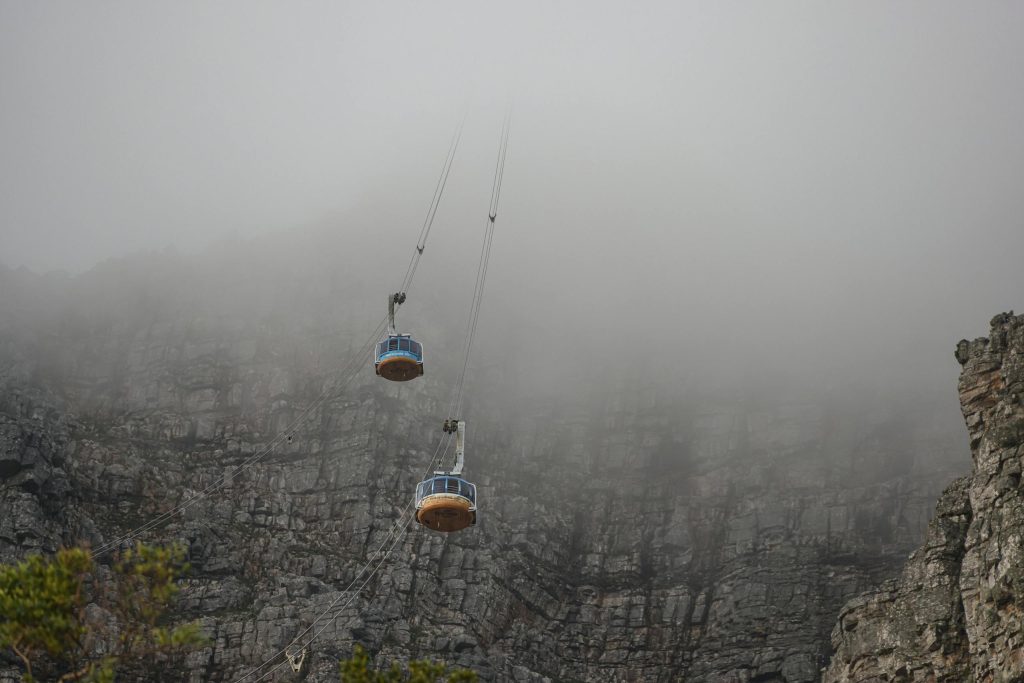
The Tablecloth is a legendary meteorological phenomenon in Cape Town where a southeast wind forces moisture up the slopes of Table Mountain. This creates a thick layer of cloud that spills over the plateau. Atmospheric scientists describe this as an orographic cloud formation that can materialize in minutes. The Aerial Cableway carries passengers directly into this churning mass of vapor.
Park rangers warn that the temperature drops significantly inside the cloud. The sudden shift from the warm city base to the freezing, blind summit shocks unprepared visitors. The rotating floor of the cable car offers 360-degree views that become a uniform gray canvas. This disorients passengers who lose their sense of direction relative to the mountain face. The wind often howls around the station, and the lack of visibility makes the precipitous cliffs of the plateau a hidden but felt danger.
Mi Teleférico In Bolivia
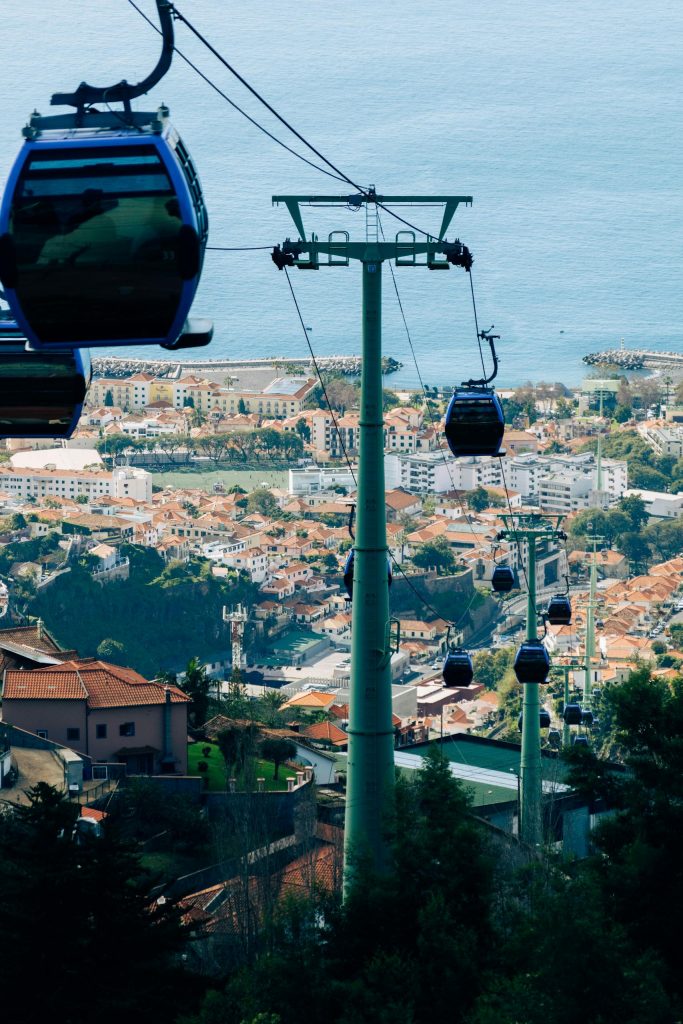
La Paz boasts the world’s largest urban cable car network, but its altitude presents unique challenges. High-altitude climatologists note that the city sits in a bowl that traps weather systems. The lines connecting La Paz to El Alto climb up the canyon walls into the Altiplano. Here, storms and heavy clouds descend rapidly from the surrounding peaks of the Cordillera Real.
Commuters and tourists alike face rides where the city below disappears entirely. Civil defense officials in Bolivia monitor these lines closely because the severe thunderstorms often accompany the low visibility. The fear factor increases when lightning flashes illuminate the inside of the clouds surrounding the cabins. Passengers hang suspended over a dense urban environment that they know is there but cannot see. This creates a claustrophobic tension unique to high-density city transport.
Awana SkyWay In Malaysia
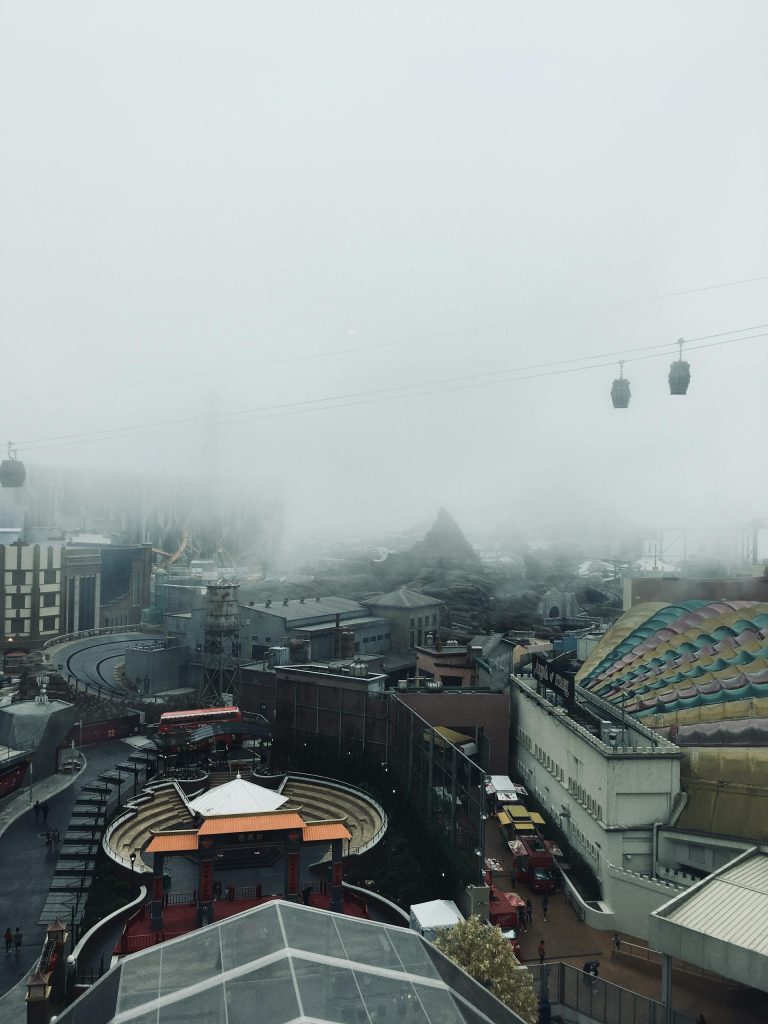
The Genting Highlands are a hill station resort area located on the peak of Mount Ulu Kali. Rainforest ecologists explain that the moisture from the surrounding jungle rises and condenses at the summit. This keeps the resort and the Awana SkyWay shrouded in mist for a significant portion of the year. The gondola climbs from the humid lowlands into a cool, wet cloud forest environment.
The transition is stark. Passengers leave the tropical heat and enter a realm of perpetual twilight and fog. Resort operators note that the Chin Swee Caves Temple, a major stop on the line, frequently appears as a ghostly silhouette or vanishes altogether. The intense humidity condenses on the cabin windows. This further obscures the view and creates a sense of entrapment. First-time riders often express alarm at the density of the mist which hides the steep drops into the virgin rainforest below.
Titlis Rotair In Switzerland
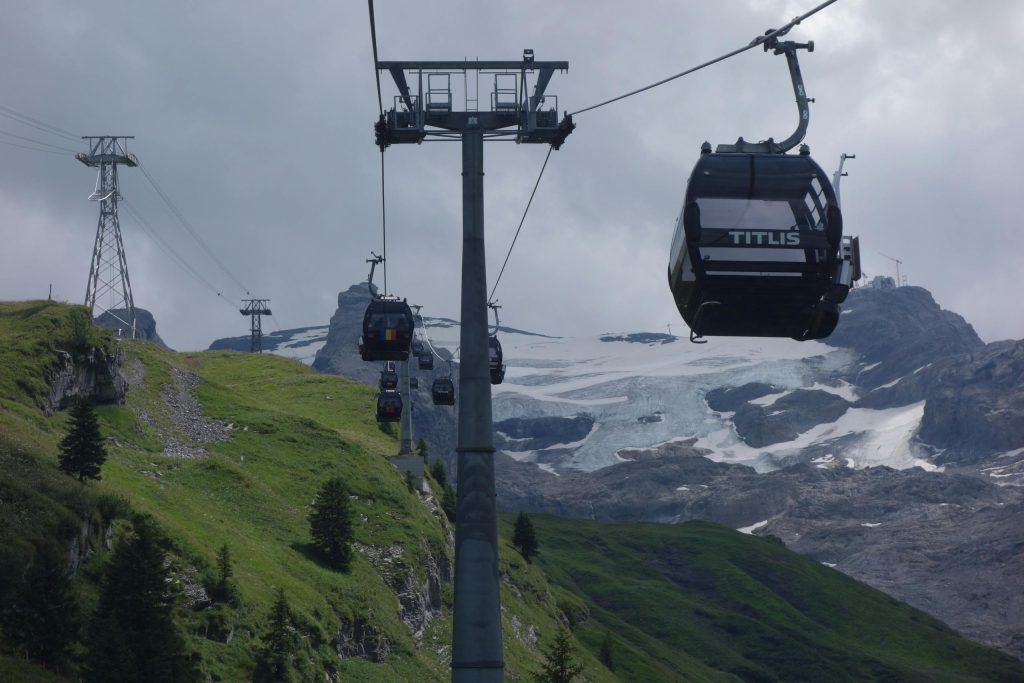
The Titlis Rotair features the world’s first rotating cable car and ascends to the summit of Mount Titlis in the Uri Alps. Glaciologists and mountain guides caution that the glacier environment generates its own weather. Clouds often sit heavily on the ice fields. The ride culminates at over ten thousand feet where thin air and freezing mist are common.
The rotation of the cabin is intended to provide a panoramic view, but in whiteout conditions, it disorients the inner ear. Medical experts in altitude sickness suggest that the combination of rotation, lack of visual fixity, and hypoxia can lead to severe nausea and anxiety. Passengers expect to see jagged peaks and deep crevasses. Instead, they often face a relentless white wall that hides the dramatic topography. This turns the scenic journey into an endurance test of equilibrium.
Gulmarg Gondola In India
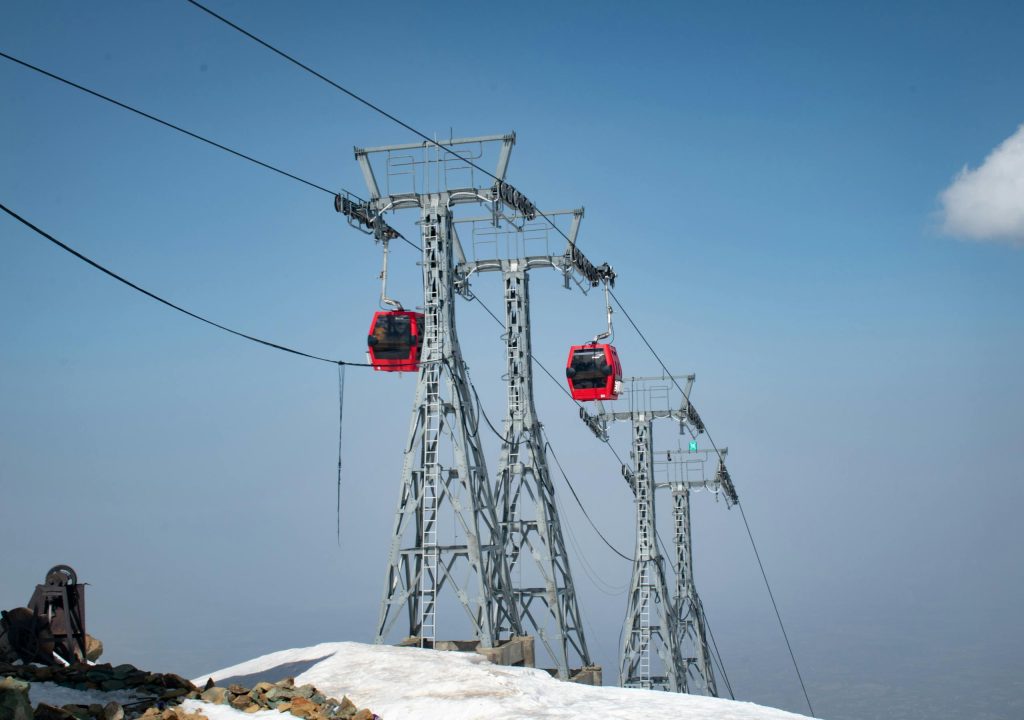
The Gulmarg Gondola in Kashmir is one of the highest cable cars in the world. It services the Afarwat Peak in the Himalayas. High-mountain warfare experts and avalanche forecasters in the region describe the weather as notoriously unpredictable. Heavy snowstorms and freezing fog can descend upon the mountain with little warning. This transforms a clear scenic ride into a navigation through a blizzard.
The second stage of the lift takes skiers and tourists to nearly fourteen thousand feet. At this elevation, the cloud ceiling is often below the station. Riders pass through the cloud layer and lose all sight of the ground. Adventure tourism operators warn that the extreme cold and howling winds in the upper section exacerbate the fear. The cabin swings in the gusts while surrounded by driving snow. This leaves passengers feeling completely exposed to the harsh elements of the high Himalayas.