8 Tourist Areas Designed To Reduce Visitor Impact
Travel destinations rarely get damaged by one reckless visitor. They wear down through small, repeated pressures: too many footsteps on fragile trails, too many boats in shallow bays, too many buses arriving at the same hour. What used to be called peak season now stretches longer in many places, which means ecosystems and local infrastructure have less time to recover between waves of arrivals.
The most interesting shift is not that places are trying to block tourism entirely. It is that many are redesigning the terms of access. Instead of asking whether travel should happen, managers are asking how movement can be timed, capped, routed, and priced so the place remains alive for residents, wildlife, and future visitors.
Some of these experiments are strict, and some are still evolving. A few rely on fees, others on guide-led movement, seasonal closures, or hard limits on how many people can be ashore at once. What ties them together is a practical idea: if visitor flow can be shaped early, damage becomes easier to prevent than repair.
This article looks at eight tourism zones where that logic is visible on the ground. Each case uses a different tool, but all of them point to the same reality. Impact management is no longer a niche policy topic. It is becoming the backbone of how high-demand destinations stay open without being loved to death.
Venice Historic Center, Italy
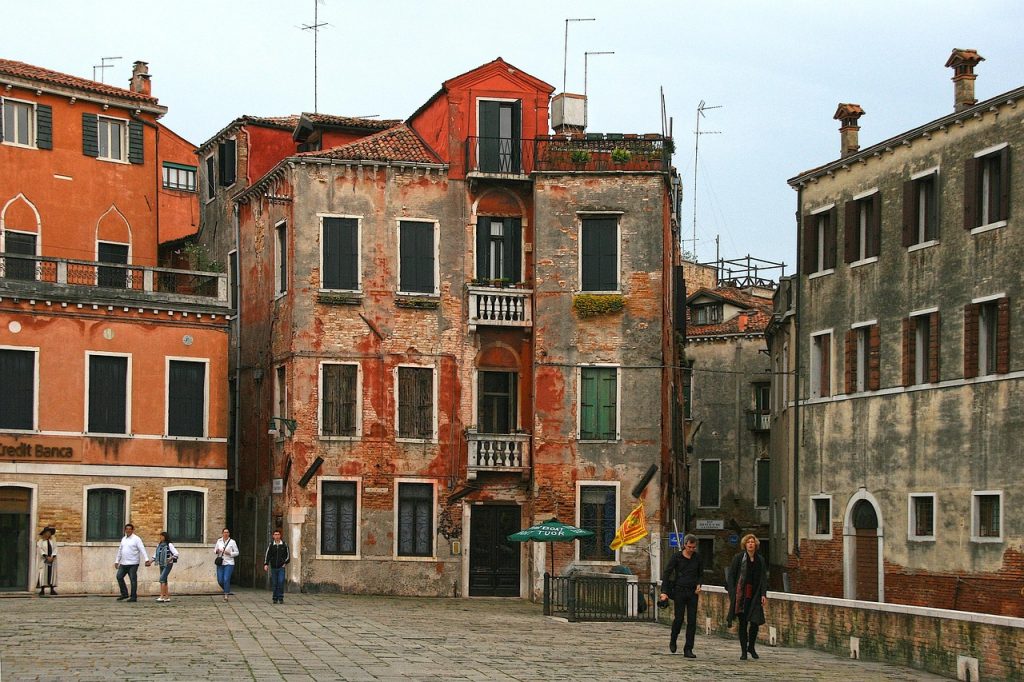
Venice has moved from talking about overtourism to testing direct entry management. The city’s official access-fee portal confirms a 2026 trial calendar beginning on April 3, with designated dates and daytime enforcement windows for day visitors entering the historic center.
The fee structure is not meant to eliminate demand overnight. It is designed to flatten spikes, especially short, high-volume day traffic that strains streets, transport nodes, and public services without adding much overnight capacity. AP reporting on the program’s expansion shows Venice steadily refining the rule set rather than treating it as a one-season stunt.
What makes Venice notable is how visible the mechanism is. Visitors are pushed toward pre-planning, digital proof, and compliance checks, which changes behavior before people even arrive. That front-loaded friction matters because unmanaged last-minute flows are exactly what narrow historic centers handle worst.
The policy is still debated, and no single fee can solve structural pressure by itself. But as a management model, Venice has created something exportable: a way to convert crowd concerns into timed, enforceable access rules that can be adjusted year by year as data comes in.
Machu Picchu Sanctuary, Peru
Machu Picchu has shifted from open-ended wandering to controlled circulation. Peru’s official Machupicchu portal states that, from June 1, 2024, the Ministry of Culture implemented three circuits grouped into ten routes, replacing the older visitor pattern with tighter movement design.
Entry logistics were also formalized through official ticketing channels. The government platform for online tickets emphasizes pre-booked access through the state-managed system, which supports timed entry and route assignment instead of uncontrolled onsite crowd buildup.
This matters because archaeology sites are unusually vulnerable to cumulative wear. The damage is not only physical abrasion on stone and paths. It also includes bottlenecks at iconic viewpoints that degrade safety and visitor experience when too many people converge at the same angle and time.
By reshaping circulation rather than simply raising prices, Machu Picchu has effectively turned conservation into trip design. The visitor still gets the place, but through a sequence built around carrying capacity. That shift, from access as entitlement to access as managed stewardship, is the core lesson.
Zion Canyon Corridor, United States

Zion’s most visited corridor uses a transportation rule to protect both habitat and visitor flow. The National Park Service states that Zion Canyon Scenic Drive is closed to private vehicles during shuttle season, with limited exceptions for specific reservation holders.
That single operational decision does a lot of work. It reduces stop-and-go congestion, lowers roadside trampling from random parking behavior, and keeps trailhead access more predictable. In high-demand parks, predictability is a conservation tool because chaotic access patterns usually trigger spillover damage.
There is also a social benefit. Shuttle systems spread arrivals and remove the race for parking that often pushes people into rushed decisions. Visitors move with less friction once inside, and the park can concentrate ranger attention where ecological sensitivity is highest instead of constantly managing traffic disorder.
Zion shows how impact control can be embedded in mobility design, not just in rules on paper. If the road itself is managed as a scarce ecological asset, downstream pressure eases across trails, river access points, and visitor nodes. It is a practical blueprint for canyon landscapes with finite room.
Galápagos Protected Areas, Ecuador
The Galápagos model is built on guided access and strict conduct rules in protected zones. Galápagos park-rule guidance states that visitors to protected areas must be accompanied by an authorized naturalist guide, use authorized operators, remain on marked trails, and maintain distance from wildlife.
Supporting guidance from Galápagos public documents also emphasizes organized site visitation with qualified guides as a core management principle, linking interpretation directly to conservation compliance in fragile habitats.
This is not only about policing behavior. It is about reducing countless micro-disturbances that add up quickly on islands with endemic species. A small off-trail detour, one too-close photo moment, or repeated approach to nesting zones can alter wildlife patterns long after the visitor has left.
The strength of the Galápagos system is that education and enforcement happen together. Guides are not an add-on product. They are part of the protection architecture. That design keeps visitation possible while preserving the biological conditions that make the islands worth visiting at all.
Bhutan’s High-Value, Low-Volume Tourism Framework

Bhutan’s tourism policy is explicit about direction. Official tourism pages describe a long-standing High Value, Low Volume approach focused on controlling tourism intensity while protecting culture and environment.
Current visa guidance also requires payment of a Sustainable Development Fee, listed at US$100 per day per adult, plus a one-time visa application fee, embedding conservation finance directly into entry mechanics.
The important point here is not simply price. It is policy coherence. Bhutan aligns national branding, visa procedure, and sustainability objectives so that visitor growth is filtered through public-interest goals instead of being treated as an automatic good.
This approach is sometimes criticized for cost barriers, and that tension is real. Still, as a visitor-impact strategy, it demonstrates a clear lever many destinations avoid using: set a national threshold for tourism pressure, then build administrative systems that make the threshold enforceable.
Antarctica Landing Sites Under Treaty-Era Guidelines
Antarctica is one of the clearest examples of hard operational caps. Antarctic visitor guidance linked to treaty processes states that vessels carrying more than 500 passengers should not make landings, and no more than 100 passengers may be ashore at one time, with guide-to-visitor controls during landings.
IAATO-linked operational material also reinforces limits such as one ship at a landing site at a time and guiding ratios designed to keep shore activity tightly supervised.
In practical terms, this means Antarctic tourism is structured around choreography, not spontaneity. Zodiacs, shore time, and site rotation are scheduled to minimize wildlife disturbance and cumulative footprint in environments that recover slowly and react sharply to human pressure.
The takeaway is simple and powerful. When ecosystems are extremely sensitive, strong caps are not anti-tourism. They are the condition that makes tourism possible at all. Without strict landing logic, the model would collapse under its own popularity.
Palau’s Pledge-and-Fee Conservation Model

Palau turned conservation into a border ritual. The Palau Pledge framework requires arriving visitors to sign a commitment to behave responsibly, making environmental responsibility part of the entry process itself rather than a brochure afterthought.
Palau also enacted a Pristine Paradise Environmental Fee of US$100 tied to international travel, as reflected in government legal material and related regulatory documentation.
What works here is the combination of symbolic and financial tools. A pledge shapes norms. A fee creates fiscal capacity. One influences behavior through identity, the other through funding. Used together, they help small-island governments manage tourism externalities with limited enforcement bandwidth.
Palau’s model is especially relevant to reef-dependent destinations where damage can be fast and restoration expensive. When visitor responsibility is framed as a formal condition of entry, not optional etiquette, sustainable tourism starts to feel less abstract and more contractual.
Maya Bay and the Phi Phi Marine Management Cycle, Thailand
Maya Bay became an overtourism case study after ecological stress and coral damage forced authorities to intervene. Reuters reporting from the initial shutdown period documented how pressure levels had become incompatible with ecosystem recovery, prompting closure as a corrective step.
Later management has relied on periodic closures and controlled reopening structures. Thailand’s public information channels have described seasonal closure windows for rehabilitation and safety, including closures in 2024 for Maya Bay and nearby zones.
That pattern matters because marine systems often need uninterrupted recovery time, not just lighter daily traffic. Temporary shutdowns can look strict from a traveler perspective, but they are frequently more effective than constant partial access in heavily stressed beach ecosystems.
Maya Bay now stands as a caution and a template. If demand surges faster than site resilience, the only responsible path may be to pause, reset, and reopen under stronger operating rules. Waiting too long usually makes recovery harder, slower, and more expensive.
Sources
Antarctic Treaty Visitor Guidelines
Venice Access Fee Official Portal
Associated Press: Venice Day-Tripper Tax Expansion
Machu Picchu Official Circuits and Routes
Machu Picchu Official Online Tickets