9 Hidden U.S. Gardens Women Walk Into by Accident and Stay
Some gardens decline to announce themselves. They nestle behind a museum’s back wall, beside a library, or inside a citywide tree-dense parkland-labyrinth where most people keep strolling.
Women often stumble in by accident then slow down because canopy-shade, water, and careful planting recalibrate the body’s cadence before the mind fully catches up.
The best ones feel like a secret shared with the city. A gate clicks, a fountain murmurs, and street noise thins to warbling-songbirds and leaves. The reward is not spectacle. It is the calm sense that an ordinary day just turned gentler, and lingering feels perfectly-sensible, even necessary.
Dumbarton Oaks Gardens, Washington, D.C.
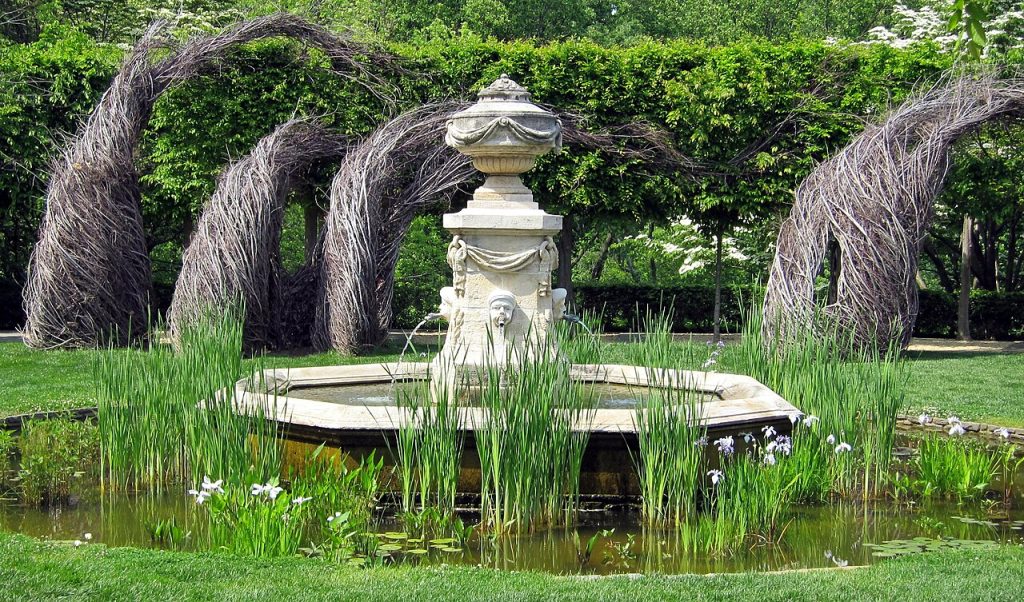
Dumbarton Oaks hides in Georgetown, where brick walls and clipped hedges turn a city block into a sequence of garden rooms. Narrow paths pass pergolas, stone steps drop to terraces, and a fountain keeps steady time while leaves filter the light. A long lawn opens, then tightens again into tucked beds that carry a clean, green scent.
Many visitors arrive for a quick loop and stay because each corner offers another framed view, then a bench placed exactly where the mind wants to rest. The setting feels private without being closed, and the quiet craft behind every line makes lingering feel both easy and earned even on busy afternoons. At dusk.
The Met Cloisters Gardens, New York, N.Y.
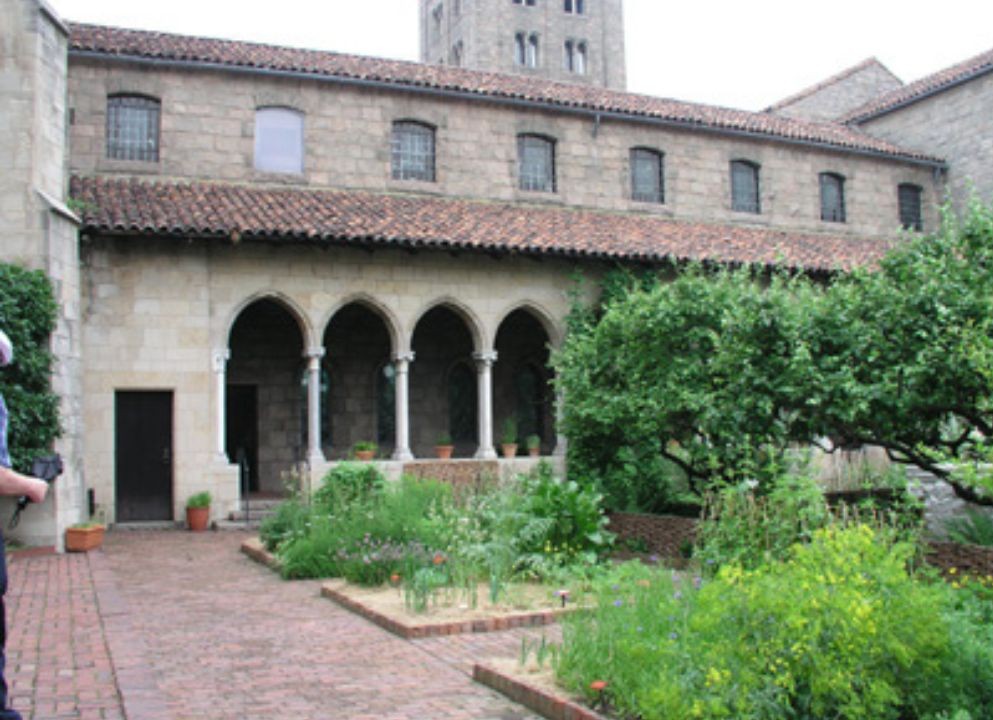
At The Met Cloisters in Fort Tryon Park, gardens hide inside stone courtyards, so Manhattan noise falls away the moment the heavy door closes. Three planted spaces include a medieval-style herb garden with raised beds, a central wellhead, and simple paths under arches where river light shifts across the stones.
Visitors often arrive for art and end up staying outside, because the walls hold stillness in place and the Hudson air feels cooler here. In spring the beds smell sharp and green, and in colder months the structure still feels complete. The order is gentle, and the quiet invites unhurried conversation and slow, careful breaths again..
Untermyer Park and Gardens, Yonkers, N.Y.
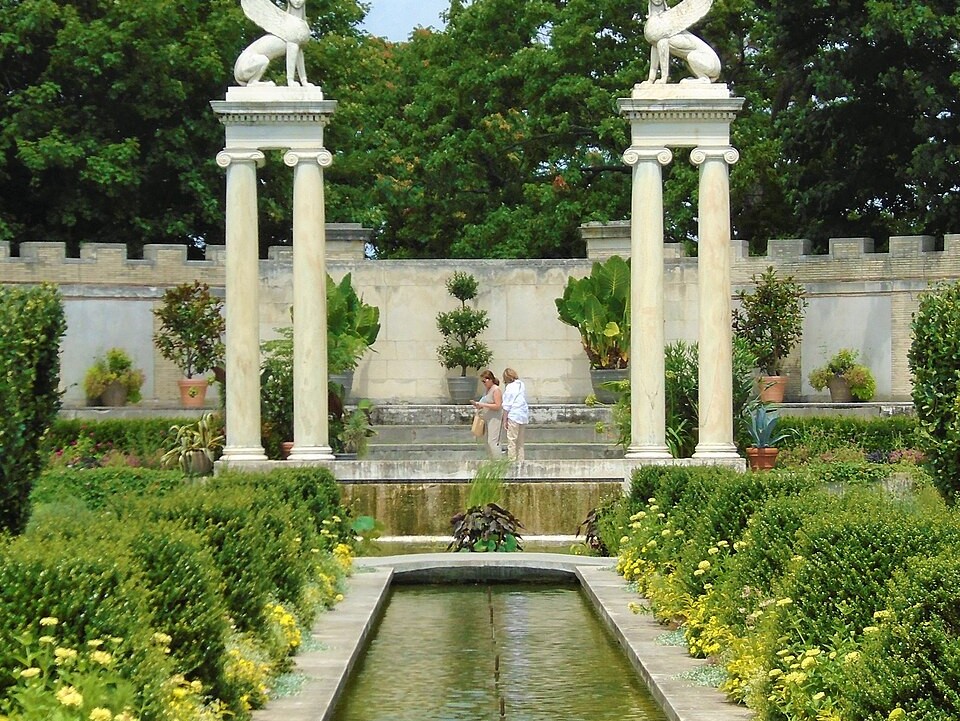
Untermyer Park and Gardens in Yonkers feels hidden until the entrance opens to its Walled Garden, modeled on Indo-Persian design. Water rills divide the space into clean quarters, fountains pulse along the central axis, and stone walls frame the long view toward the Temple of the Sky. An amphitheater and carved figures add drama without raising the volume.
Many visitors arrive expecting a quick stop and stay because the symmetry steadies attention and the water supplies a constant sound-track. The place holds both grandeur and quiet corners, and Hudson River light nearby makes the pause feel larger than the city around it, almost effortless.
Ruth Bancroft Garden, Walnut Creek, Calif.

Ruth Bancroft Garden sits on an ordinary Walnut Creek street then surprises with a dry landscape built from cacti, succulents, and other drought-tolerant plants. What began as a private collection became a public garden, arranged along looping paths where texture and form do most of the storytelling. Many plants trace roots to Mexico, Chile, South Africa, and Australia.
Women often wander in out of curiosity and stay because the light keeps changing the plants’ colors, from silver blues to warm rust and green. Even without big blooms, the place feels alive, and it quietly teaches how beauty can thrive with less water and more patience alone.
Ganna Walska Lotusland, Montecito, Calif.
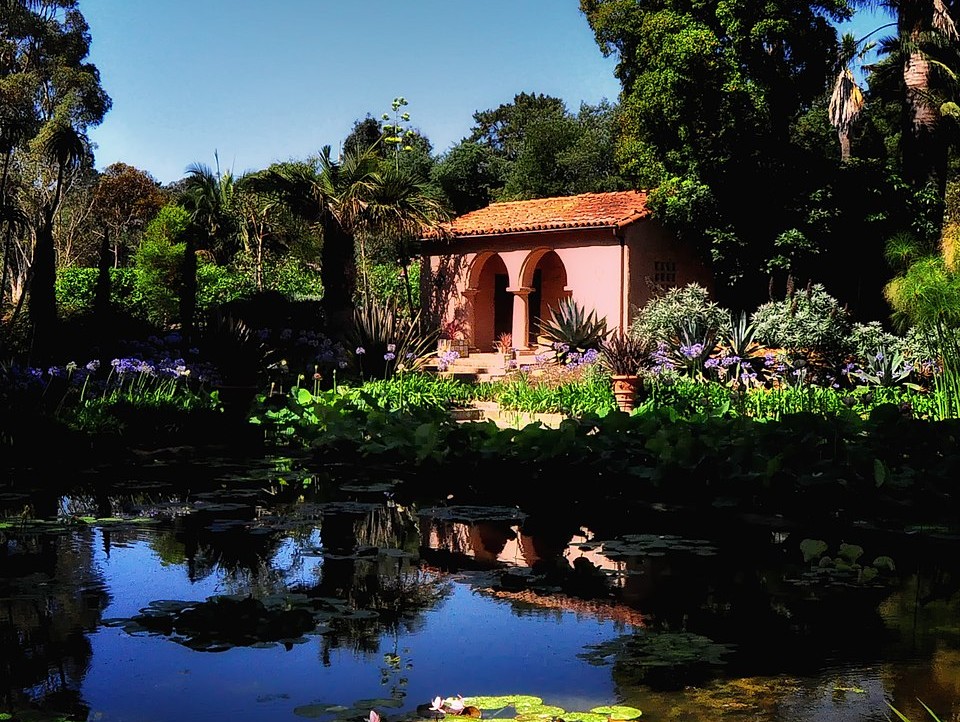
Lotusland sits behind hedges in Montecito, where the entrance feels more like visiting a private estate than a public garden. Spread across more than 37 acres, it moves through themed spaces, from dramatic cactus plantings to rare cycads, palms, and water gardens that change the mood with each turn. Created by Ganna Walska, it treats plants like set pieces in quiet theater.
Because visits run by reservation, the grounds stay calm, and guests tend to slow down on their own. Many arrive curious and stay because the details feel playful but deliberate, and every corner offers a fresh composition that holds attention without trying too hard too.
The Elizabethan Gardens, Manteo, N.C.
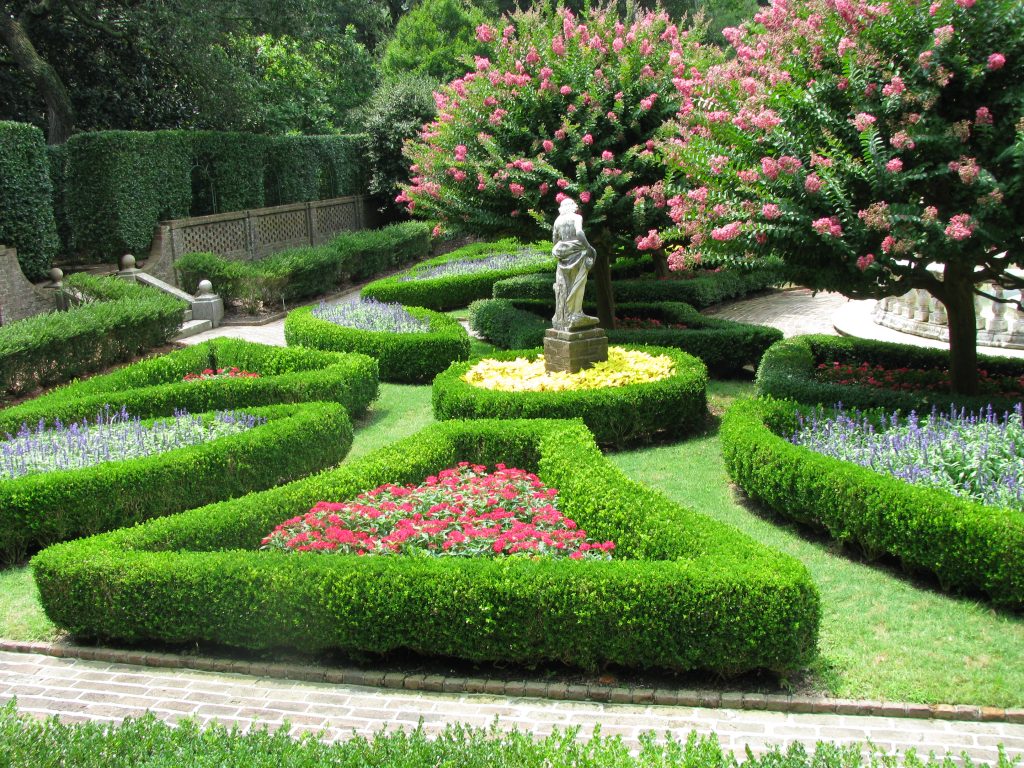
On Roanoke Island in Manteo, The Elizabethan Gardens often appears after a history stop, when a path past live oaks opens into ordered green. The nonprofit grounds draw on Elizabethan-era inspiration, mixing formal beds, shaded walks, fountains, and sculpture, then softening it all with coastal light. A tucked butterfly garden and quiet benches invite slower pacing.
Women who wander in tend to stay because the place balances structure and ease, so conversation slows and photos happen naturally. It feels composed without being stiff, and the salt air plus seasonal bloom make the calm feel honest, not staged. A short visit tends to run longer.
Garden of the Phoenix, Chicago, Ill.
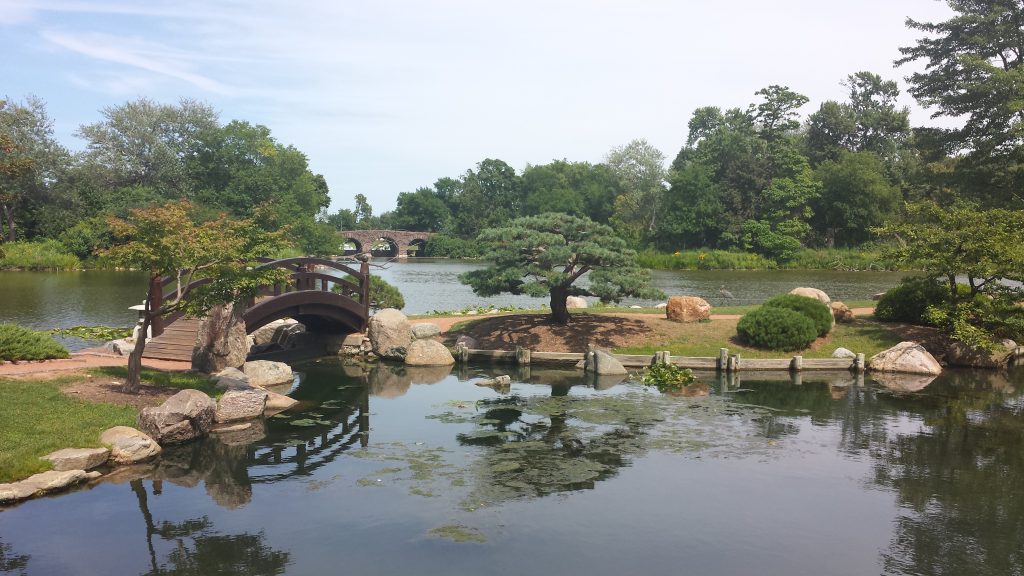
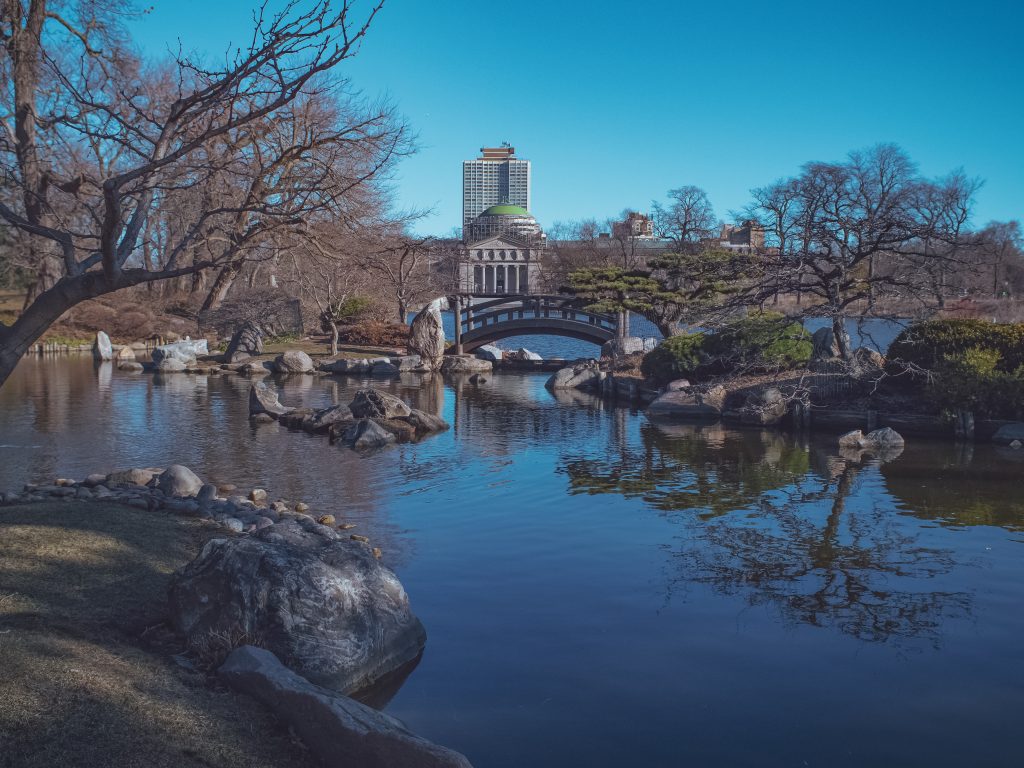
In Chicago’s Jackson Park, the Garden of the Phoenix sits near major paths, yet it feels secluded once the walkway drops toward the lagoon. First created for the 1893 World’s Columbian Exposition as a symbol of friendship between Japan and the United States, it follows a stroll-garden rhythm of bridges, stone, and water. Lantern-style details and maples soften the edges.
Women often drift in during a casual park walk and stay because the space teaches stillness without instruction. Koi gather near the edges, leaves move softly overhead, and even nearby traffic feels far away. The calm arrives quickly, then holds after work, for a long while.
Asticou Azalea Garden, Northeast Harbor, Maine
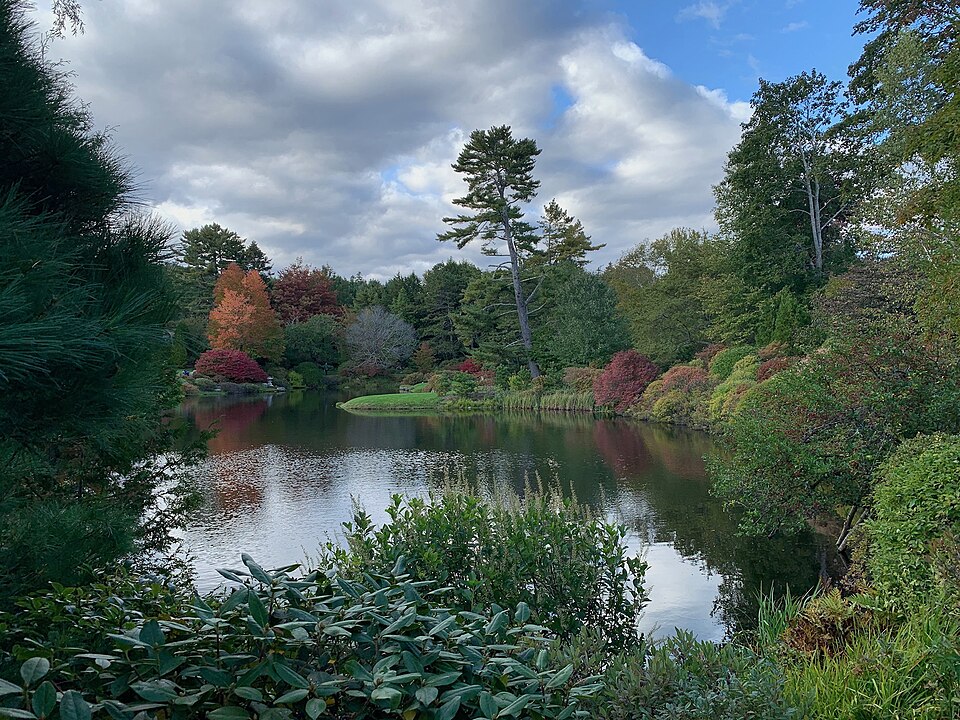
Asticou Azalea Garden sits near Northeast Harbor on Mount Desert Island, easy to miss among coastal roads and summer traffic. Created in 1956, it borrows from Japanese stroll gardens, using raked gravel that suggests water, a small pond, stone steps, and layered plantings that feel quietly intentional. Native Maine azalea appears here, adding local character to the design.
Women often step in expecting a quick look and stay because the space asks for slow attention, not speed. In spring, azaleas and rhododendrons brighten the paths, and in other seasons the pond and stones keep the mood steady. Coastal light helps thoughts settle, then stay.
McKee Botanical Garden, Vero Beach, Fla.
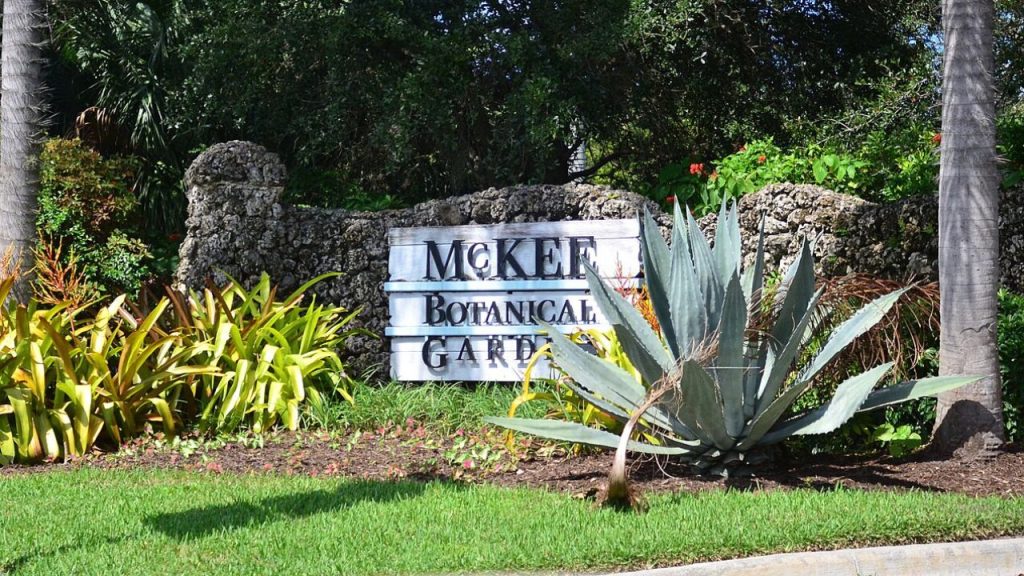
McKee Botanical Garden sits near U.S. 1 in Vero Beach, but inside the gates it becomes canopy shade, winding water, and tropical air that changes the day’s pace. Founded in 1932 by Arthur McKee and Waldo Sexton as McKee Jungle Gardens and designed by William Lyman Phillips of the Olmsted Brothers firm, it later closed, then was restored and reopened in 2001.
Women often arrive on a whim and stay because palms, waterlilies, and quiet trails keep unfolding into new pockets of green. The garden’s comeback story adds a human warmth to the beauty, and lingering feels like a small reward for noticing what was there all along on hot afternoons too.